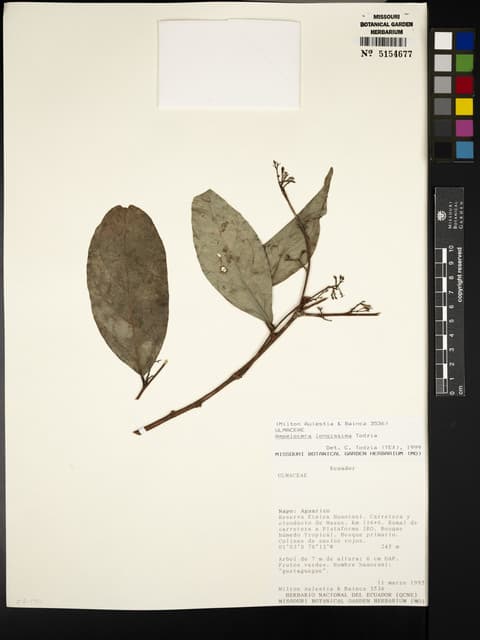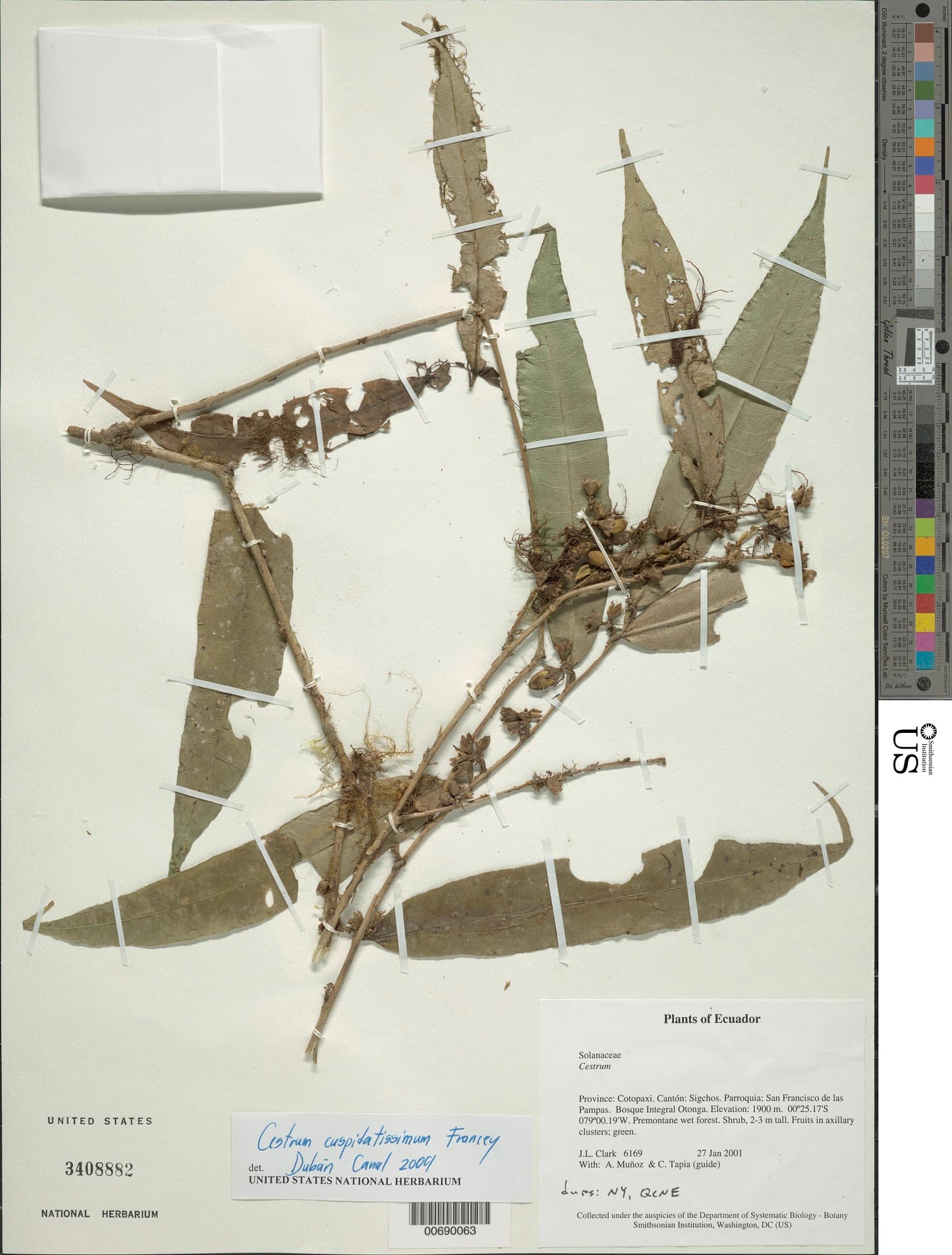
Cestrum cuspidatissimum
Image: Conveyor Belt (cc0)
NameCestrum cuspidatissimum
Scientific NameCestrum cuspidatissimum Francey
Common NamesJessamine
Plant FamilySolanaceae
Natural HabitatNative to the premontane wet forests of the Andes in Ecuador, specifically found at elevations around 1900 meters in humid, subtropical environments.
Parts Usedleaf,fruit
Medicinal Actionsanalgesic, anti-inflammatory, antimicrobial, sedative
Traditional UsesWhile specific traditional medicinal uses for Cestrum cuspidatissimum are not widely documented, other species within the Cestrum genus have been traditionally used with extreme caution for their analgesic, anti-inflammatory, and sedative properties. These uses are often external or involve highly diluted internal preparations due to the genus's inherent toxicity.
Active ConstituentsGlycoalkaloids, Saponins, Alkaloids
Preparation Methodsinfusion, poultice, tincture
Contraindications & WarningsAll parts of Cestrum species, including C. cuspidatissimum, are generally considered toxic due to the presence of glycoalkaloids and saponins. Ingestion can cause severe gastrointestinal upset, neurological symptoms, and cardiac issues. Medicinal use is not recommended without expert guidance and extreme caution.
Cultivation NotesThis shrub thrives in humid, subtropical to tropical conditions, preferring well-drained, fertile soil. It requires consistent moisture and can tolerate partial shade to full sun, typical of its premontane wet forest habitat.
Rarityuncommon
Description
Cestrum cuspidatissimum is a shrub typically growing 2-3 meters tall. It features simple, alternate leaves and produces small, green fruits arranged in axillary clusters along its stems.