Cestrum amistadense
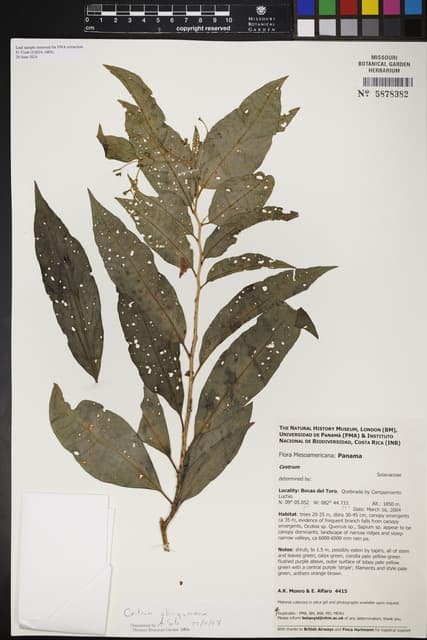
Image: MBG (cc-by-nc)
NameCestrum amistadense
Scientific NameCestrum amistadense A.K.Monro
Plant FamilySolanaceae
Natural HabitatThis species thrives in montane rainforests at an altitude of approximately 1850 meters in Bocas del Toro, Panama. It is found in areas with high annual rainfall (6000-6500 mm) within a landscape of narrow ridges and steep valleys, often associated with canopy dominant trees like Ocotea, Quercus, and Sapium species.
Parts Usedleaf,flower
Medicinal Actionsanti-inflammatory, analgesic
Traditional UsesSpecific traditional medicinal uses for Cestrum amistadense are not well-documented. However, other species within the Cestrum genus have been traditionally used for conditions like pain and inflammation, often with significant caution due to potential toxicity.
Active Constituentssteroidal glycoalkaloids
Preparation Methodsinfusion, decoction
Contraindications & WarningsDue to the presence of steroidal glycoalkaloids common in the Cestrum genus, Cestrum amistadense is likely toxic if ingested. Internal use is strongly contraindicated without specific knowledge and expert guidance. Potential for severe gastrointestinal upset, neurological effects, and other adverse reactions. Not recommended for self-medication.
Cultivation NotesPrefers a montane rainforest environment with high humidity and significant annual rainfall (6000-6500 mm). Thrives at altitudes around 1850 meters in well-drained soils, often in the understory or edges of forests dominated by Ocotea, Quercus, and Sapium species. Requires warm, consistent temperatures.
Rarityrare
Description
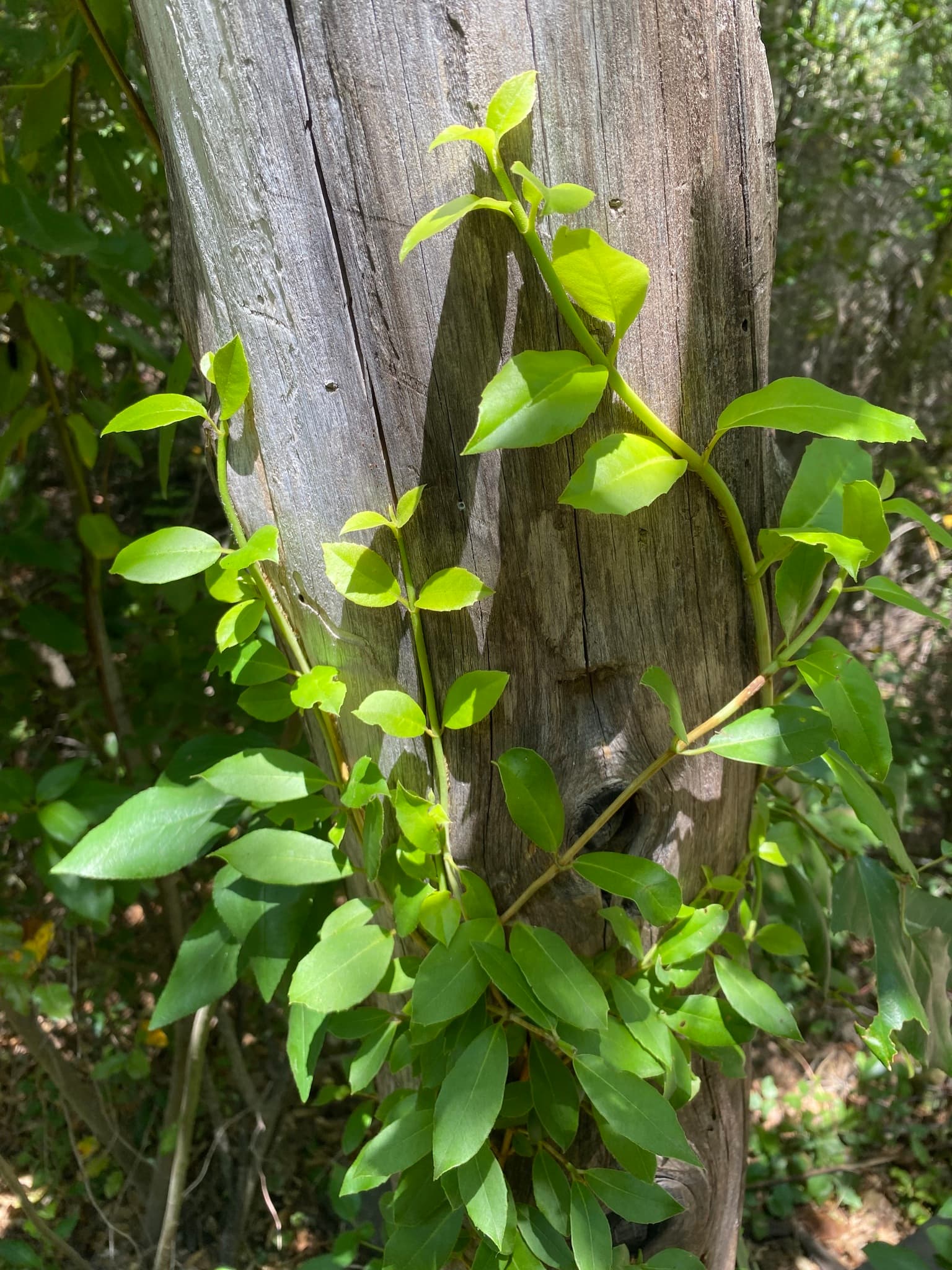
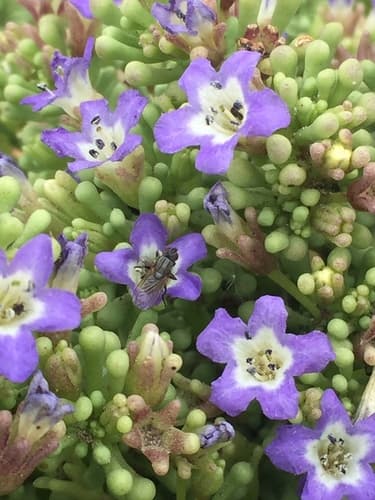
Cestrum amistadense is a shrub growing up to 1.5 meters tall, characterized by green stems and leaves. Its flowers feature a green calyx and a pale yellow-green corolla, flushed purple on the upper surface, with a central purple stripe on the outer lobes.