Celandine
NameCelandine
Scientific NameChelidonium majus
Common NamesGreater Celandine, Tetterwort, Swallowwort, Devil's Milk
Plant FamilyPapaveraceae
Natural HabitatNative to Europe and western Asia, it thrives in disturbed areas, woodlands, hedgerows, and roadsides, often preferring moist, nitrogen-rich soils. It has naturalized in many other parts of the world.
Parts Usedwhole_plant,root,leaf,flower
Medicinal Actionsanalgesic, antimicrobial, anti-inflammatory, antioxidant
Traditional UsesTraditionally, the fresh orange latex from the stem was applied topically to remove warts, corns, and fungal skin infections due to its caustic and antiviral properties. Internally, it has been used cautiously as a choleretic to stimulate bile flow and as an antispasmodic for digestive complaints, though internal use is now largely discouraged due to toxicity.
Active ConstituentsChelidonine, berberine, coptisine, sanguinarine, chelerythrine
Preparation Methodspoultice, tincture, infusion, powder
Contraindications & WarningsHighly toxic if ingested in large quantities; can cause severe liver damage (hepatotoxicity). Not recommended for internal use without strict medical supervision. Contraindicated in pregnancy, lactation, and in individuals with liver disease. Skin irritation can occur with topical application.
Cultivation NotesEasily grown from seed or root division in partial shade to full sun. Prefers moist, well-drained soil. Can become invasive due to prolific self-seeding. Handle with gloves due to irritating sap.
Raritycommon
Description
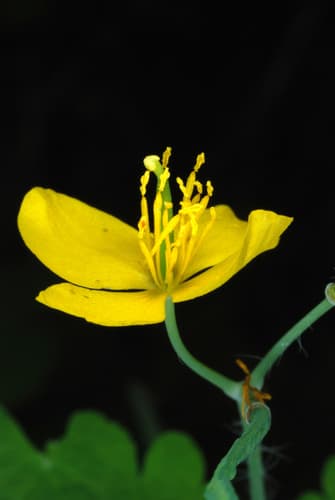
A perennial herbaceous plant characterized by its bright yellow, four-petaled flowers and deeply lobed leaves. It produces a distinctive orange-yellow latex (sap) when its stems or leaves are broken.