Catesby's False Bindweed
NameCatesby's False Bindweed
Scientific NameStylisma patens
Common NamesCatesby's False Bindweed, Spreading Bindweed, Pineland Bindweed
Plant FamilyConvolvulaceae
Natural HabitatNative to the southeastern United States, this plant thrives in dry, sandy soils, pine flatwoods, sandhills, and open woodlands.
Parts Usedroot
Medicinal Actionsantioxidant
Traditional UsesSpecific traditional medicinal uses for Catesby's False Bindweed (*Stylisma patens*) are not well-documented in ethnobotanical literature. While some members of the broader Convolvulaceae family are known for purgative properties, often from their roots, these are typically potent and potentially toxic, and such uses are not attributed to *Stylisma patens* itself.
Preparation Methodsdecoction
Contraindications & WarningsDue to the lack of specific medicinal documentation and safety data for *Stylisma patens*, and the potential for purgative resins in some related Convolvulaceae species, internal use is not recommended. General caution should be exercised with any plant lacking clear safety profiles.
Cultivation NotesThis plant prefers full sun to partial shade and well-drained, sandy soils. It is drought-tolerant once established and can be propagated by seed or division. It is a native species important for local ecosystems.
Raritycommon
Description
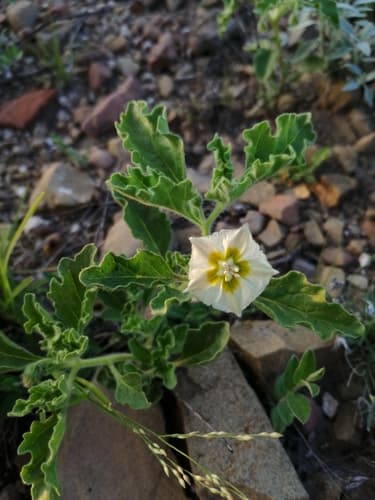
Catesby's False Bindweed is a perennial herbaceous vine characterized by slender, trailing or twining stems. It produces striking white, funnel-shaped flowers, typically solitary or in small clusters, emerging from the leaf axils. Its leaves are alternate, simple, and generally linear to lanceolate in shape.