Carr's Bindweed
NameCarr's Bindweed
Scientific NameConvolvulus cantabrica
Common NamesCarr's Bindweed, Cantabrian Bindweed, Pink Bindweed
Plant FamilyConvolvulaceae
Natural HabitatCommonly found in dry, rocky, or sandy soils, particularly in Mediterranean climates, grasslands, and open woodlands.
Parts Usedroot,whole_plant
Medicinal Actionsdiuretic, antimicrobial
Traditional UsesWhile specific traditional medicinal uses for 'Carr's Bindweed' are not widely documented, other species within the *Convolvulus* genus have historically been used as strong purgatives due to their resin content. Some species have also been noted for mild diuretic properties or external application for wounds.
Active Constituentsglycosidic resins
Preparation Methodsdecoction, powder
Contraindications & WarningsDue to the presence of purgative resins in many *Convolvulus* species, internal use is generally not recommended and can be toxic. Contraindicated during pregnancy, lactation, and in individuals with gastrointestinal disorders.
Cultivation NotesThis plant thrives in full sun and well-drained, dry to medium soils. It is drought-tolerant once established and is often grown as an ornamental for its attractive flowers.
Raritycommon
Description
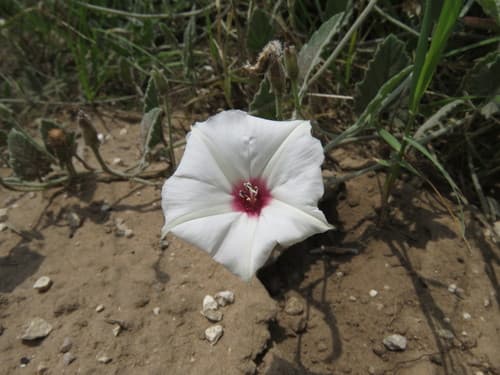
A perennial herbaceous plant characterized by its trailing or climbing stems and hairy, often silvery-green leaves. It produces showy, funnel-shaped flowers, typically white to pink, often with a distinctive darker reddish-purple throat.