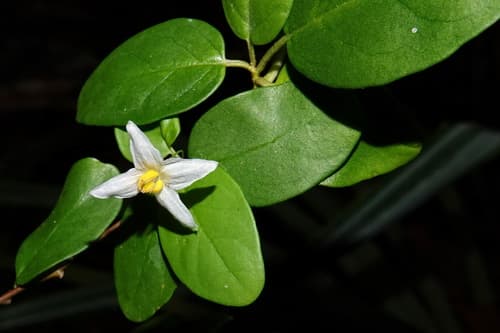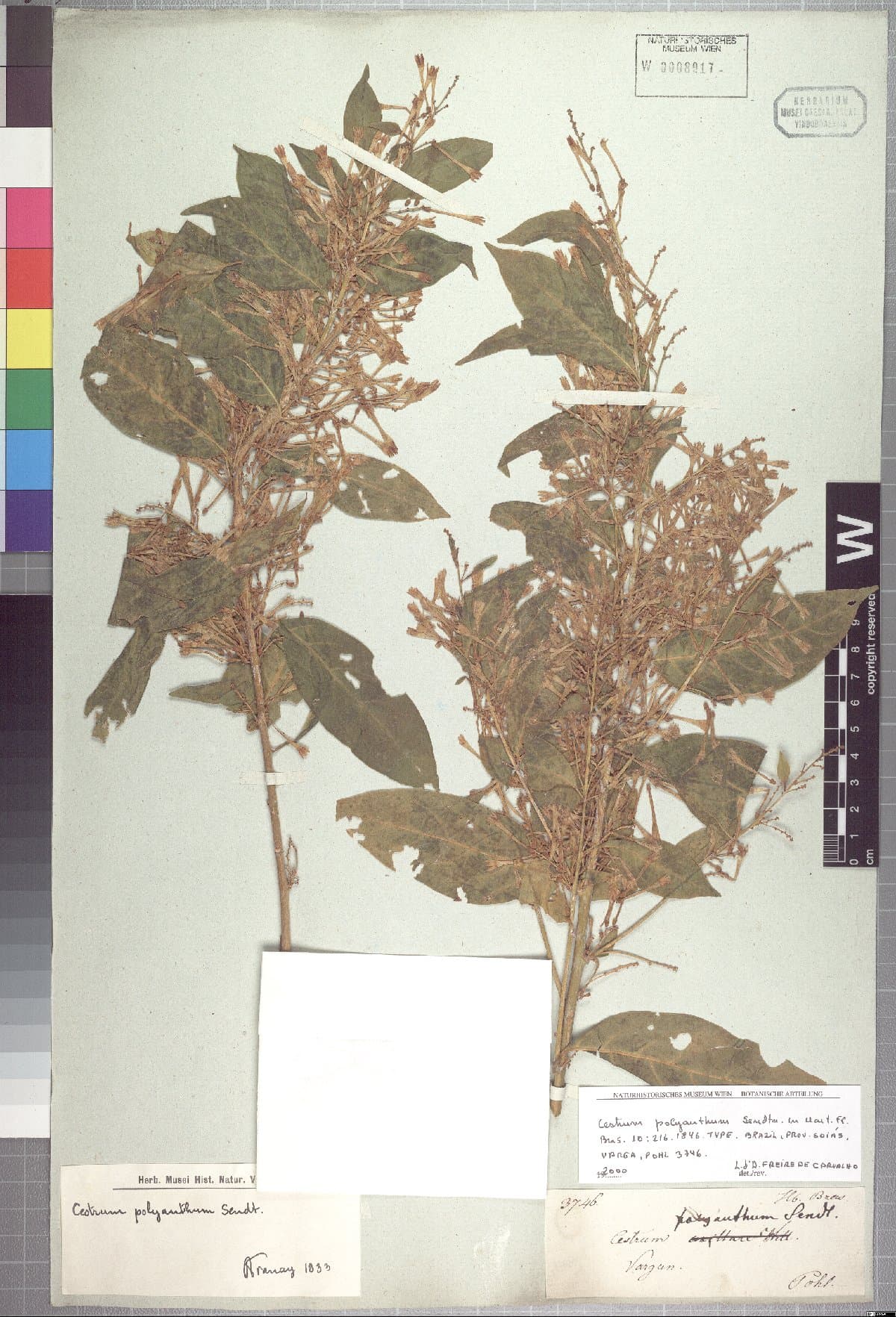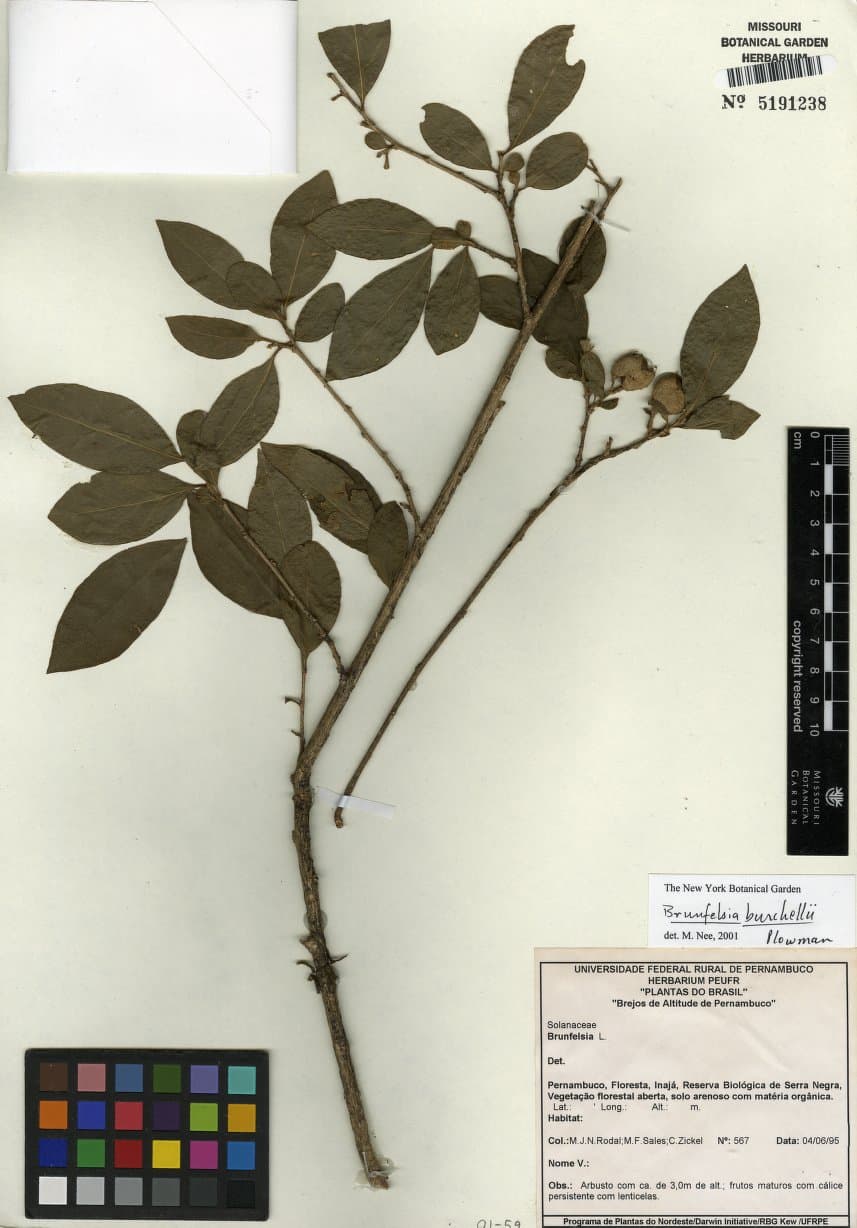
Brunfelsia burchellii
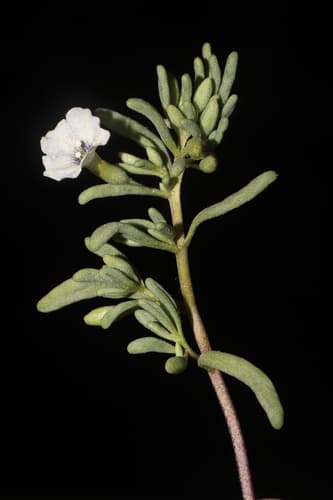
Image: MBG (cc-by-nc)
NameBrunfelsia burchellii
Scientific NameBrunfelsia burchellii
Plant FamilySolanaceae
Natural HabitatFound in open forest vegetation on sandy soil with organic matter, specifically noted in the Serra Negra Biological Reserve in Inajá, Pernambuco, Brazil.
Parts Usedroot,bark,leaf
Medicinal Actionsanalgesic, anti-inflammatory, nervine, sedative
Traditional UsesWhile specific traditional uses for *Brunfelsia burchellii* are not detailed in the provided metadata, other species within the *Brunfelsia* genus are traditionally used in South American folk medicine for conditions such as fevers, rheumatism, and syphilis. They are also employed as purgatives, emetics, and in some cases, for their psychoactive properties in shamanic rituals.
Active Constituentsbrunfelsamidine, manacine, scopoletin, indole alkaloids
Preparation Methodsdecoction, infusion, tincture, powder
Contraindications & WarningsSpecies within the *Brunfelsia* genus are known to be potent and can be toxic in high doses, potentially causing nausea, vomiting, dizziness, and neurological symptoms. They are generally contraindicated for pregnant or nursing women, children, and individuals with liver or kidney conditions. Caution is advised regarding potential interactions with central nervous system depressants.
Cultivation NotesAs a tropical shrub, *Brunfelsia burchellii* likely thrives in warm, humid conditions with well-draining, organically rich, sandy soil, mimicking its natural forest habitat in Pernambuco. It would require protection from frost and consistent moisture.
Rarityuncommon
Description
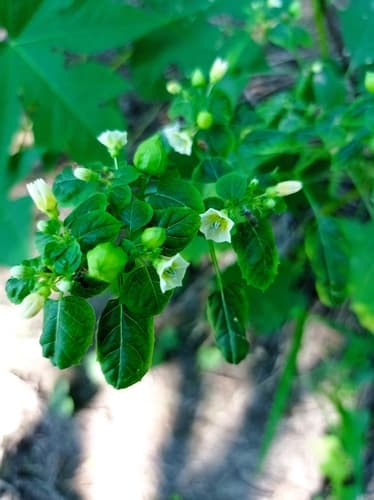
Brunfelsia burchellii is a shrub, typically growing up to 3 meters tall. It features alternate, ovate to elliptic leaves and produces mature fruits with a persistent calyx that exhibits lenticels.