blue potatobush
Nameblue potatobush
Scientific NameSolanum rantonnetii
Common NamesBlue Potato Bush, Paraguay Nightshade, Potato Bush, Blue Solanum
Plant FamilySolanaceae
Natural HabitatNative to South America (Paraguay, Argentina, Brazil), it thrives in warm, temperate to subtropical climates. It is often found in open woodlands, scrublands, and along riverbanks.
Parts Usedwhole_plant
Medicinal Actionsanti-inflammatory
Traditional UsesDespite its ornamental appeal, Blue Potato Bush is generally considered toxic due to the presence of solanine alkaloids, particularly in its berries. It is not traditionally used in herbal medicine due to its toxicity, and any potential medicinal actions are overshadowed by its poisonous nature.
Active ConstituentsSolanine alkaloids, Steroidal glycoalkaloids
Preparation Methodspowder
Contraindications & WarningsAll parts of the Blue Potato Bush, especially the berries, are considered toxic due to solanine alkaloids. Ingestion can cause severe gastrointestinal upset, nausea, vomiting, diarrhea, and more serious neurological symptoms. It should not be used internally or externally for medicinal purposes and is considered unsafe for consumption.
Cultivation NotesPrefers full sun to partial shade and well-drained soil. Tolerates a range of soil types but thrives in fertile, moist conditions. Drought-tolerant once established, it can be grown as a shrub, standard, or espalier. Requires protection from hard frosts.
Raritycommon
Description
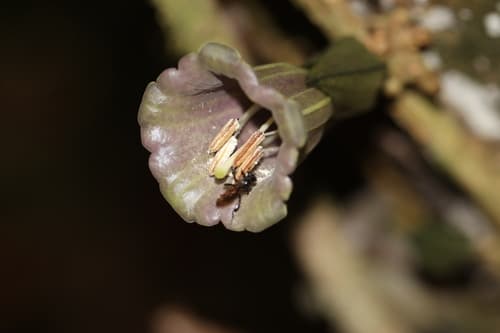
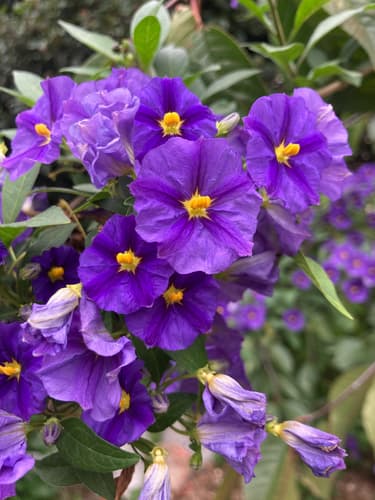
A fast-growing, semi-deciduous shrub or small tree, characterized by its profusion of vibrant blue-purple, star-shaped flowers with prominent yellow stamens. It typically blooms from spring through fall, attracting pollinators with its showy blossoms.