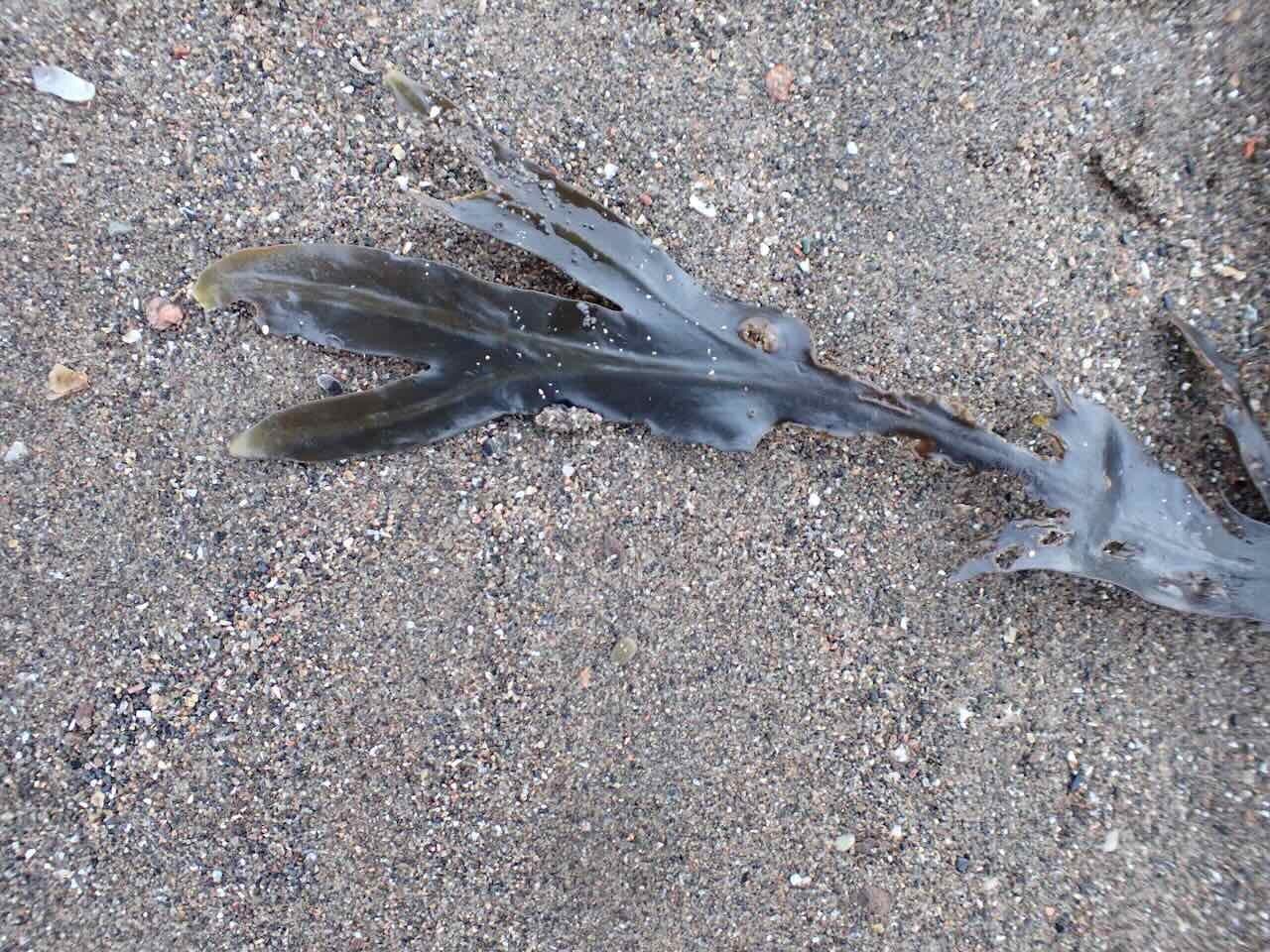
Bladderwrack
Image: Jane Orgee (cc-by-nc)
NameBladderwrack
Scientific NameFucus vesiculosus
Common NamesBladderwrack, Rockweed, Black Tang, Sea Oak, Cut Weed, Dye Weed
Plant FamilyFucaceae
Natural HabitatFound abundantly on rocky shores in the intertidal zones of the North Atlantic and Pacific oceans, as well as the Baltic Sea. It prefers cold temperate waters.
Parts Usedwhole_plant
Medicinal Actionsanti-inflammatory, antioxidant, diuretic, demulcent, adaptogen
Traditional UsesTraditionally used to support thyroid function due to its high iodine content, making it a remedy for goiter and hypothyroidism. It has also been employed for weight management, joint pain, and as a general tonic. Topically, it was used for skin conditions and internally for digestive complaints.
Active ConstituentsIodine, Fucoidans, Phlorotannins, Alginic acid, Mannitol, Carotenoids, Minerals
Preparation Methodsinfusion, decoction, powder, salve
Contraindications & WarningsContraindicated in individuals with hyperthyroidism, iodine sensitivity, or those taking thyroid medications (e.g., levothyroxine) or anticoagulant drugs, as it may interact. Not recommended during pregnancy or breastfeeding without professional advice.
Cultivation NotesBladderwrack is not typically cultivated but is wild-harvested from coastal areas. Sustainable harvesting practices are crucial to ensure the regeneration of natural populations.
Raritycommon
Description
Bladderwrack is a common brown seaweed characterized by its flattened, dichotomously branching fronds and distinctive air bladders, which typically appear in pairs along the midrib. It attaches to rocks via a holdfast and can grow up to 90 cm in length, thriving in intertidal zones.