Arizona desert-thorn
NameArizona desert-thorn
Scientific NameLycium exsertum
Common NamesArizona desert-thorn, Desert-thorn
Plant FamilySolanaceae
Natural HabitatArid and semi-arid regions of the Sonoran Desert, typically found in washes, rocky slopes, bajadas, and desert scrub communities. It thrives in well-drained soils.
Parts Usedleaf,flower,fruit
Medicinal Actionsantioxidant, anti-inflammatory
Traditional UsesTraditionally, the berries of *Lycium exsertum* and other desert-thorn species were consumed by indigenous peoples (e.g., Tohono O'odham) as a food source, either fresh or dried. While specific medicinal uses for *L. exsertum* are less documented than for Asian *Lycium* species (Goji), related species have been used for general wellness, fever, and digestive complaints.
Active Constituentspolysaccharides, carotenoids, flavonoids, vitamins
Preparation Methodsinfusion, powder
Contraindications & WarningsGenerally considered safe when consumed as food. However, as with many plants in the Solanaceae family, caution is advised, and specific interactions with medications (e.g., anticoagulants, as seen with Goji berries) should be considered, though less studied for *L. exsertum*.
Cultivation NotesThis drought-tolerant shrub prefers full sun and well-drained, sandy or rocky soils. It is well-suited for xeriscaping in desert climates and requires minimal water once established.
Raritycommon
Description
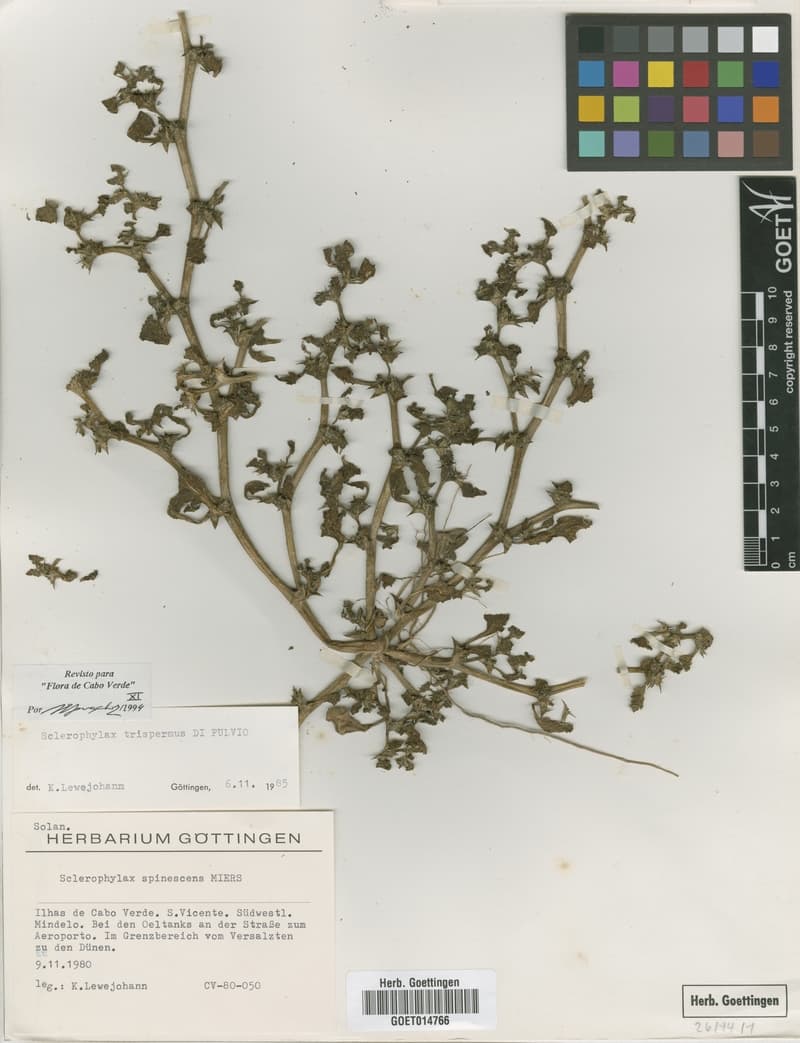
A thorny, deciduous shrub native to the Sonoran Desert, characterized by small, fuzzy, somewhat succulent leaves and tubular, pale yellow to whitish flowers that bloom in spring. Its branches are often grayish and armed with sharp thorns.