Andalusian Belladonna
NameAndalusian Belladonna
Scientific NameWithania frutescens
Common NamesAndalusian Belladonna, Fruticose Withania, Jabalí
Plant FamilySolanaceae
Natural HabitatNative to the Mediterranean region, particularly the Iberian Peninsula and North Africa. It thrives in dry, rocky, and disturbed areas, often found in scrublands, roadsides, and coastal regions.
Parts Usedleaf,root,fruit
Medicinal Actionsadaptogen, analgesic, anti-inflammatory, antimicrobial, antioxidant, nervine, sedative
Traditional UsesTraditionally used in folk medicine, particularly in North Africa and parts of Spain, for its calming properties, to alleviate pain, and as a general tonic. It has been employed for conditions like rheumatism, skin ailments, and as a mild sedative, though all parts are considered toxic.
Active ConstituentsWithanolides, Alkaloids, Flavonoids, Saponins
Preparation Methodsinfusion, decoction, tincture, poultice, powder
Contraindications & WarningsDue to the presence of alkaloids, including tropane alkaloids, all parts of the plant are considered toxic if ingested in large quantities. It should be used with extreme caution and under expert supervision. Pregnant and breastfeeding women, individuals with autoimmune diseases, and those on sedative or anticholinergic medications should avoid its use.
Cultivation NotesPrefers full sun and well-drained, sandy or rocky soils. It is drought-tolerant once established and requires a warm climate, being sensitive to frost. Can be propagated by seed or cuttings.
Raritycommon
Description
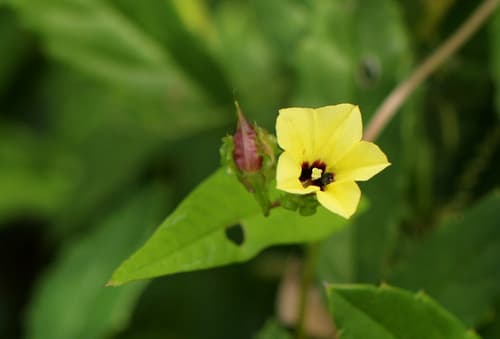
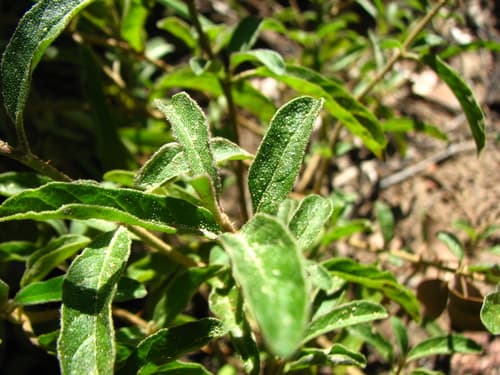
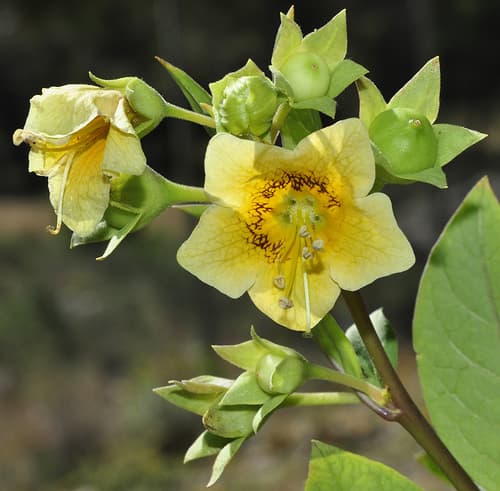
A shrubby plant characterized by its yellowish, bell-shaped flowers, often with darker markings in the throat, and prominent, accrescent green calyces that enclose the developing fruit. It typically grows as a small to medium-sized shrub with simple, ovate leaves.