Alishan elm
NameAlishan elm
Scientific NameUlmus uyematsui
Common NamesAlishan elm, Uyematsu's elm
Plant FamilyUlmaceae
Natural HabitatEndemic to Taiwan, found in mountainous regions at elevations between 1,000 and 2,000 meters, often in mixed broadleaf forests.
Parts Usedbark,leaf
Medicinal Actionsdemulcent, astringent, anti-inflammatory, antioxidant
Traditional UsesTraditionally, the inner bark of elm species has been used as a demulcent to soothe irritated mucous membranes in the digestive tract, for conditions like sore throats, coughs, and gastrointestinal inflammation. It has also been applied externally as a poultice for skin irritations, wounds, and boils due to its astringent and anti-inflammatory properties.
Active Constituentsmucilage, tannins, flavonoids
Preparation Methodsdecoction, infusion, poultice, powder
Contraindications & WarningsGenerally considered safe, but the high mucilage content may interfere with the absorption of other medications if taken concurrently. It is advisable to take elm preparations a few hours apart from other drugs.
Cultivation NotesThis species is critically endangered and rarely cultivated outside of conservation efforts. It prefers moist, well-drained soil and a temperate climate, typically found in mountain forests.
Rarityvery-rare
Description
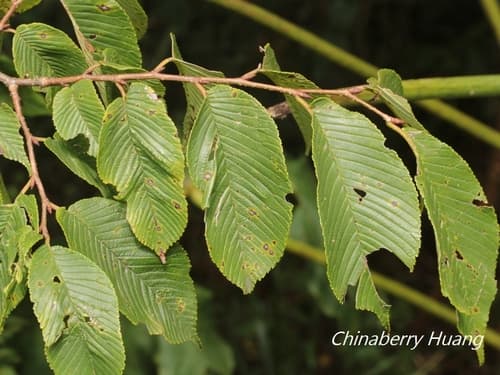
A deciduous tree endemic to Taiwan, characterized by its alternate, simple, ovate to oblong-lanceolate leaves with sharply serrated margins and prominent parallel venation. The bark is typically rough and fissured.