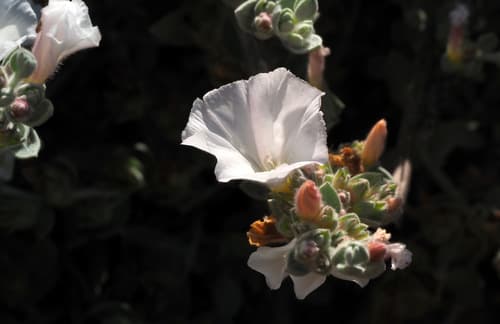
Woolly Bindweed
NameWoolly Bindweed
Scientific NameConvolvulus cneorum
Common NamesWoolly Bindweed, Silverbush, Shrubby Bindweed
Plant FamilyConvolvulaceae
Natural HabitatNative to the Mediterranean region, this plant thrives in dry, rocky, and coastal areas, as well as garrigue (shrubland) environments. It prefers full sun and well-drained soil conditions.
Parts Usedwhole_plant
Medicinal Actionsantioxidant, anti-inflammatory
Traditional UsesConvolvulus cneorum is primarily cultivated as an ornamental plant for its aesthetic appeal. Specific traditional medicinal uses for this particular species are not well-documented in herbal literature. While some related Convolvulus species have been historically used as purgatives, this application is not attributed to Woolly Bindweed.
Active ConstituentsFlavonoids, Phenolic compounds, Resin glycosides (general to family)
Preparation Methodsinfusion, powder
Contraindications & WarningsDue to the lack of documented medicinal use and research, specific contraindications for Convolvulus cneorum are not well-established. As with any plant, potential allergic reactions are possible, and ingestion of large quantities of plants from the Convolvulaceae family can sometimes cause gastrointestinal upset due to purgative compounds, though this is not specifically noted for C. cneorum.
Cultivation NotesThis plant prefers full sun exposure and requires well-drained, even poor, soil. It is highly drought-tolerant once established and thrives in Mediterranean climates, hardy to USDA zones 8-10. It requires minimal watering and occasional pruning to maintain its shape.
Raritycommon
Description
Convolvulus cneorum is a small, evergreen shrub characterized by its striking silvery, woolly foliage and abundant white, trumpet-shaped flowers with yellow centers. It typically forms a dense, rounded mound, growing 2-4 feet tall and wide, making it a popular ornamental plant.