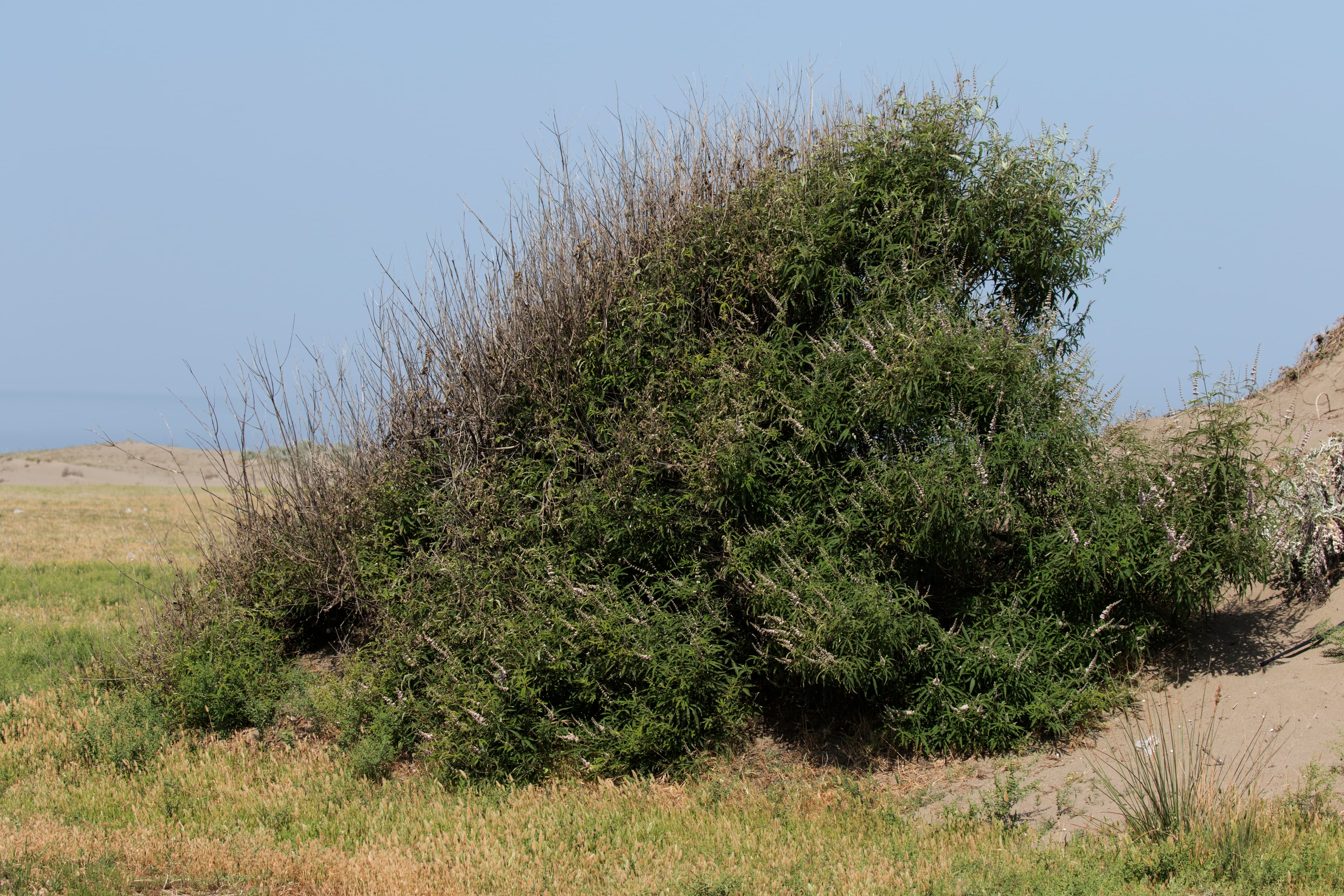
Vitex (Chaste Tree)
Image: Zeynel Cebeci (CC BY-SA 4.0)
NameVitex (Chaste Tree)
Scientific NameVitex agnus-castus
Common NamesChaste tree, Chasteberry, Monk's Pepper
Plant FamilyLamiaceae
Natural HabitatNative to the Mediterranean region and Central Asia, it thrives in riverbeds, coastal areas, and disturbed sites, often found in sandy or gravelly soils. The image shows it growing in a dune environment near Lake Tuzla in Turkey.
Parts Usedfruit,leaf
Medicinal Actionsadaptogen, nervine
Traditional UsesTraditionally used to support female reproductive health, particularly for symptoms of premenstrual syndrome (PMS), irregular menstrual cycles, and menopausal complaints. It has also been historically used to suppress libido, earning it the name 'chaste tree'.
Active ConstituentsFlavonoids (casticin, vitexin), Iridoid glycosides (agnuside, aucubin), Diterpenes (rotundifuran, clerodadienols), Essential oils
Preparation Methodstincture, infusion, powder
Contraindications & WarningsShould be avoided during pregnancy (especially early stages), by individuals with hormone-sensitive cancers, and those undergoing hormone replacement therapy. May interact with dopamine-related medications.
Cultivation NotesPrefers full sun and well-drained soil, tolerating a range of soil types including sandy or gravelly conditions. It is drought-tolerant once established and can be pruned to maintain shape or size.
Raritycommon
Description
Vitex agnus-castus is a deciduous shrub or small tree, typically growing 1-5 meters tall, characterized by its palmate leaves with 5-7 finger-like leaflets. It produces slender, fragrant spikes of small, often lavender to purple flowers in late summer, followed by small, dark, berry-like fruits.