Ulmus boissieri
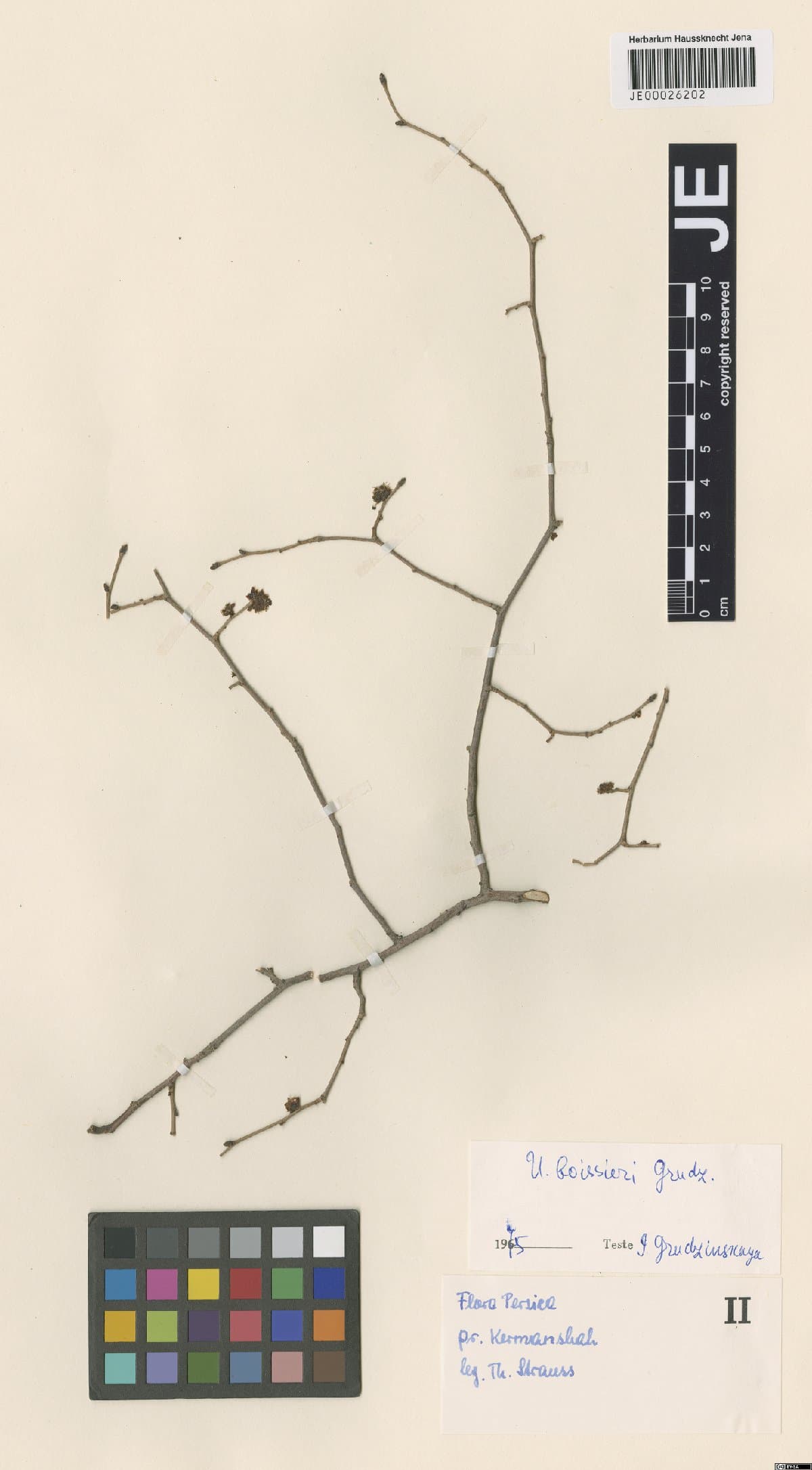
Image: Strauss,T. Flora Persica s.n. [s.d.] (cc-by)
NameUlmus boissieri
Scientific NameUlmus boissieri Grudz.
Common NamesBoissier's Elm, Persian Elm
Plant FamilyUlmaceae
Natural HabitatNative to the mountainous regions of Western Asia, particularly the Zagros Mountains of Iran (as indicated by 'Flora Persica' and 'Kermanshah' on the specimen label). It typically thrives in temperate climates, often found in forests or along riverbanks.
Parts Usedbark,leaf
Medicinal Actionsdemulcent, astringent, anti-inflammatory, antioxidant
Traditional UsesWhile specific traditional uses for Ulmus boissieri are not widely documented, other species within the Ulmus genus (e.g., Ulmus rubra, Ulmus minor) have a long history of medicinal use. The inner bark is traditionally used as a demulcent to soothe irritated mucous membranes in the digestive and respiratory tracts, for conditions like sore throats, coughs, and gastrointestinal inflammation. It is also applied externally as a poultice for skin irritations, wounds, and boils due to its astringent and anti-inflammatory properties.
Active Constituentsmucilage, tannins, flavonoids, phytosterols
Preparation Methodsdecoction, poultice, powder, infusion
Contraindications & WarningsDue to its high mucilage content, elm bark can interfere with the absorption of other medications if taken concurrently. It is generally considered safe, but pregnant or breastfeeding individuals should consult a healthcare professional. Allergic reactions are rare but possible.
Cultivation NotesAs a species adapted to mountainous regions, Ulmus boissieri likely prefers well-drained soil and can tolerate a range of temperatures. It would benefit from full sun to partial shade and moderate watering, especially during dry periods. Propagation is typically by seed or cuttings.
Rarityuncommon
Description
Ulmus boissieri is a deciduous tree species native to the Middle East, characterized by its woody branches and typical elm leaf structure (though not visible in this winter specimen). Like other elms, it likely possesses rough bark and a spreading canopy.