Thuja (Arborvitae)
NameThuja (Arborvitae)
Scientific NameThuja occidentalis
Common NamesArborvitae, Northern Whitecedar, Eastern Arborvitae, American Arborvitae
Plant FamilyCupressaceae
Natural HabitatNative to eastern North America, Thuja occidentalis thrives in cool, moist, and often swampy or boggy areas, as well as along stream banks and on limestone cliffs. It prefers full sun to partial shade and well-drained to wet soils.
Parts Usedleaf,bark
Medicinal Actionsantimicrobial, astringent, expectorant
Traditional UsesTraditionally, Thuja has been used by Indigenous peoples for various ailments, including as a remedy for colds, coughs, fevers, and scurvy due to its high vitamin C content. It was also applied externally for skin conditions like warts, fungal infections, and rheumatism, and internally for respiratory issues and as a diuretic.
Active Constituentsthujone, fenchone, sabinene, limonene, tannins, flavonoids, vitamin C
Preparation Methodsinfusion, tincture, essential oil, poultice
Contraindications & WarningsThuja, particularly its essential oil and concentrated preparations, contains thujone, which can be toxic in large doses, causing convulsions, kidney damage, and liver damage. It is contraindicated in pregnancy, breastfeeding, and for individuals with epilepsy or kidney disease. Internal use should be approached with extreme caution and under professional guidance.
Cultivation NotesThuja occidentalis is a hardy plant that prefers moist, well-drained soil and full sun to partial shade. It is tolerant of a wide range of soil types, including clay, and can withstand cold temperatures. Regular watering is beneficial, especially during dry periods, and it can be pruned to maintain shape or size.
Raritycommon
Description
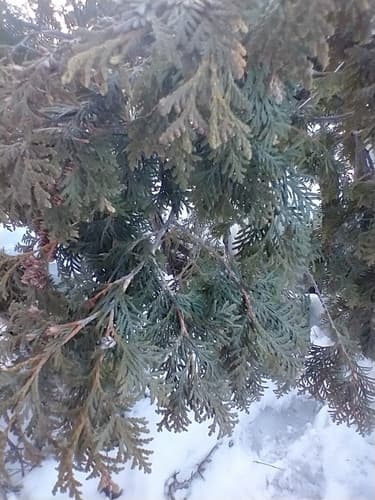
Thuja occidentalis is a coniferous evergreen tree characterized by its flattened, scale-like leaves arranged in sprays, forming dense, fan-like branches. It typically grows as a medium-sized tree with reddish-brown bark that peels in narrow strips, and produces small, oblong cones.