Solanum somalense
NameSolanum somalense
Scientific NameSolanum somalense
Common NamesSomali Nightshade
Plant FamilySolanaceae
Natural HabitatNative to arid and semi-arid regions of East Africa, particularly Somalia, Ethiopia, and Kenya. It thrives in dry scrublands, rocky hillsides, and disturbed areas, often found in sandy or well-drained soils.
Parts Usedleaf,fruit,root
Medicinal Actionsanti-inflammatory, antimicrobial
Traditional UsesWhile specific detailed traditional uses for *Solanum somalense* are not extensively documented in readily available ethnobotanical literature, other *Solanum* species in the region are traditionally used for various ailments. Given its genus, it's plausible it might have been used topically for skin conditions, wounds, or internally with extreme caution for inflammatory conditions, similar to other nightshades, but its inherent toxicity would limit widespread internal use.
Active Constituentssteroidal glycoalkaloids, flavonoids
Preparation Methodspoultice, decoction
Contraindications & WarningsDue to the presence of steroidal glycoalkaloids common in the *Solanum* genus, *Solanum somalense* is likely toxic, especially the unripe fruits. It should not be consumed internally without expert guidance. Contraindicated in pregnancy, lactation, children, and individuals with gastrointestinal issues or allergies to nightshades.
Cultivation NotesPrefers full sun and well-drained, sandy or rocky soils. It is drought-tolerant once established and requires minimal watering. Propagated by seed or cuttings.
Rarityuncommon
Description
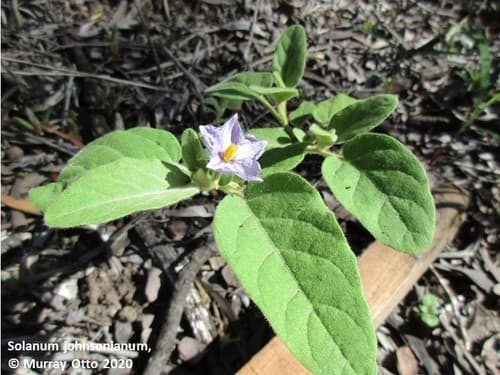
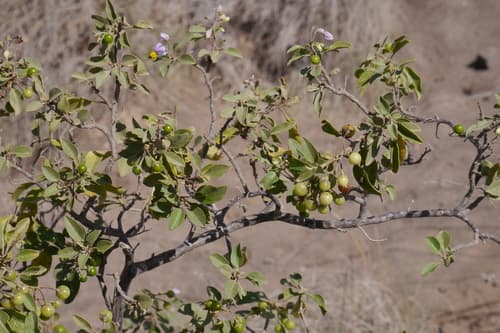
A thorny, woody shrub typically growing up to 1-2 meters tall, characterized by small, ovate to elliptic leaves, often with a slightly hairy texture. It produces small, star-shaped flowers that can be pale purple or white with yellow anthers. These are followed by clusters of small, spherical green berries that ripen to yellow or orange.