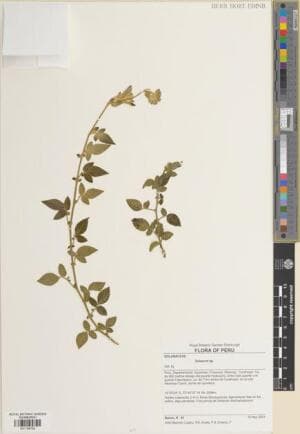
Solanum perlongistylum
Image: Balvin, Richard, Melchor-Castro, R. Briggitthe, Arista, Pamela & Chávez, Fiorella (cc0)
NameSolanum perlongistylum
Scientific NameSolanum perlongistylum G.J.Anderson, Martine, Prohens & Nuez
Common NamesWild Potato
Plant FamilySolanaceae
Natural HabitatEndemic to the high-altitude regions of the Peruvian Andes, often found in disturbed areas, roadsides, and agricultural margins.
Parts Used
Traditional UsesThere are no documented traditional medicinal uses for Solanum perlongistylum. Like many wild potato species, it is generally considered toxic due to the presence of glycoalkaloids.
Active ConstituentsGlycoalkaloids (e.g., solanine, chaconine)
Contraindications & WarningsConsumption of any part of Solanum perlongistylum is contraindicated due to the likely presence of toxic glycoalkaloids, which can cause gastrointestinal distress and neurological symptoms.
Cultivation NotesPrimarily cultivated for botanical research and genetic conservation. It thrives in well-drained soil, full sun, and cool temperatures, mimicking its native Andean habitat.
Rarityuncommon
Description
A wild potato species native to the Peruvian Andes, characterized by its herbaceous growth habit and simple leaves. It produces small flowers and is notable for its distinctively elongated style.