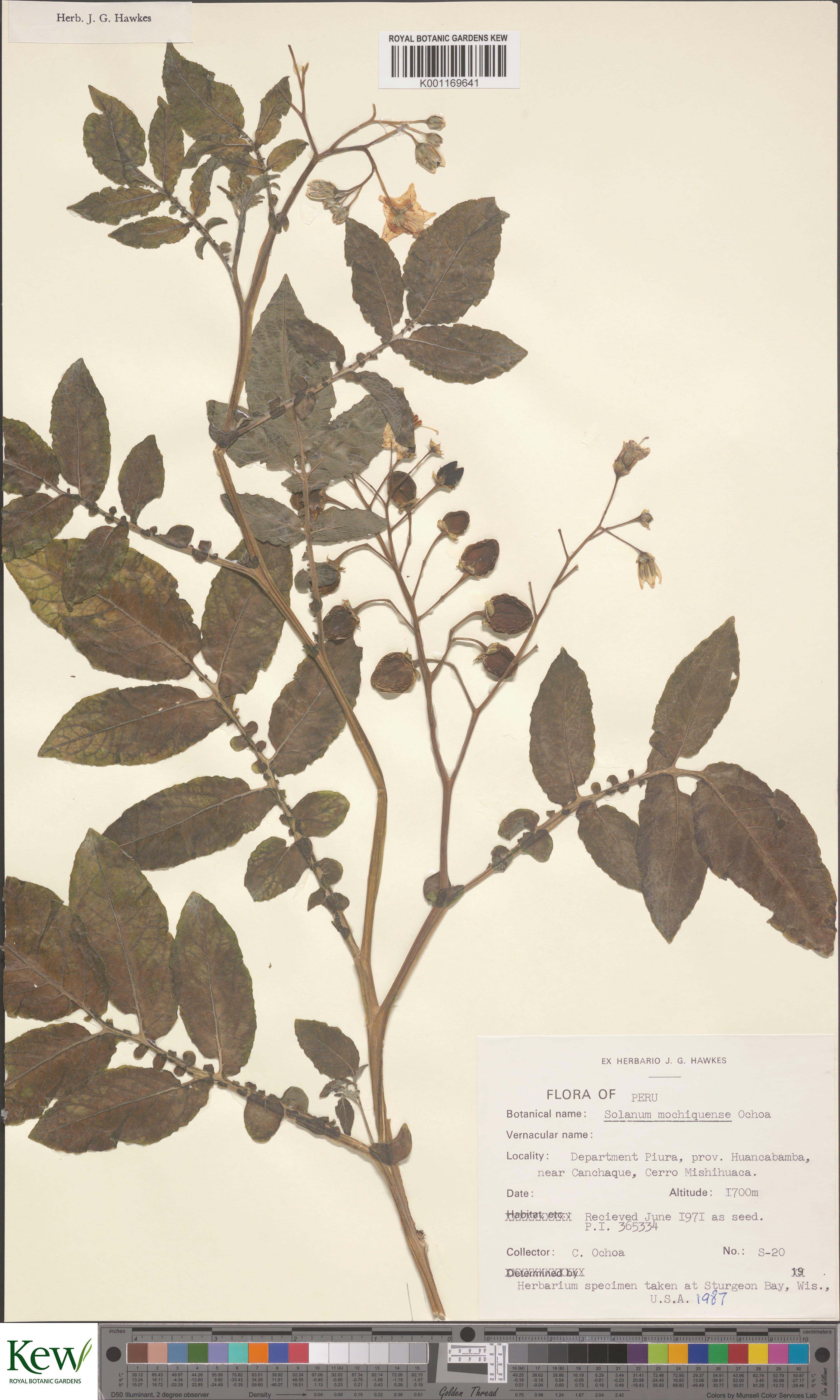
Solanum mochiquense
Image: Ochoa, C. (cc-by)
NameSolanum mochiquense
Scientific NameSolanum mochiquense Ochoa
Common NamesWild Potato (Peru)
Plant FamilySolanaceae
Natural HabitatNative to the high-altitude Andean regions of Peru, specifically found in areas like Piura province, Huancabamba, near Canchaque and Cerro Mishihuaca, at elevations around 1700 meters.
Parts Usedleaf,flower,fruit
Traditional UsesThis species is primarily valued for its genetic resources in potato breeding due to its disease resistance. It is not traditionally used for medicinal purposes due to the presence of toxic glycoalkaloids in all its parts.
Active ConstituentsGlycoalkaloids (e.g., solanine, chaconine)
Contraindications & WarningsAll parts of Solanum mochiquense, including leaves, flowers, and fruits, are considered toxic if ingested due to high concentrations of glycoalkaloids. It should not be used for any internal or external medicinal applications.
Cultivation NotesCultivated primarily for research and genetic conservation in botanical gardens or specialized agricultural settings. It thrives in well-drained soils and temperate highland climates mimicking its native Andean habitat.
Rarityuncommon
Description
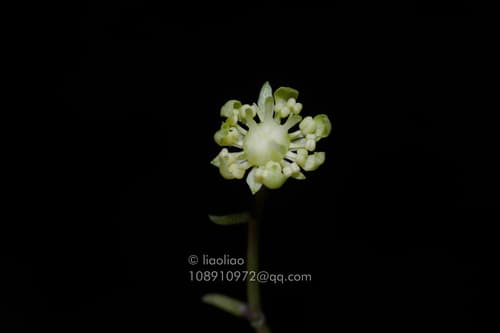
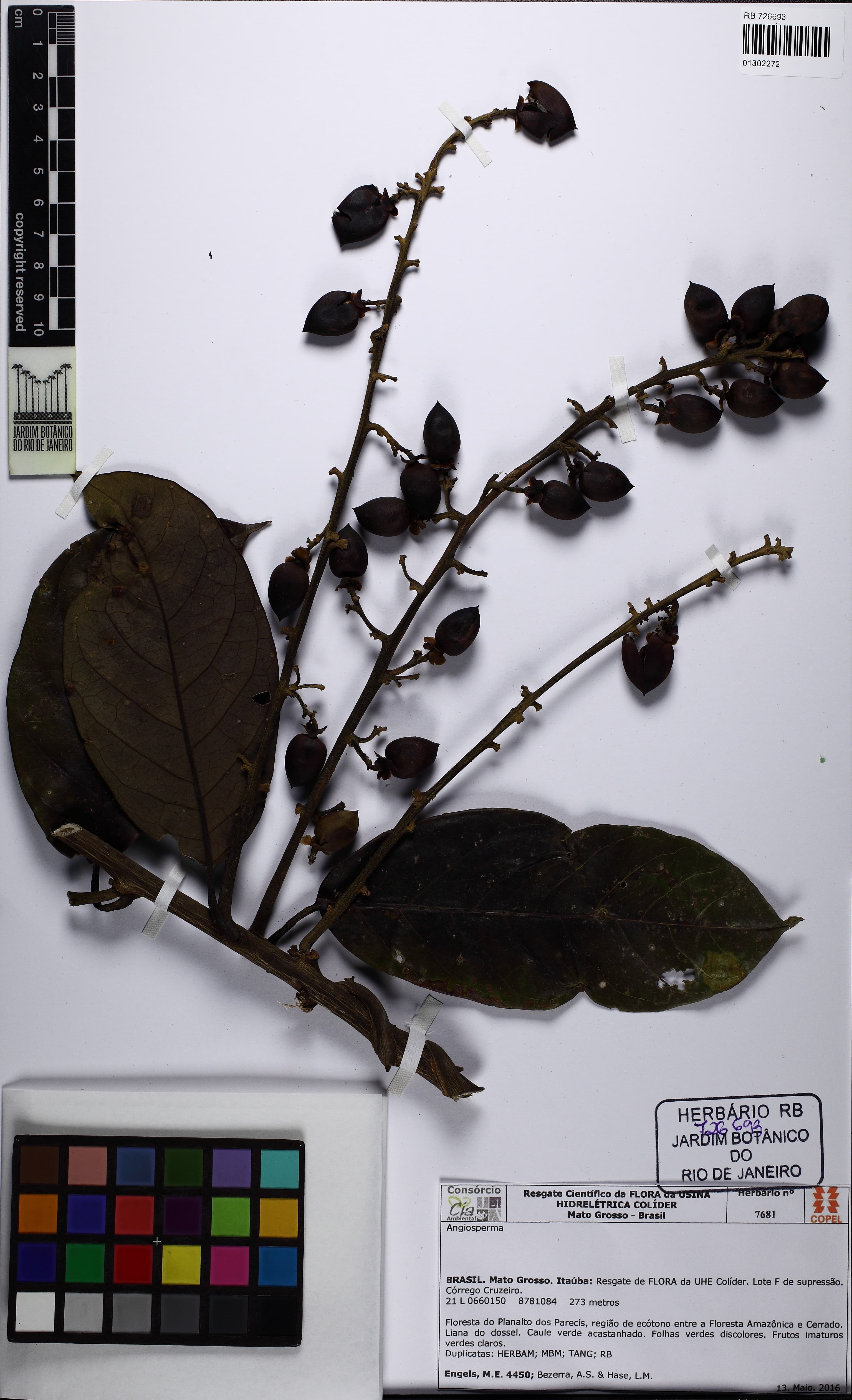
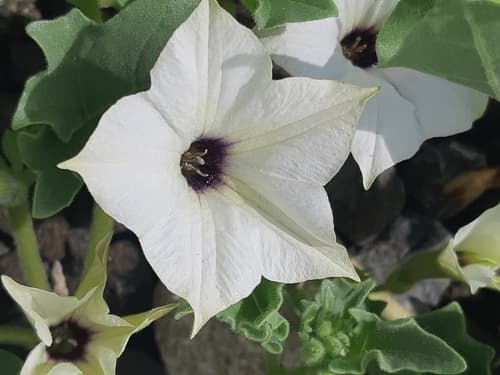
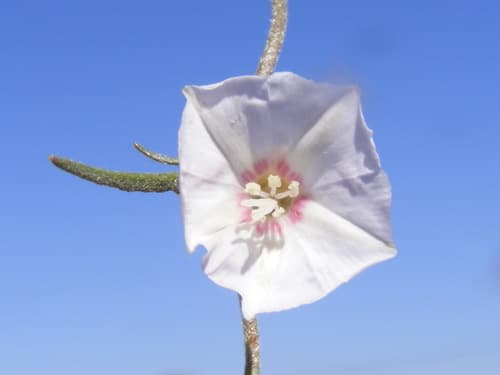
A herbaceous perennial wild potato species, characterized by its pinnately compound leaves, small pale flowers, and small, spherical green to purplish berries. It is a close relative of the cultivated potato, valued for its genetic diversity.