Solanum limbaniense
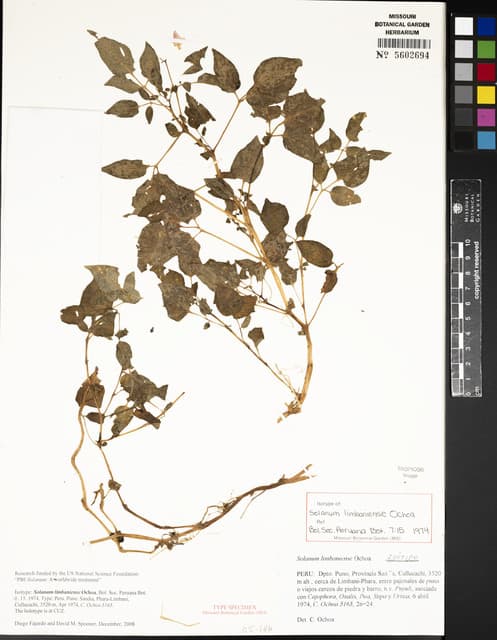
Image: MBG (cc-by-nc)
NameSolanum limbaniense
Scientific NameSolanum limbaniense
Plant FamilySolanaceae
Natural HabitatThis species is found in the Puno Department of Peru, specifically near Limbani-Phara in Cullucachi at an altitude of 3520 meters. It grows among grasslands and old stone and mud fences, often associated with other plants like Copiaphora, Oxalis, Poa, Stipa, and Urtica.
Parts Used
Traditional UsesNo specific traditional medicinal uses are documented for *Solanum limbaniense* in the provided context. Many species within the *Solanum* genus are known for containing steroidal glycoalkaloids, which can have diverse pharmacological effects, but also significant toxicity.
Active ConstituentsSteroidal glycoalkaloids, Flavonoids
Contraindications & WarningsGiven that many species within the *Solanum* genus contain toxic steroidal glycoalkaloids, *Solanum limbaniense* should be presumed to be potentially toxic if ingested. Consumption of raw plant material, especially fruits or leaves, could lead to gastrointestinal upset, neurological symptoms, or more severe poisoning.
Cultivation NotesThis plant thrives in high-altitude environments (around 3500m) in the Andes region of Peru. It prefers open, grassy areas or disturbed habitats like old fences, suggesting it can tolerate varying soil conditions and some sun exposure.
Rarityrare
Description
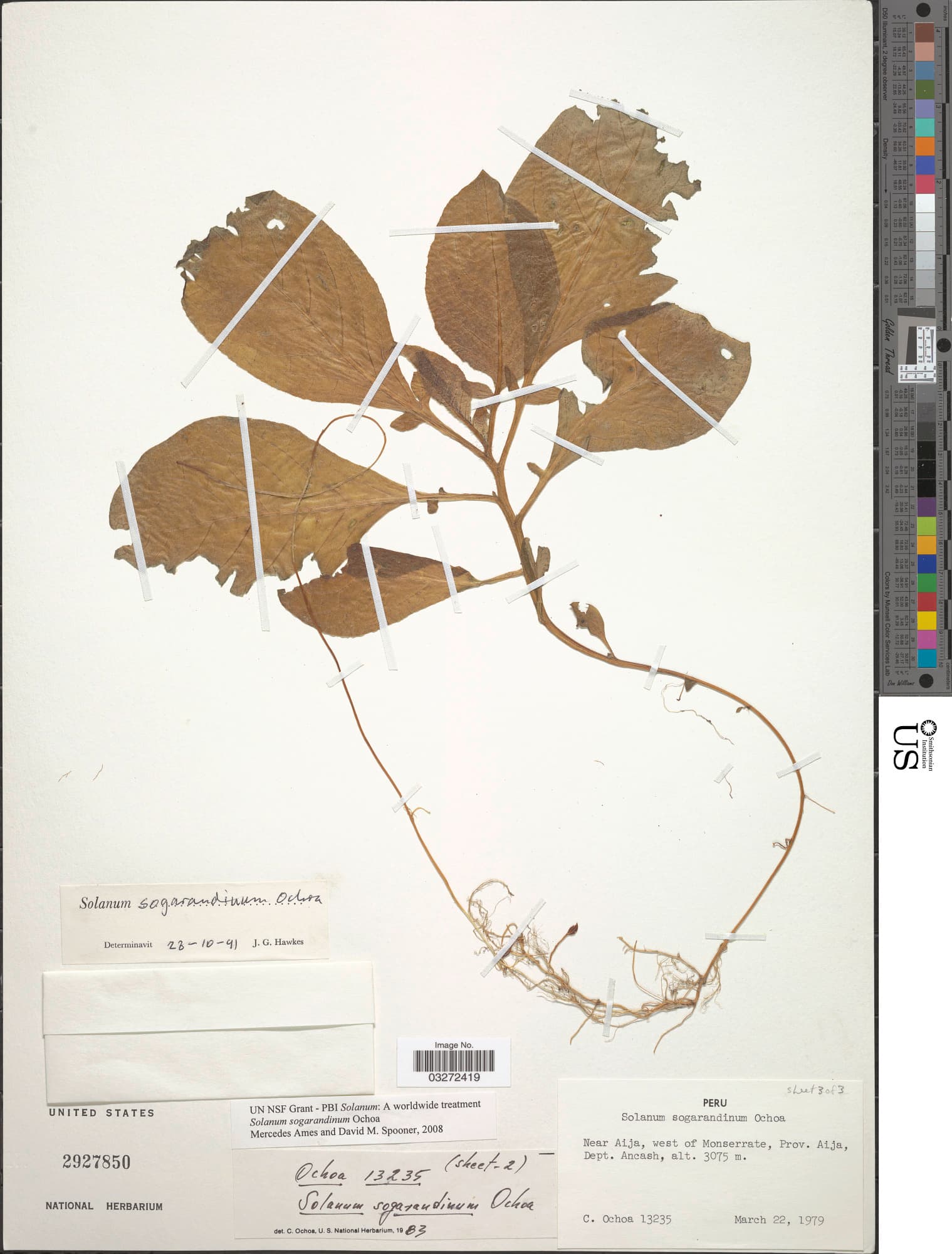
Solanum limbaniense is a herbaceous plant characterized by its simple, alternate leaves and a somewhat sprawling or climbing growth habit. The specimen displays a well-developed root system, slender stems, and ovate to lanceolate leaves, some showing signs of insect damage.