Solanum huancabambense
Image: Conveyor Belt (cc0)
NameSolanum huancabambense
Scientific NameSolanum huancabambense Ochoa
Plant FamilySolanaceae
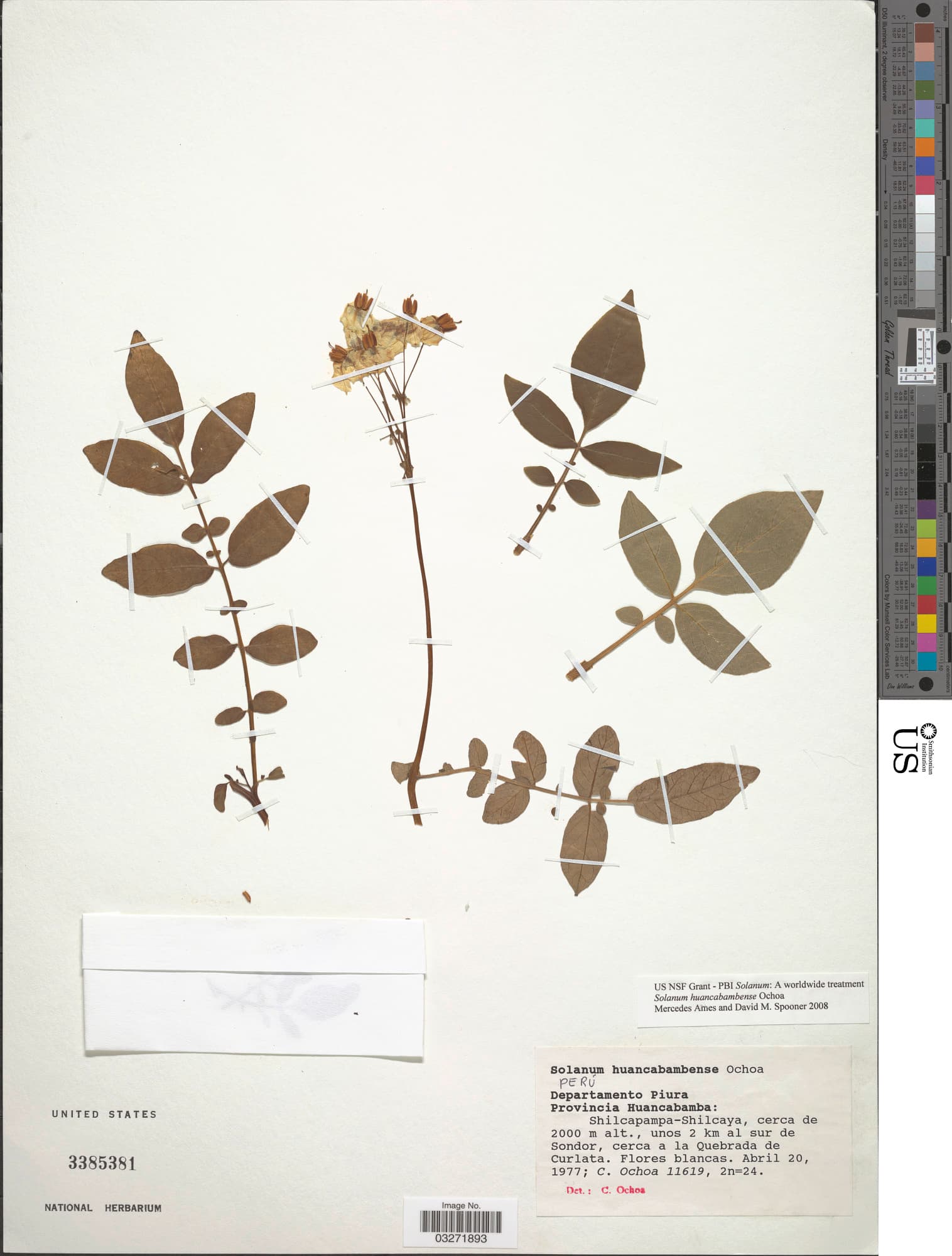
Natural HabitatFound in the Andes of Peru, specifically in the Departamento Piura, Provincia Huancabamba, near Shilcapampa-Shilcaya, at an altitude of approximately 2000 meters. It grows in areas near streams or quebradas.
Parts Used
Traditional UsesNo specific traditional medicinal uses are documented for Solanum huancabambense in the provided metadata or image. Many species within the Solanum genus are known for their edible tubers (potatoes) or fruits, while others are toxic.
Active ConstituentsGlycoalkaloids (e.g., solanine, chaconine - common in the genus Solanum, though specific levels and types for S. huancabambense are not detailed)
Contraindications & WarningsDue to the presence of glycoalkaloids common in the Solanum genus, ingestion of raw or improperly prepared plant parts may be toxic. Specific contraindications for medicinal use of Solanum huancabambense are not documented.
Cultivation NotesNot detailed in the provided information. As a wild potato species from high-altitude regions, it would likely prefer cool climates and well-drained soil, similar to other Andean Solanum species.
Rarityuncommon
Description
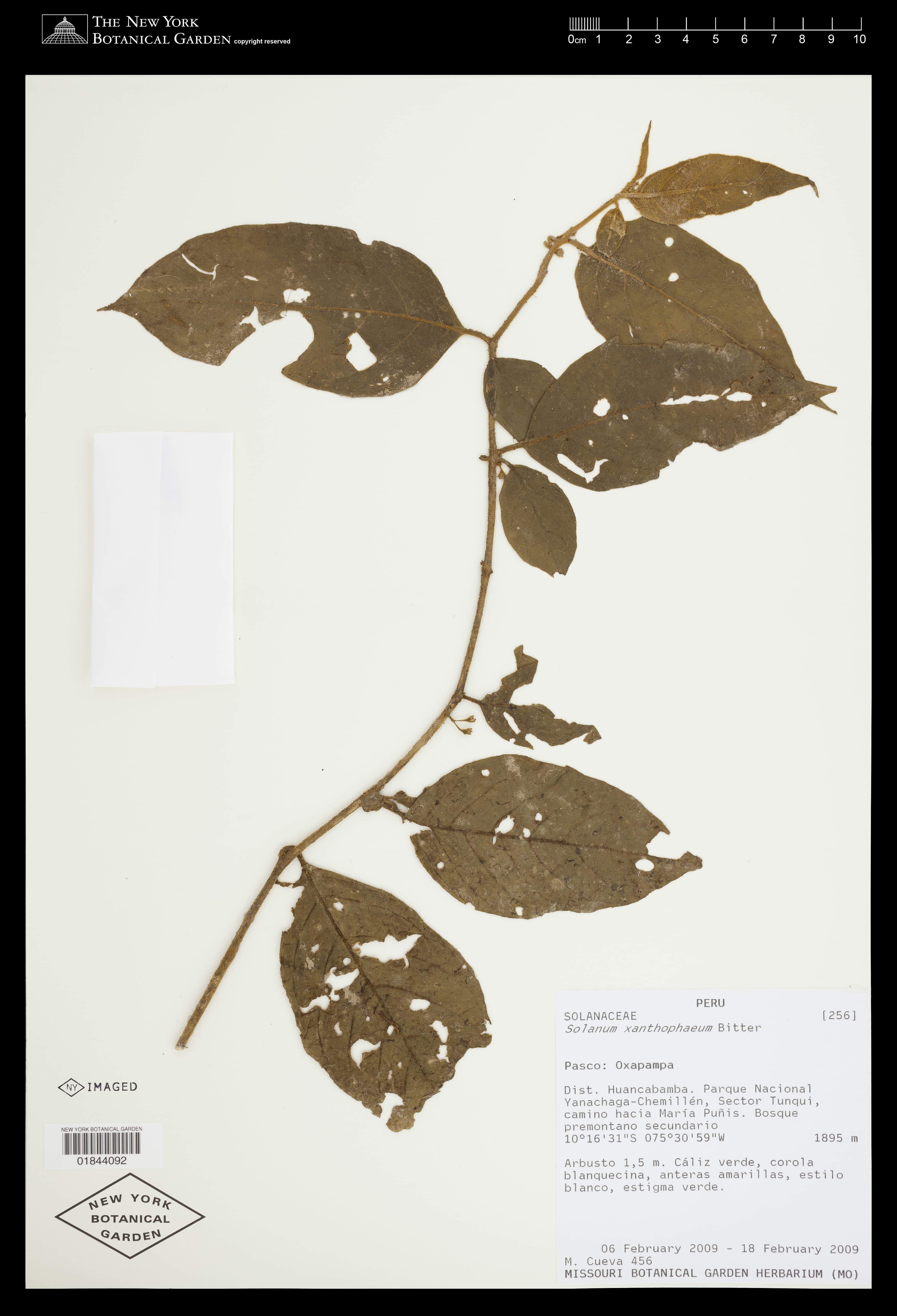
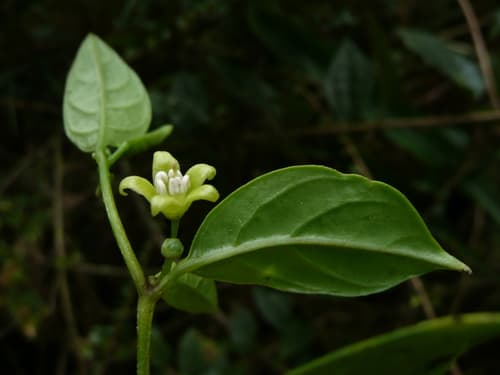
A herbaceous plant, likely a wild potato species, characterized by simple stems and ovate to elliptic leaves. The specimen shows dried plant material with what appear to be small, dried flowers, noted as 'Flores blancas' (white flowers) in the collection notes.