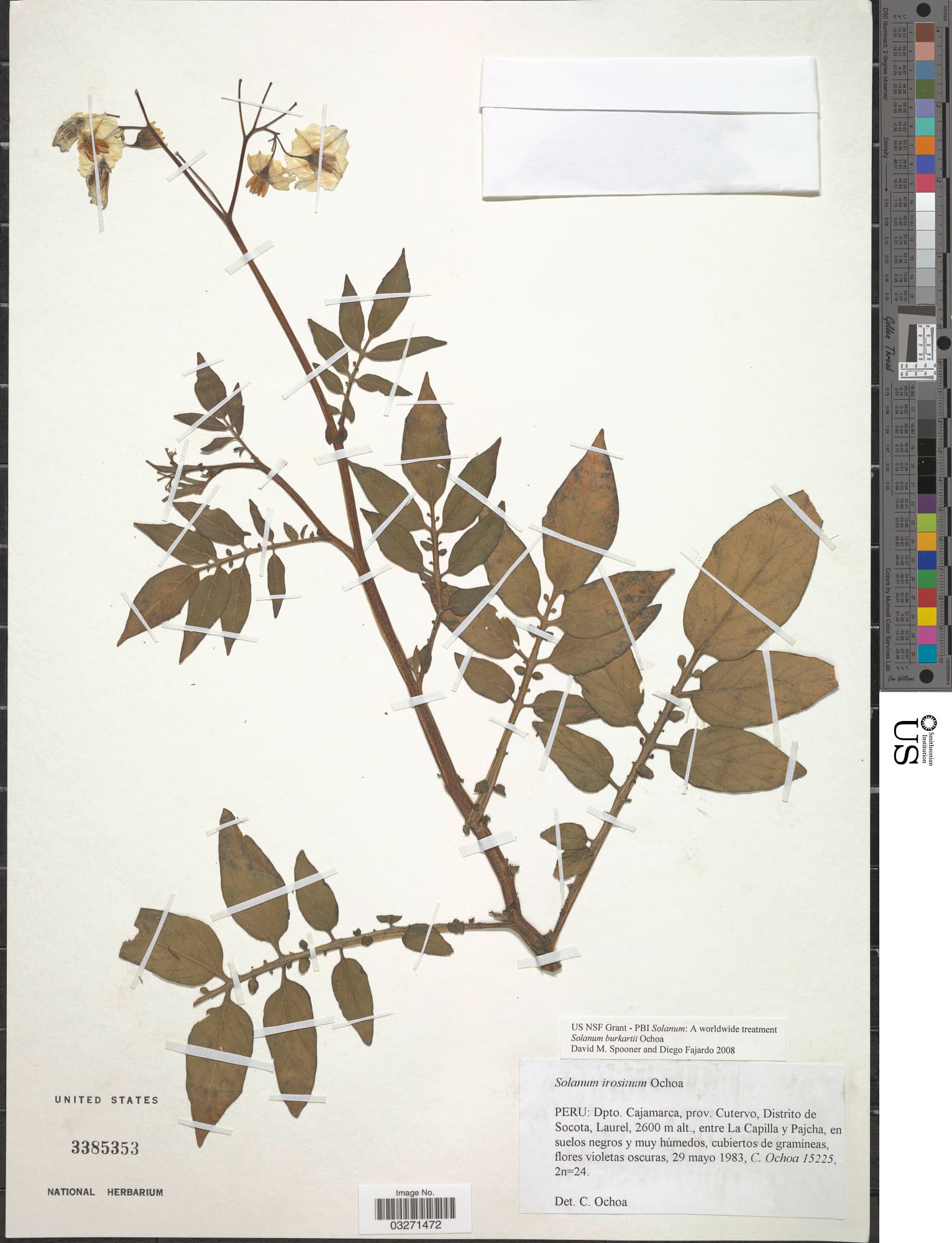
Solanum burkartii
Image: Conveyor Belt (cc0)
NameSolanum burkartii
Scientific NameSolanum burkartii Ochoa
Plant FamilySolanaceae
Natural HabitatNative to the Andean region of Peru, specifically in the Department of Cajamarca, Cutervo province, Socota district, Laurel. It thrives at altitudes around 2600 meters in black, very humid soils, often found among graminoids (grasses).
Parts Usedwhole_plant
Medicinal Actionsanti-inflammatory, antimicrobial
Traditional UsesSpecific traditional medicinal uses for Solanum burkartii are not documented in the provided sources or general ethnobotanical literature. Many species within the Solanum genus are known to contain steroidal glycoalkaloids, which can be toxic if ingested.
Active ConstituentsSteroidal glycoalkaloids
Preparation Methodspowder
Contraindications & WarningsDue to the potential presence of toxic steroidal glycoalkaloids, common in the Solanum genus, consumption or topical application of Solanum burkartii without specific knowledge of its safety and dosage is highly cautioned. Specific contraindications for this species are not documented.
Cultivation NotesPrefers high-altitude, humid environments with rich, black soils. Requires conditions similar to its native Andean habitat in Peru, including consistent moisture and cool temperatures.
Rarityuncommon
Description
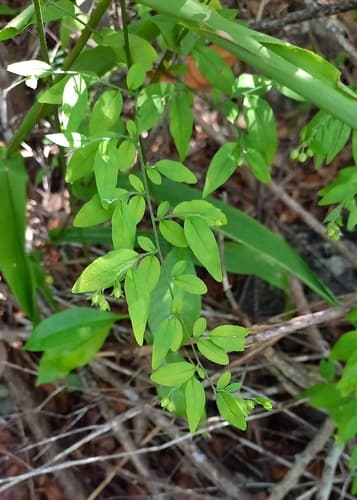
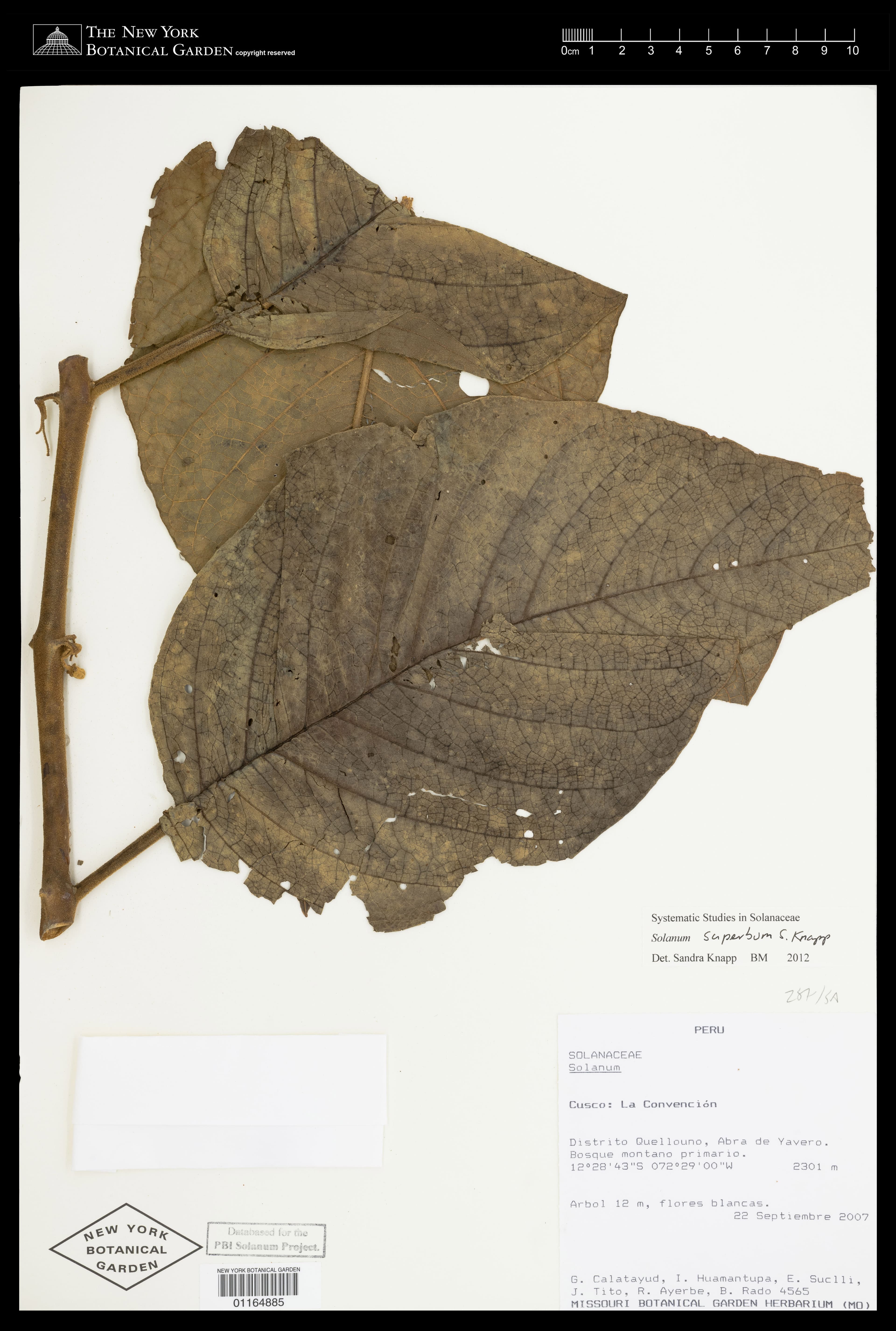
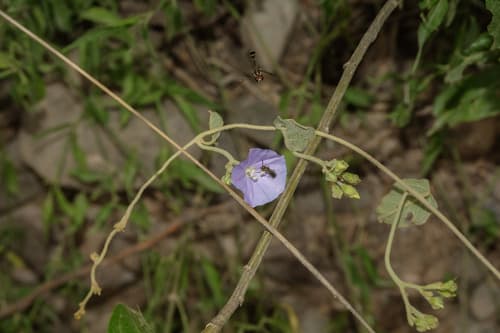
Solanum burkartii is a herbaceous plant characterized by its simple, alternate leaves. It produces dark violet flowers, as noted in its collection data, though the dried specimen shows pale flowers. This species is part of the diverse Solanum genus, often recognized for its varied morphology.