Solanum barbulatum
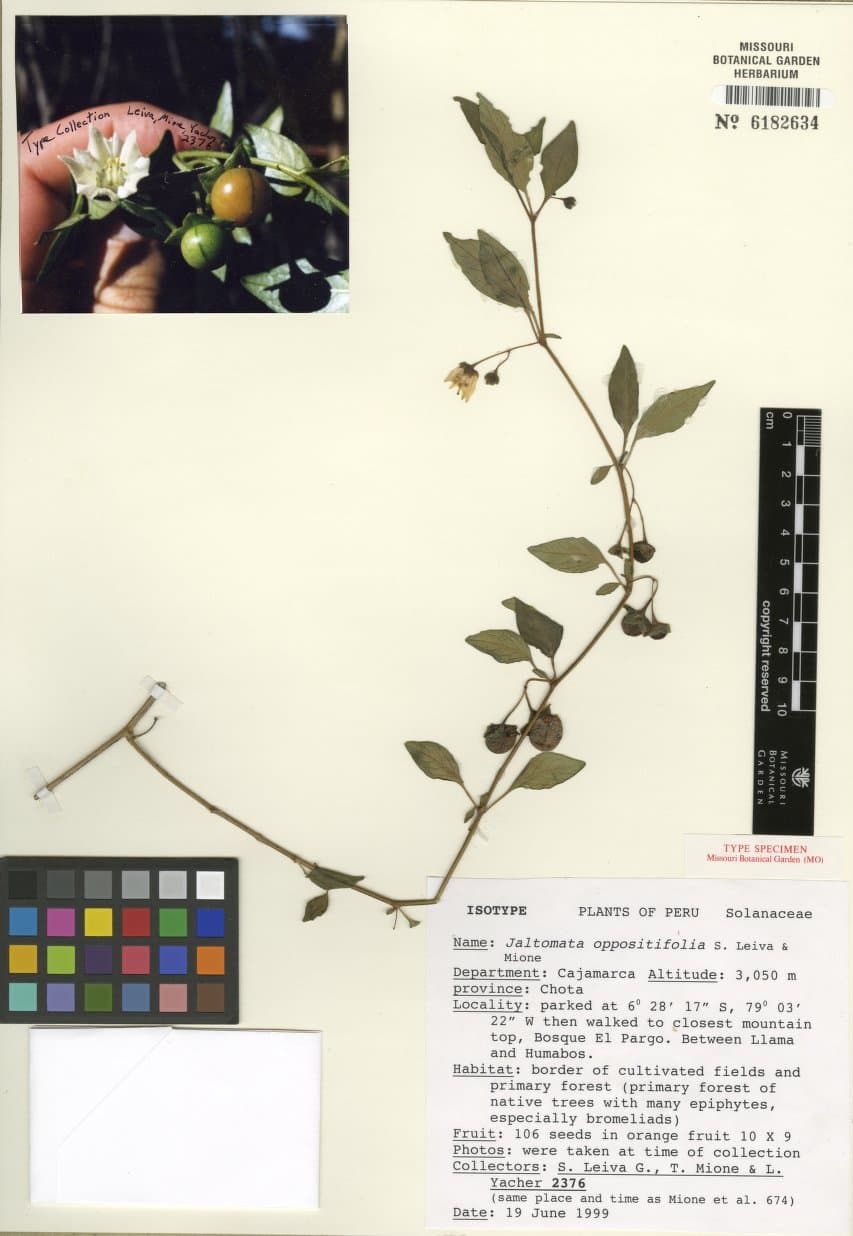
Image: MBG (cc-by-nc)
NameSolanum barbulatum
Scientific NameSolanum barbulatum Zahlbr.
Plant FamilySolanaceae
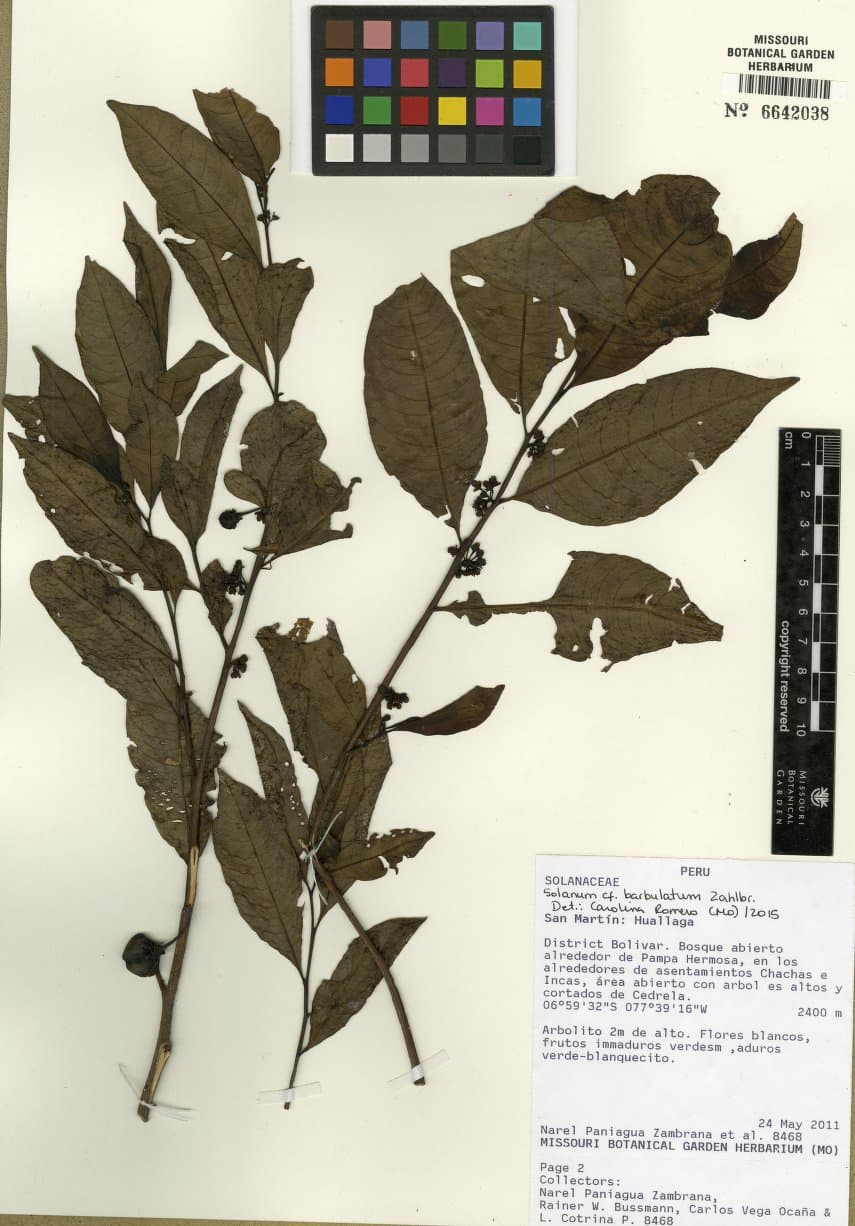
Natural HabitatThis species is native to the open forests of the Peruvian Andes, specifically found around Pampa Hermosa in the San Martín region of Huallaga. It thrives in open areas with tall trees, often near human settlements, at an altitude of approximately 2400 meters.
Parts Used
Traditional UsesSpecific traditional medicinal uses for Solanum barbulatum are not widely documented in readily available ethnobotanical literature. While many species within the Solanum genus are known for various medicinal properties, specific applications for this particular species are unclear.
Contraindications & WarningsSpecific contraindications for Solanum barbulatum are not documented. However, many species in the Solanum genus contain steroidal glycoalkaloids which can be toxic, especially in unripe fruits and leaves. Due to the potential presence of these compounds, caution is advised, and consultation with an expert is recommended before any internal or external use.
Cultivation NotesOriginating from high-altitude open forests, Solanum barbulatum likely prefers well-drained soil and a climate with moderate temperatures, tolerating cooler conditions due to its elevation. It would benefit from conditions mimicking its natural habitat, including ample sunlight and possibly some protection from extreme cold.
Rarityuncommon
Description
Solanum barbulatum is a small tree or shrub, typically growing up to 2 meters tall. It is characterized by its ovate to elliptic leaves, which appear dark and possibly pubescent in the specimen. The plant produces white flowers and small, spherical fruits that are initially green and mature to a greenish-white color.