Solanum apiculatum
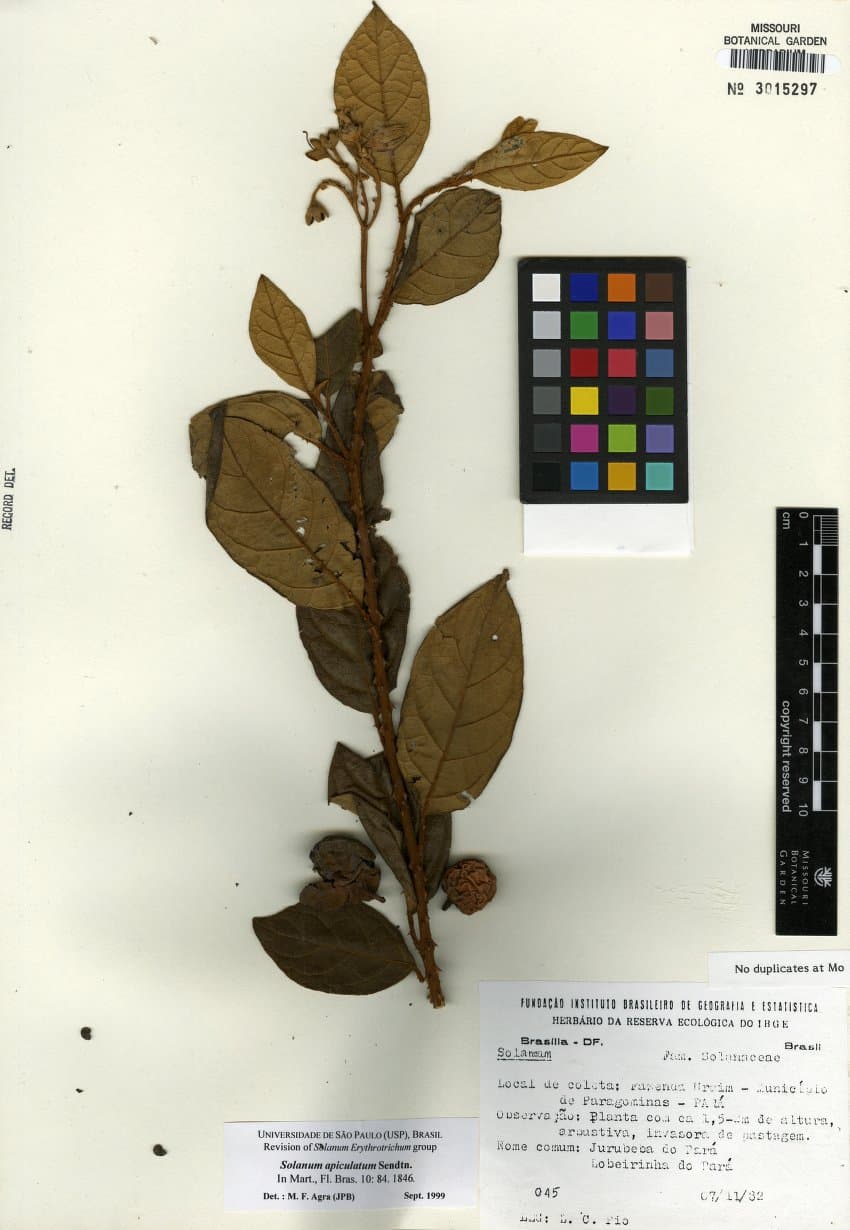
Image: MBG (cc-by-nc)
NameSolanum apiculatum
Scientific NameSolanum apiculatum Sendtn.
Common NamesJurubeba do Pará, Robeirinha do Pará
Plant FamilySolanaceae
Natural HabitatThis species is found in tropical and subtropical regions, specifically noted as an invader of pastures in areas like Paragominas, Pará, Brazil. It thrives in disturbed, open environments.
Parts Usedleaf,fruit,whole_plant
Medicinal Actionsanti-inflammatory, antioxidant
Traditional UsesKnown by the common name 'Jurubeba do Pará', this plant is traditionally used in Brazilian folk medicine, similar to other Jurubeba species, for digestive issues, liver complaints, and as a general tonic. It is also employed for fevers and inflammatory conditions.
Active Constituentssteroidal glycoalkaloids, flavonoids, saponins
Preparation Methodsinfusion, decoction, tincture, powder
Contraindications & WarningsAs with many Solanum species, caution is advised due to the presence of glycoalkaloids, which can be toxic in high doses. Contraindicated for pregnant or nursing women, and individuals with liver conditions or those taking medications that interact with liver function.
Cultivation NotesBeing described as a 'pasture invader', Solanum apiculatum is likely a hardy and vigorous grower, preferring full sun and well-drained soils. It is adapted to tropical and subtropical climates.
Raritycommon
Description
Solanum apiculatum is a shrubby plant, typically growing to about 1.5 meters in height. It features ovate leaves and produces small, rounded fruits, characteristic of many species within the Solanum genus.