smallflower 'aiea
Namesmallflower 'aiea
Scientific NameNothocestrum latifolium
Common Namessmallflower 'aiea, 'aiea
Plant FamilySolanaceae
Natural HabitatEndemic to the Hawaiian Islands, this plant is found in dry to mesic forests and shrublands, typically at elevations between 300 and 1,200 meters. It thrives in various soil types, often on lava flows.
Parts Usedbark,leaf,flower
Medicinal Actionsantimicrobial, anti-inflammatory
Traditional UsesIn traditional Hawaiian medicine (Laʻau Lapaʻau), the bark and leaves of 'aiea were primarily used as a strong purgative and emetic to cleanse the body. The sap from the plant was also applied topically to treat skin sores, cuts, and infections.
Active ConstituentsSteroidal alkaloids, Solanocapsine-type alkaloids
Preparation Methodsdecoction, poultice, infusion
Contraindications & WarningsThe plant is considered poisonous due to its alkaloid content. Ingestion can cause severe gastrointestinal distress, vomiting, and diarrhea. It should not be used internally without expert guidance and extreme caution, and is contraindicated for pregnant or nursing women and young children.
Cultivation NotesNothocestrum latifolium is a slow-growing, endemic Hawaiian species that prefers well-drained, rocky or volcanic soils. It thrives in full sun to partial shade and requires moderate watering once established, being sensitive to frost and needing protection from strong winds. Propagation is typically by seed.
Rarityrare
Description
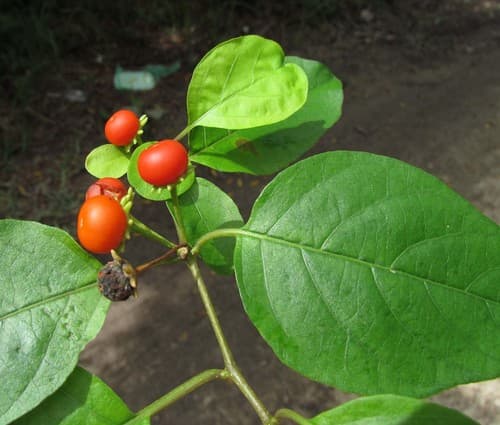
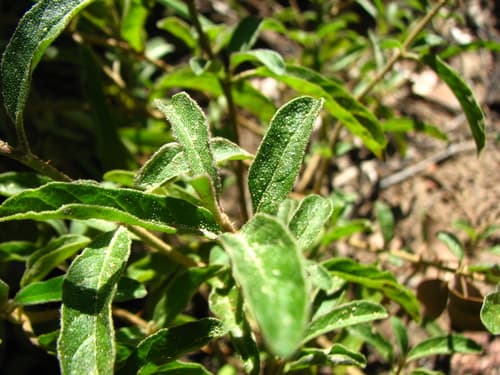
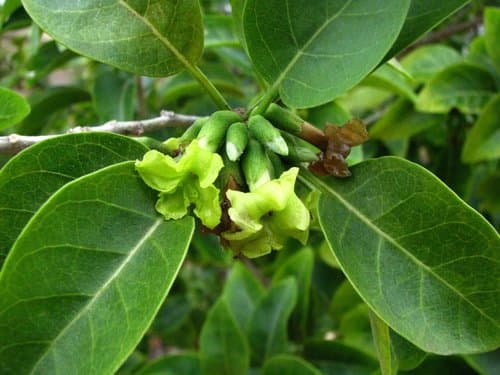
Nothocestrum latifolium is a shrub or small tree, typically growing 3-10 meters tall, featuring large, ovate to elliptic leaves. It produces clusters of small, greenish-yellow, tubular flowers that bloom from the leaf axils, followed by small, orange-red berries.