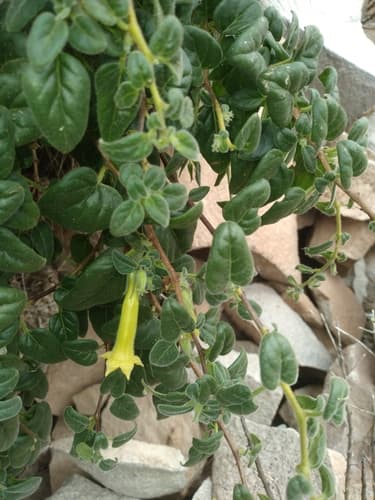
Salpichroa hirsuta
NameSalpichroa hirsuta
Scientific NameSalpichroa hirsuta
Common NamesHairy Salpichroa, Uvita de Campo
Plant FamilySolanaceae
Natural HabitatNative to South America, particularly Argentina, Bolivia, and Chile, it thrives in dry, rocky, or disturbed areas. It is commonly found in scrublands, roadsides, and open woodlands.
Parts Usedleaf,whole_plant
Medicinal Actionsanalgesic, anti-inflammatory, diuretic
Traditional UsesTraditionally, Salpichroa hirsuta has been used in South American folk medicine for its analgesic and anti-inflammatory properties. It is often applied externally as a poultice for muscle pain, sprains, and bruises, and sometimes taken internally as an infusion for rheumatic conditions or as a diuretic.
Active ConstituentsSteroidal alkaloids, Flavonoids, Saponins
Preparation Methodsinfusion, poultice
Contraindications & WarningsDue to its membership in the Solanaceae family, which often contains toxic alkaloids, Salpichroa hirsuta should be used with extreme caution. Potential for toxicity, especially with internal use or overdose. Not recommended for pregnant or breastfeeding women, or young children. Interactions with central nervous system depressants or anticholinergic drugs are possible.
Cultivation NotesThis plant is generally hardy and adaptable, preferring well-drained soil and full sun to partial shade. It can tolerate dry conditions once established and is often considered a weed in some regions due to its vigorous growth.
Raritycommon
Description
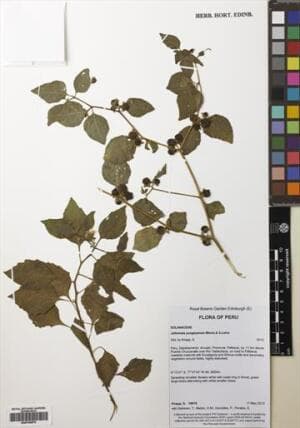
Salpichroa hirsuta is a perennial herbaceous plant, often sprawling or climbing, characterized by its small, ovate to elliptic, often hairy leaves. It produces solitary, pendulous, tubular to bell-shaped yellow flowers, which are followed by small, berry-like fruits.