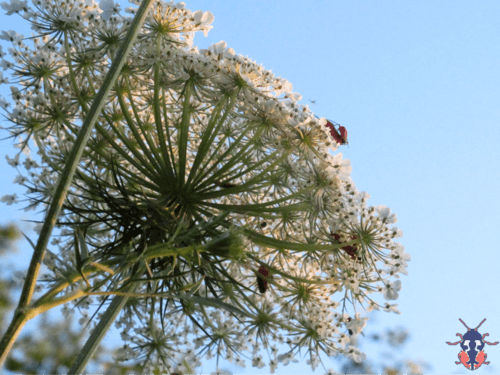
Queen Anne's Lace
NameQueen Anne's Lace
Scientific NameDaucus carota
Common NamesQueen Anne's Lace, Wild Carrot, Bird's Nest
Plant FamilyApiaceae
Natural HabitatCommonly found in meadows, fields, roadsides, disturbed areas, and waste ground across temperate regions worldwide.
Parts Usedroot,seed,flower,leaf
Medicinal Actionsdiuretic, carminative, antimicrobial, antioxidant, anti-inflammatory
Traditional UsesTraditionally, the roots were used as a diuretic for kidney and bladder complaints, while the seeds were employed as a carminative for digestive issues and historically as an emmenagogue or abortifacient. The leaves and flowers have been used in poultices for skin conditions, and the young roots are edible.
Active ConstituentsCarotol, daucol, alpha-pinene, limonene, flavonoids, carotenoids
Preparation Methodsinfusion, decoction, tincture, essential oil, poultice, powder
Contraindications & WarningsPregnant women should avoid the seeds due to their emmenagogue and abortifacient properties. Contact with the plant sap can cause photosensitivity and dermatitis in some individuals. Positive identification is crucial as it can be confused with highly poisonous hemlocks (e.g., *Conium maculatum*).
Cultivation NotesThis plant is easily grown from seed in full sun to partial shade and well-drained soil. It is a biennial, flowering in its second year, and can readily self-seed, potentially becoming invasive in some garden settings.
Raritycommon
Description
Queen Anne's Lace is a biennial herbaceous plant characterized by its feathery, finely divided leaves and distinctive flat-topped white flower clusters (umbels), often featuring a single dark red or purple floret in the center. It develops a long, slender taproot, which is the wild ancestor of the cultivated carrot.