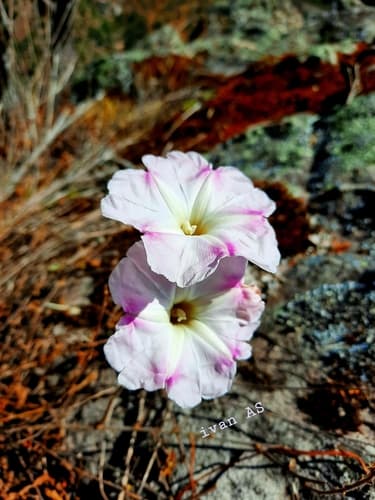
Pruinose Morning Glory
NamePruinose Morning Glory
Scientific NameIpomoea pruinosa
Common NamesPruinose Morning Glory, Morning Glory
Plant FamilyConvolvulaceae
Natural HabitatNative to dry, rocky, and often sandy soils in savannas, grasslands, and open woodlands, primarily found in Brazil. It thrives in sunny, well-drained conditions.
Parts Usedroot,seed
Medicinal Actionsanti-inflammatory, antioxidant
Traditional UsesSpecific traditional medicinal uses for Ipomoea pruinosa are not well-documented in readily available sources. However, other species within the Ipomoea genus are traditionally used as purgatives for digestive issues, for skin conditions, and some species' seeds are are known for psychoactive properties.
Active ConstituentsResin glycosides, Ergoline alkaloids (potential)
Preparation Methodsdecoction, powder, tincture
Contraindications & WarningsDue to the potential presence of purgative resin glycosides and psychoactive ergoline alkaloids (in seeds of some related species), caution is advised. Not recommended for pregnant or breastfeeding individuals, or those with gastrointestinal disorders. Avoid use without expert guidance.
Cultivation NotesThis plant prefers full sun and well-drained, often sandy or rocky soils. It is drought-tolerant once established and can be propagated from seeds. It is best suited for warm climates.
Rarityuncommon
Description
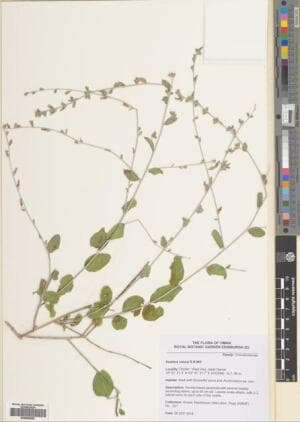
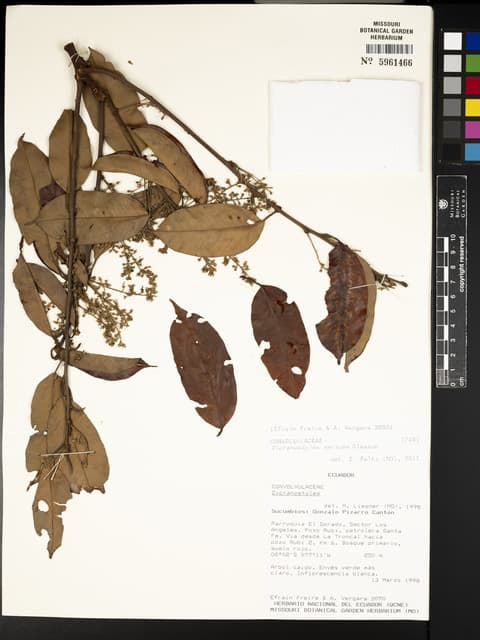
Ipomoea pruinosa is a perennial vine or subshrub, often with a woody base, characterized by its funnel-shaped flowers. These flowers are typically white with distinct pink or purplish stripes, as seen in the image. The plant may exhibit a pruinose (waxy/frosty) coating on its stems or leaves.