Prairie Dodder
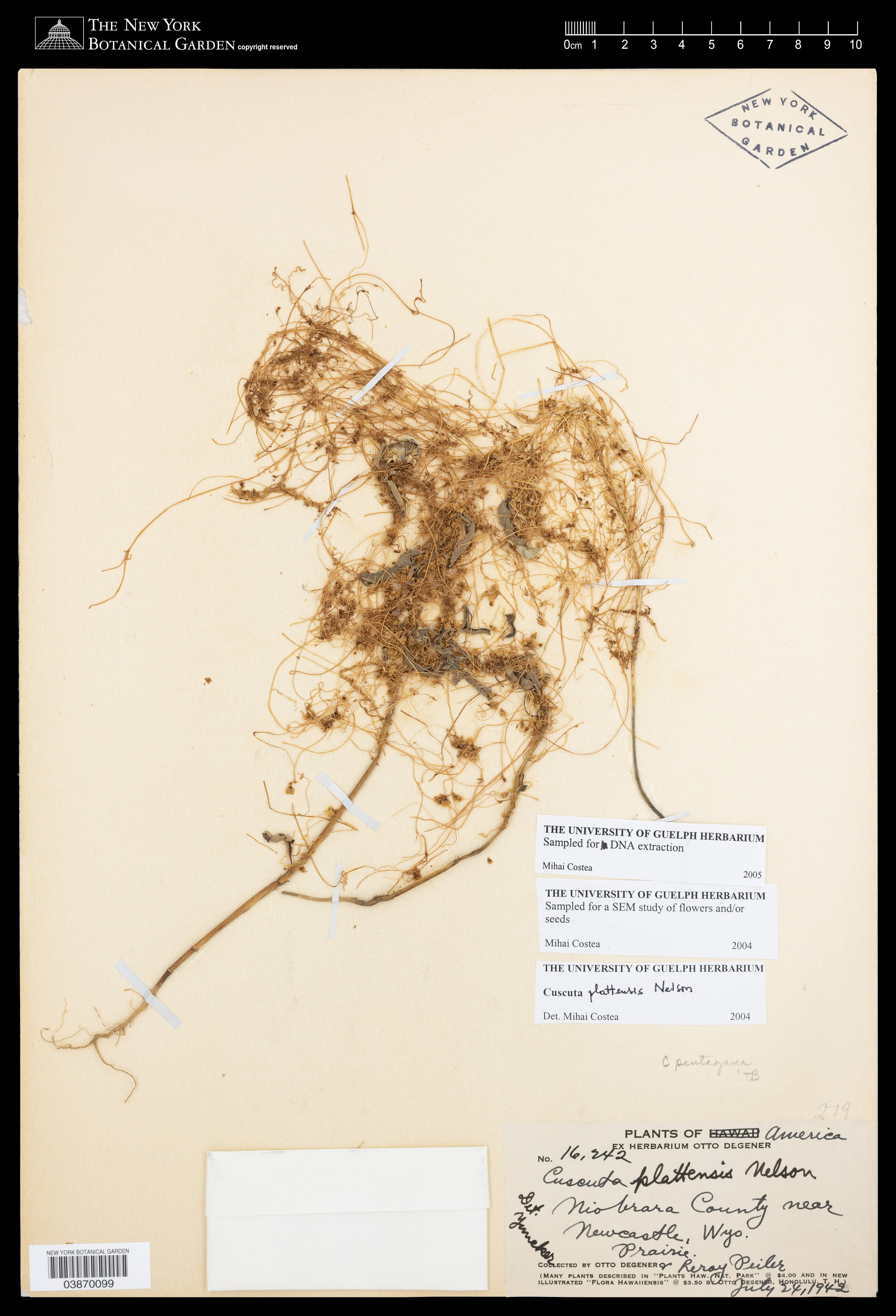
Image: The New York Botanical Garden (cc-by)
NamePrairie Dodder
Scientific NameCuscuta plattensis A.Nelson
Common NamesPrairie Dodder, Platte Dodder
Plant FamilyConvolvulaceae
Natural HabitatTypically found in prairies, grasslands, and disturbed areas across central North America, parasitizing a variety of herbaceous plants and shrubs. It thrives in sunny locations with suitable host vegetation.
Parts Usedwhole_plant,seed
Medicinal Actionsdiuretic, antioxidant, anti-inflammatory
Traditional UsesWhile specific traditional uses for *Cuscuta plattensis* are less documented, other *Cuscuta* species (like *C. chinensis* and *C. japonica*) are widely used in traditional medicine for kidney and liver support, to improve vision, and as a tonic for reproductive health. It may be used as a mild diuretic or for general debility.
Active Constituentsflavonoids, lignans, polysaccharides
Preparation Methodsinfusion, decoction, powder
Contraindications & WarningsDue to its parasitic nature and potential for toxicity, internal use should be approached with caution and under expert guidance. Pregnant or breastfeeding women should avoid use. May interact with medications affecting liver or kidney function.
Cultivation NotesAs a parasitic plant, *Cuscuta plattensis* cannot be cultivated independently. It requires a suitable host plant to germinate and grow, making controlled cultivation for medicinal purposes challenging and generally not practiced.
Raritycommon
Description
Cuscuta plattensis is a parasitic annual vine characterized by its slender, yellowish-orange, leafless stems that twine around host plants. It produces small, clustered white or cream-colored flowers and tiny spherical fruits containing seeds.