Pacific Yew
Image: Jason Hollinger (CC BY 2.0)
NamePacific Yew
Scientific NameTaxus brevifolia
Common NamesPacific Yew, Western Yew, Oregon Yew
Plant FamilyTaxaceae
Natural HabitatTypically found in cool, moist, shady environments, often as an understory tree in coniferous forests, along streams, and in ravines. It thrives in well-drained, rich soils.
Parts Usedbark,leaf
Medicinal Actionsanti-inflammatory
Traditional UsesHistorically, various Indigenous peoples of the Pacific Northwest used Pacific Yew for medicinal purposes, often with great caution due to its toxicity. Preparations from the bark and leaves were used externally for pain relief, rheumatism, and as poultices for wounds. Internal use was extremely rare and dangerous.
Active ConstituentsPaclitaxel, Taxanes, Taxine alkaloids
Preparation Methodsdecoction, poultice
Contraindications & WarningsAll parts of the Pacific Yew, except the fleshy aril, are highly toxic and potentially fatal if ingested. Symptoms of poisoning include dizziness, dry mouth, dilated pupils, abdominal pain, vomiting, weakness, irregular heartbeat, and respiratory failure. It should never be used internally without strict medical supervision and pharmaceutical processing.
Cultivation NotesPrefers cool, moist, well-drained acidic soils and partial to full shade. It is a slow-growing tree, often found in the understory. Requires consistent moisture, especially when young.
Rarityuncommon
Description
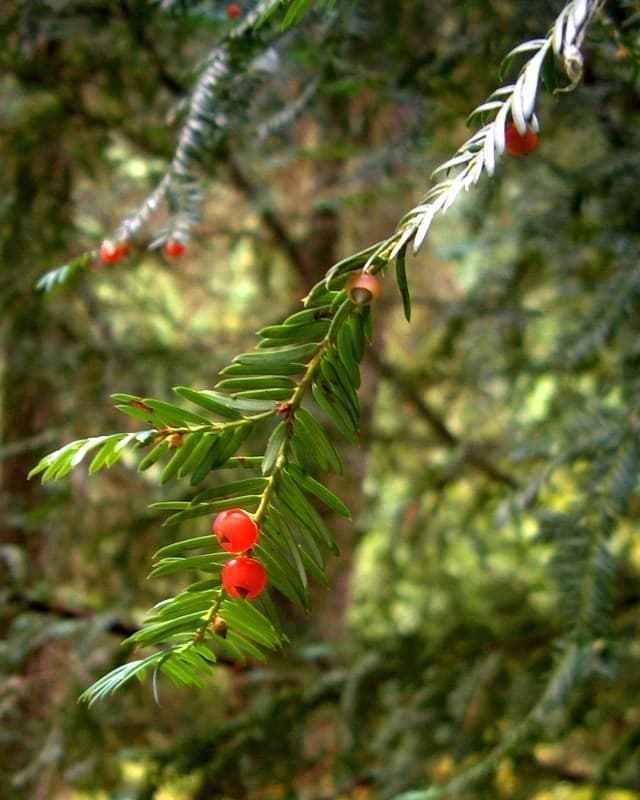
A slow-growing, coniferous evergreen tree native to the Pacific Northwest of North America. It features flat, dark green needles arranged spirally on slender branches and produces distinctive red, fleshy arils that partially enclose a single seed.