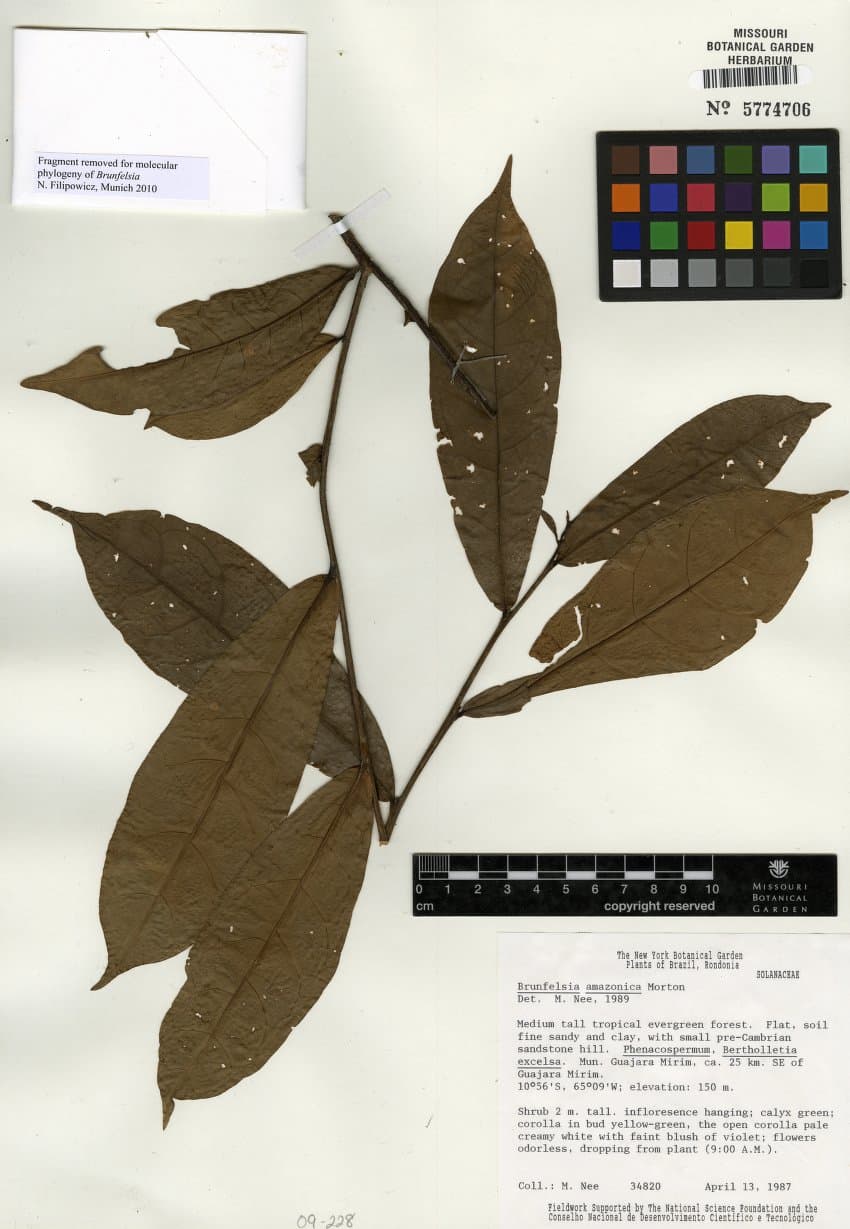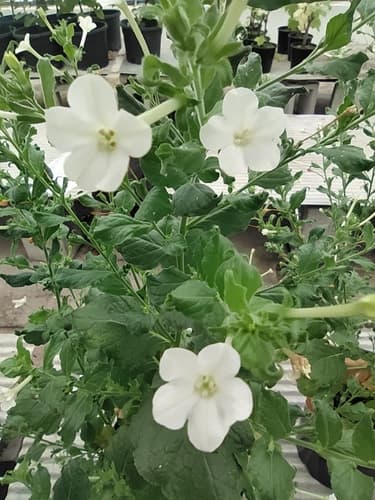
Nicotiana benthamiana
NameNicotiana benthamiana
Scientific NameNicotiana benthamiana
Common NamesBentham's Tobacco, Benthamiana Tobacco
Plant FamilySolanaceae
Natural HabitatNative to arid and semi-arid regions of northern Australia, typically found in sandy soils, often along watercourses or in disturbed areas.
Parts Usedleaf,whole_plant
Medicinal Actionsnervine, analgesic
Traditional UsesNicotiana benthamiana is not traditionally used as a medicinal herb. Its primary significance is as a model organism in plant science, particularly for transient gene expression and virus research, due to its susceptibility to many plant viruses and its genetic tractability. While other Nicotiana species (like N. tabacum) have historical ritualistic and medicinal uses (e.g., as a stimulant, sedative, or for pain relief, often with significant toxicity), N. benthamiana itself lacks such widespread traditional applications.
Active ConstituentsNicotine, pyridine alkaloids, diterpenes
Preparation Methodspowder
Contraindications & WarningsDue to the presence of alkaloids, including nicotine, ingestion can be toxic. Symptoms may include nausea, vomiting, dizziness, and in severe cases, cardiac effects and respiratory paralysis. Not recommended for internal use.
Cultivation NotesEasily cultivated in greenhouses or controlled environments. Prefers well-drained soil, full sun to partial shade, and consistent moisture. It is a short-day plant, meaning it flowers when day length is shorter. Fast-growing and readily propagated from seed.
Raritycommon
Description
A small, fast-growing herbaceous plant characterized by its sticky, hairy leaves and clusters of small, white, tubular flowers. It is a close relative of cultivated tobacco and is widely used as a model organism in plant molecular biology and virology research.