Nasa puma-chini
NameNasa puma-chini
Scientific NameImpatiens sp.
Common NamesNasa puma-chini, Balsam, Touch-me-not
Plant FamilyBalsaminaceae
Natural HabitatTypically found in moist, shaded environments such as forest understories, stream banks, and damp clearings in tropical and subtropical regions.
Parts Usedleaf,flower,whole_plant
Medicinal Actionsanti-inflammatory, analgesic, antimicrobial
Traditional UsesTraditionally, the plant is used topically as a poultice or compress for treating skin inflammations, rashes, insect bites, and minor burns. Some indigenous practices also utilize it for its anti-inflammatory and analgesic properties, particularly for localized pain.
Active Constituentsflavonoids, phenolic compounds, naphthoquinones
Preparation Methodspoultice, infusion, tincture
Contraindications & WarningsAvoid internal use without expert guidance due to potential toxicity in some Impatiens species. Pregnant or breastfeeding women and young children should avoid use. May cause skin irritation in sensitive individuals.
Cultivation NotesPrefers moist, well-drained soil and partial to full shade. Can be grown from seed or cuttings. Requires consistent moisture and protection from direct, harsh sunlight.
Raritycommon
Description
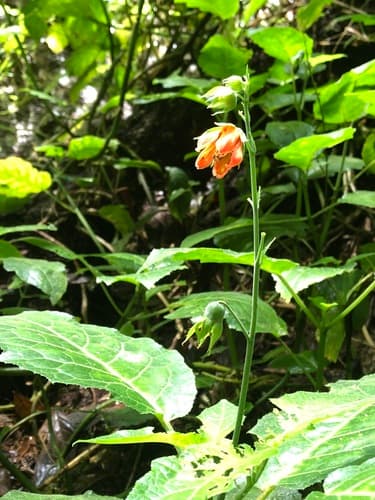
This herbaceous plant features broad, ovate to cordate leaves with distinct venation and often serrated margins. It produces slender stems bearing pendulous, bell-shaped, orange-red flowers, typically enclosed by prominent green sepals or bracts.