Mora cestrum
Image: Conveyor Belt (cc0)
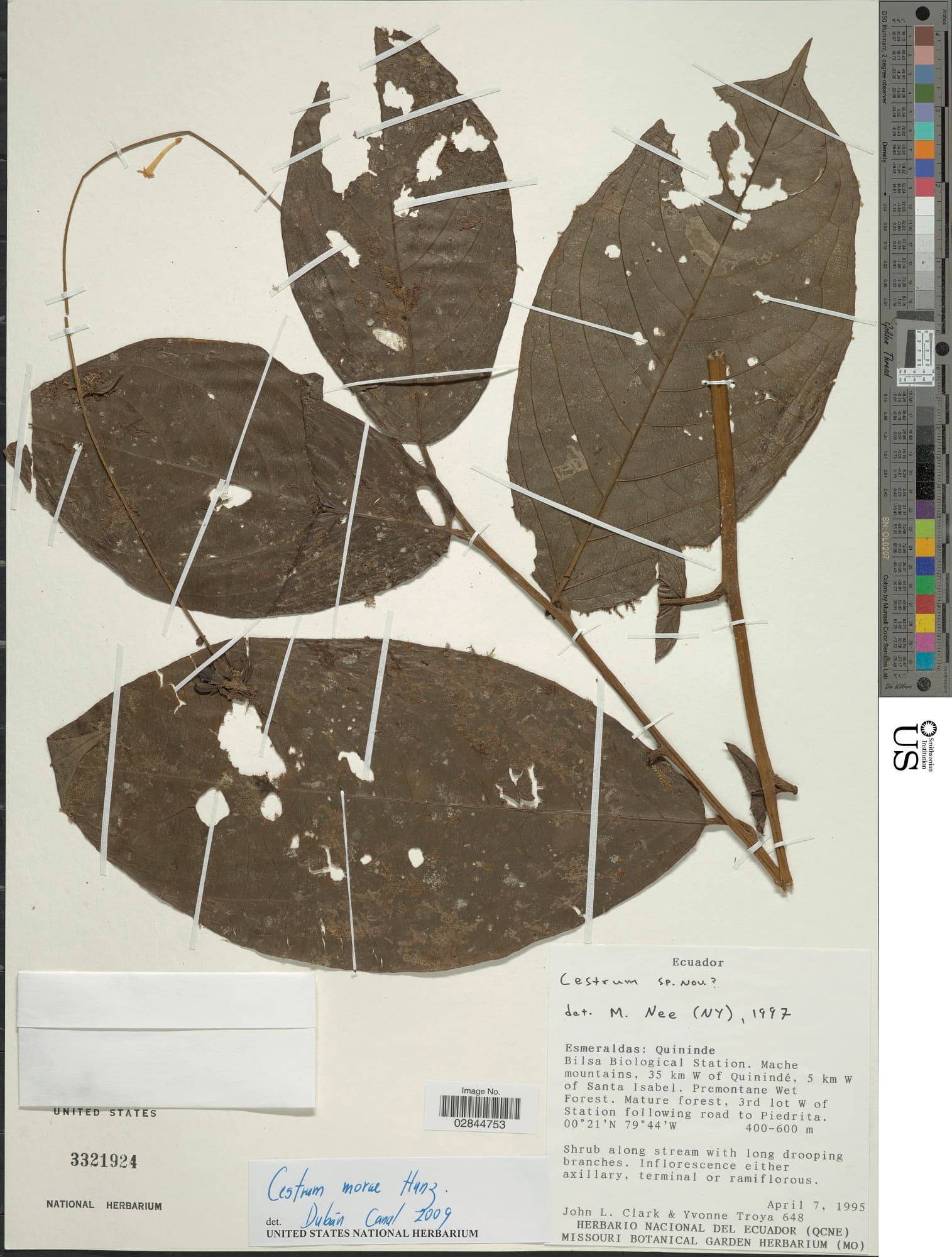
NameMora cestrum
Scientific NameCestrum morae
Common NamesMora Cestrum
Plant FamilySolanaceae
Natural HabitatThis plant thrives in premontane wet forests, typically found at elevations between 400-600 meters. It is native to regions like Esmeraldas, Ecuador, often growing along streams in mature forest environments.
Parts Usedleaf,flower
Medicinal Actionsanalgesic, anti-inflammatory
Traditional UsesWhile specific traditional uses for Cestrum morae are not well-documented, other species within the Cestrum genus have been traditionally used for their analgesic and anti-inflammatory properties. These applications are often external or involve very small, carefully prepared doses due to the genus's known toxicity.
Active Constituentssteroidal saponins, alkaloids, flavonoids
Preparation Methodsinfusion, decoction, poultice
Contraindications & WarningsMany Cestrum species are known to be toxic due to their alkaloid content, and Cestrum morae is presumed to share similar properties. Ingestion can cause gastrointestinal upset, neurological symptoms, and other adverse effects. Use is generally not recommended without expert guidance and extreme caution.
Cultivation NotesAs a shrub native to premontane wet forests, Cestrum morae would likely require a warm, humid environment with consistent moisture and well-drained, rich soil. It prefers partial shade to full sun conditions, mimicking its natural understory or forest edge habitat.
Rarityuncommon
Description
Cestrum morae is a shrub characterized by long, drooping branches and large, simple leaves. Its inflorescences can be found in axillary, terminal, or ramiflorous positions, though specific details on flower morphology are not clearly visible in the dried specimen.