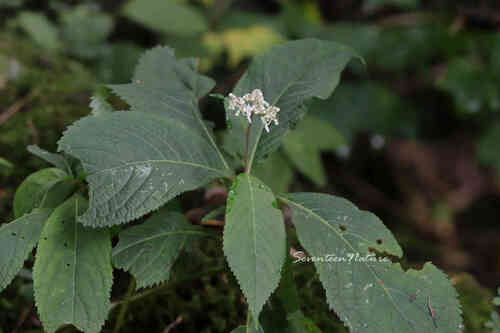
Moellendorff's Hydrangea
NameMoellendorff's Hydrangea
Scientific NameHydrangea moellendorffii
Common NamesMoellendorff's Hydrangea, Chinese Hydrangea
Plant FamilyHydrangeaceae
Natural HabitatThis species thrives in forests, thickets, and along stream banks in mountainous regions of China, commonly found at elevations between 500 and 1800 meters.
Parts Usedroot,leaf
Medicinal Actionsdiuretic, anti-inflammatory, astringent
Traditional UsesWhile specific traditional uses for Hydrangea moellendorffii are less widely documented than some other Hydrangea species, the genus is generally known in traditional medicine for its diuretic properties. Roots and sometimes leaves are traditionally used to support urinary tract health, address kidney and bladder stones, and alleviate symptoms of prostate issues.
Active Constituentshydrangin, hydrangenol, saponins, flavonoids, coumarins
Preparation Methodsdecoction, infusion, tincture
Contraindications & WarningsLarge doses may cause gastrointestinal upset including nausea, vomiting, and diarrhea. It should be used with caution by individuals with kidney disease or those taking diuretic medications. Pregnant and breastfeeding women should avoid its use.
Cultivation NotesHydrangea moellendorffii prefers moist, well-drained soil and thrives in partial shade to full sun, provided it receives adequate moisture. It is generally hardy in temperate climates and benefits from consistent watering, especially during dry periods.
Rarityuncommon
Description
Hydrangea moellendorffii is a deciduous shrub native to China, typically growing 1-3 meters tall. It features ovate to elliptic, serrated leaves and produces clusters of small, white to creamy flowers, often with larger sterile florets at the margins, in flat-topped corymbs.