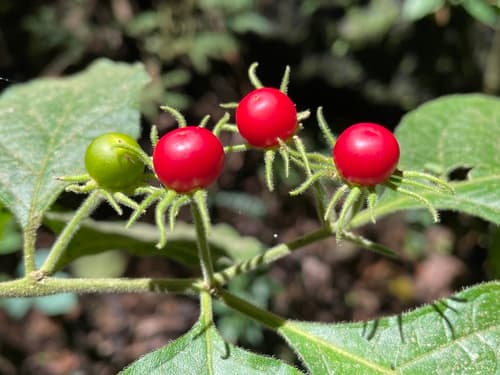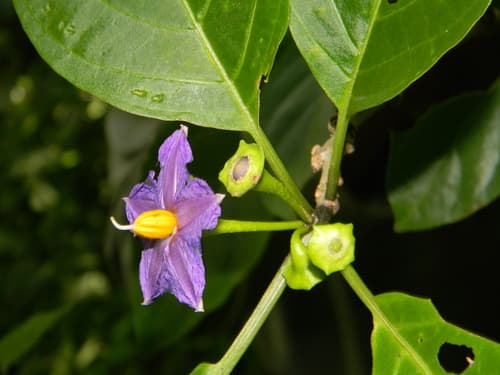
Lycianthes anomala
NameLycianthes anomala
Scientific NameLycianthes anomala
Plant FamilySolanaceae
Natural HabitatThis species is typically found in tropical and subtropical wet forests, often thriving in disturbed areas, forest edges, or secondary growth. Its native range extends from Mexico through Central America to Panama.
Parts Usedleaf,fruit,whole_plant
Traditional UsesSpecific traditional medicinal uses for Lycianthes anomala are not widely documented in ethnobotanical literature. While some species within the Solanaceae family and genus Lycianthes have local traditional uses, often involving fruits or leaves, caution is generally advised due to the potential presence of steroidal glycoalkaloids.
Active ConstituentsSteroidal glycoalkaloids (presumed, common in Solanaceae)
Contraindications & WarningsDue to its classification within the Solanaceae family, Lycianthes anomala may contain steroidal glycoalkaloids, which can be toxic if ingested in sufficient quantities. Specific contraindications are not documented, but general caution against internal use without expert guidance is advised, especially for pregnant or breastfeeding individuals and those with pre-existing conditions.
Cultivation NotesLycianthes anomala thrives in warm, humid tropical or subtropical climates with consistent moisture. It prefers well-drained soils and can tolerate some disturbance, suggesting it may adapt to various light conditions from partial shade to full sun in its native range.
Rarityuncommon
Description
Lycianthes anomala is a shrub or small tree characterized by simple, ovate to elliptic green leaves. Its distinctive flowers are star-shaped with five purple petals and a prominent cone of bright yellow anthers. The plant produces small, green, globose to ovoid fruits or buds, often enclosed by a persistent calyx.