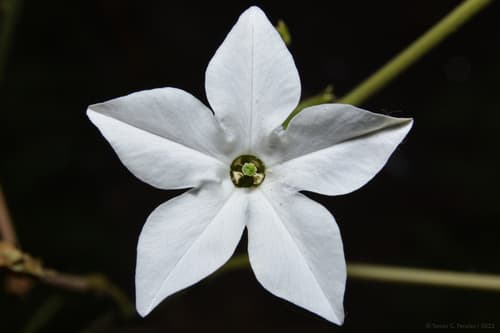
long-flower tobacco
Namelong-flower tobacco
Scientific NameNicotiana alata
Common NamesLong-flower Tobacco, Jasmine Tobacco, Winged Tobacco, Flowering Tobacco
Plant FamilySolanaceae
Natural HabitatNative to South America (Brazil, Argentina, Paraguay, Uruguay), it thrives in open woodlands, disturbed areas, and along riverbanks. It is widely cultivated globally as an ornamental.
Parts Usedleaf,flower
Medicinal Actionsanalgesic, sedative
Traditional UsesHistorically, various Nicotiana species, including wild tobaccos, have been used by indigenous cultures for ceremonial purposes, as a stimulant, and topically for pain relief (e.g., poultices for aches and insect bites). Due to its high toxicity, N. alata is not recommended for internal medicinal use.
Active ConstituentsNicotine, Anabasine, Nornicotine
Preparation Methodspoultice, powder
Contraindications & WarningsHighly toxic due to nicotine and other alkaloids. Not for internal consumption. Can cause nausea, vomiting, dizziness, cardiac effects, and addiction. Avoid during pregnancy, lactation, and in individuals with heart conditions, neurological disorders, or those sensitive to nicotine.
Cultivation NotesPrefers full sun to partial shade and well-drained soil. Can be grown as an annual in cooler climates or a perennial in warmer zones. Requires regular watering and is known to self-seed readily.
Raritycommon
Description
Nicotiana alata is an ornamental herbaceous perennial, often grown as an annual, characterized by its large, basal leaves and tall stems. It produces numerous fragrant, trumpet-shaped white flowers that typically open in the evening, attracting nocturnal pollinators.