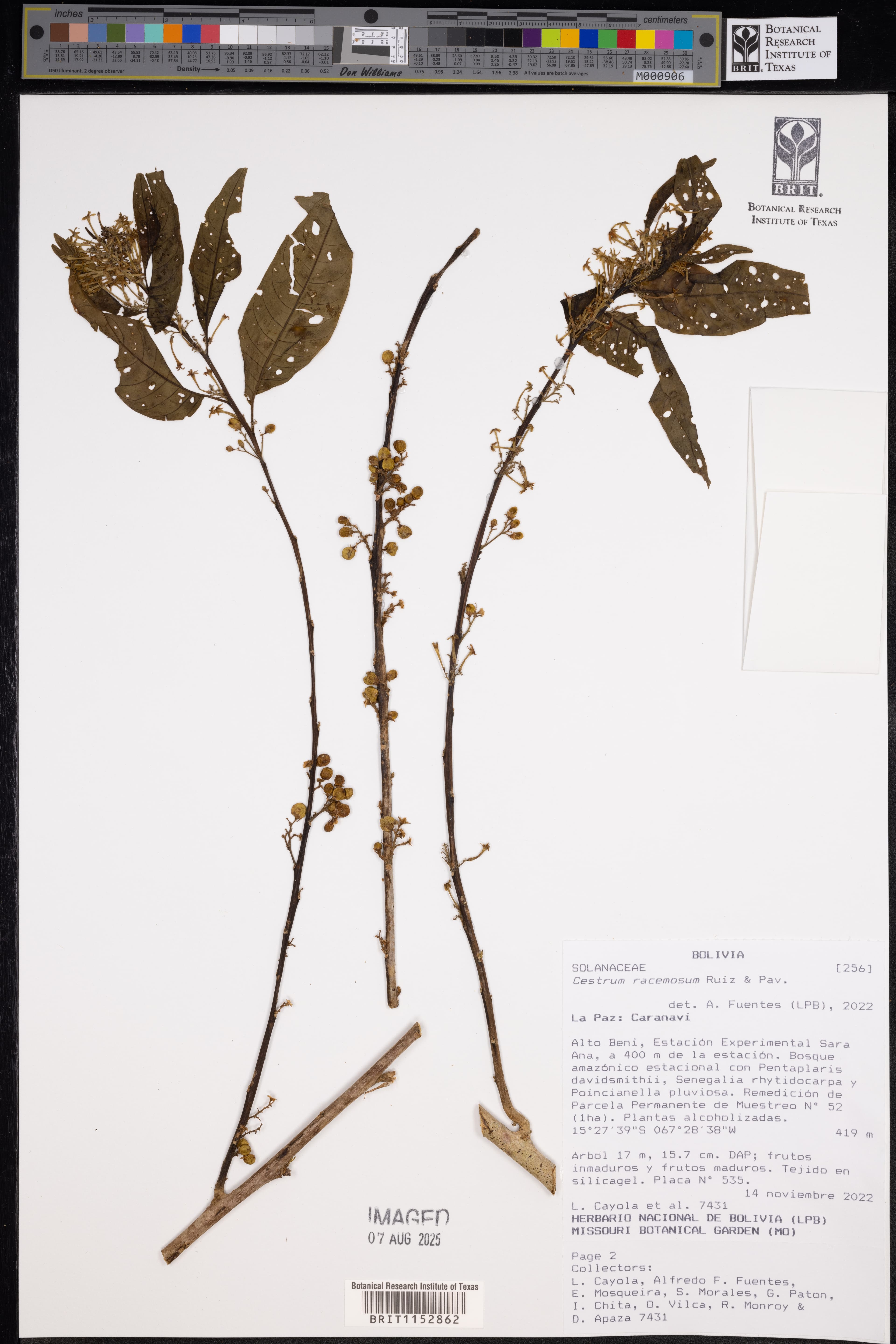
Linden cestrum
Image: L. Cayola (cc0)
NameLinden cestrum
Scientific NameCestrum racemosum Ruiz & Pav.
Common NamesLinden cestrum
Plant FamilySolanaceae
Natural HabitatThis species is found in seasonal Amazonian forests in Bolivia, specifically at an altitude of 419 meters in the Alto Beni region of La Paz. It grows in association with other tree species such as Pentaplaris goldsmithii, Senegalia rhytidocarpa, and Vochysia luncianella pluviosa.
Parts Usedleaf,flower,fruit
Traditional UsesSpecific traditional medicinal uses for Cestrum racemosum are not well-documented. The Cestrum genus is generally known for containing toxic compounds, and many species are not used medicinally or are used with extreme caution.
Contraindications & WarningsDue to the known toxicity of many species within the Cestrum genus, internal use of Cestrum racemosum is generally not recommended. Specific contraindications for this species are not documented, but caution is strongly advised.
Cultivation NotesCestrum species typically prefer full sun to partial shade and well-drained soil. They are often grown as ornamental shrubs or small trees in warm climates and can be propagated from seeds or cuttings.
Rarityuncommon
Description
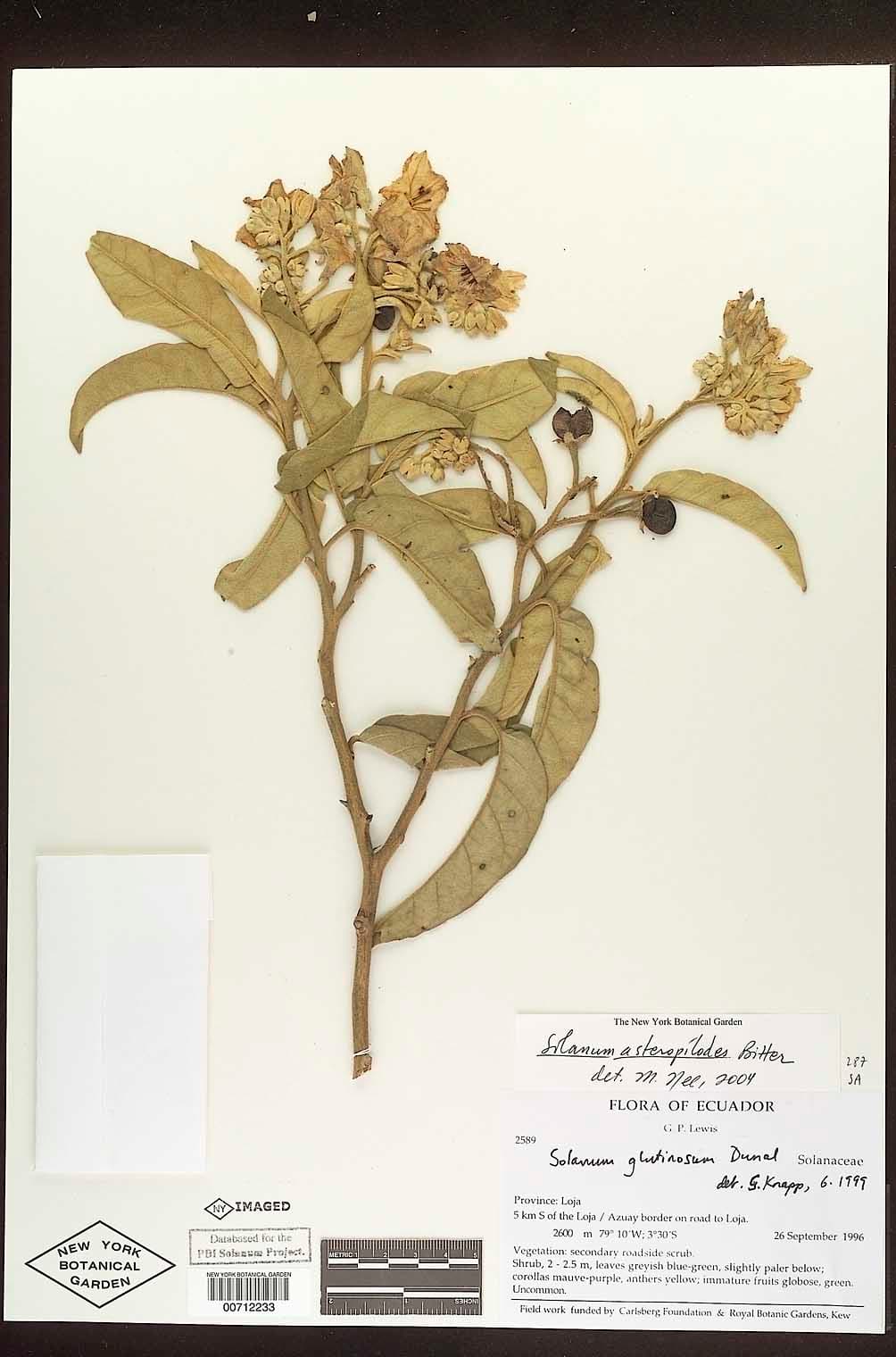
Cestrum racemosum is a tree reaching up to 17 meters in height, characterized by alternate, simple, ovate to elliptic leaves. It produces clusters of small, tubular flowers and round, berry-like fruits, which appear yellowish-brown when dried.