Kota-bengena
NameKota-bengena
Scientific NameSolanum mammosum
Common NamesKota-bengena, Nipplefruit, Cow's Udder, Apple of Sodom, Macho Naranja
Plant FamilySolanaceae
Natural HabitatNative to South America, Solanum mammosum thrives in tropical and subtropical regions, often found in disturbed areas, roadsides, and open fields. It prefers warm climates and well-drained soil.
Parts Usedfruit,leaf
Medicinal Actionsanti-inflammatory, antimicrobial
Traditional UsesTraditionally, the fruit and leaves have been used externally in some cultures for treating skin conditions, fungal infections, and as a poultice for boils and wounds. It is also used in some folk medicine for its purported anti-inflammatory effects, though internal use is generally avoided due to toxicity.
Active ConstituentsSteroidal glycoalkaloids, Solamargine, Solasonine, Solasodine
Preparation Methodspoultice, infusion
Contraindications & WarningsHighly toxic if ingested due to steroidal glycoalkaloids; can cause severe gastrointestinal upset, neurological symptoms, and even death. Not recommended for internal use. Avoid contact with open wounds if not properly prepared. Pregnant and breastfeeding women should avoid use.
Cultivation NotesGrows best in warm, humid climates with full sun to partial shade. Requires well-drained, fertile soil. Can be propagated from seeds and is often grown as an ornamental for its unusual fruit.
Raritycommon
Description
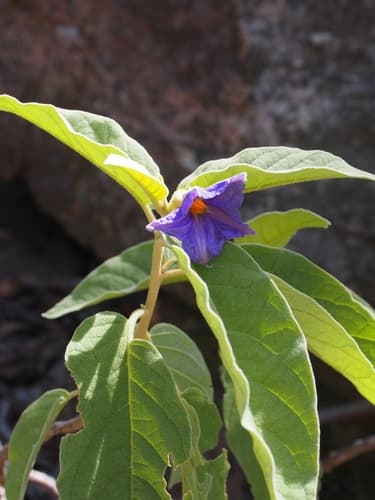
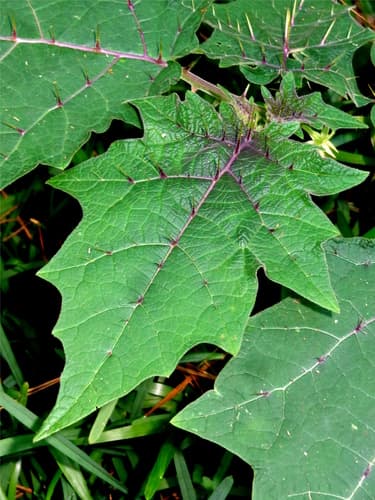
This is a spiny herbaceous shrub characterized by large, deeply lobed green leaves with prominent purple venation. Both the leaves and stems are covered in sharp, purple-tipped spines, giving it a distinctive appearance.