Kleinkaroo Honeythorn
NameKleinkaroo Honeythorn
Scientific NameLycium cinereum
Common NamesKleinkaroo Honeythorn, Karoo Honeythorn, River Honeythorn
Plant FamilySolanaceae
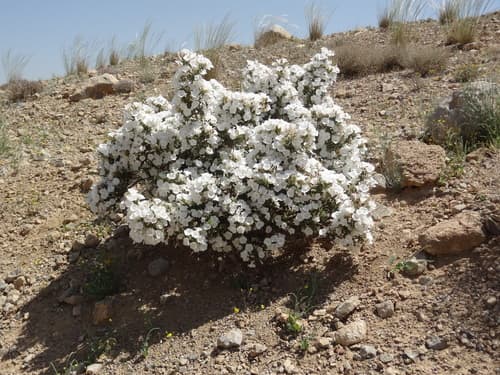
Natural HabitatNative to arid and semi-arid regions of South Africa, particularly the Karoo and Klein Karoo biomes. It thrives in dry, rocky, or sandy soils, often found along riverbeds or in disturbed areas.
Parts Usedfruit,leaf
Medicinal Actionsantioxidant, adaptogen, anti-inflammatory
Traditional UsesTraditionally, the berries are consumed for their nutritional value and as a general tonic. Some related Lycium species in South Africa have been historically used for fever and pain relief.
Active ConstituentsPolysaccharides, Carotenoids, Flavonoids, Vitamin C
Preparation Methodsinfusion, powder
Contraindications & WarningsGenerally considered safe when consumed as food. Caution is advised for individuals on anticoagulant medications due to potential interactions, and for pregnant or nursing women due to limited specific safety data.
Cultivation NotesThis drought-tolerant shrub prefers full sun and well-drained soil. It is hardy in arid conditions and can be propagated from seed or cuttings.
Raritycommon
Description
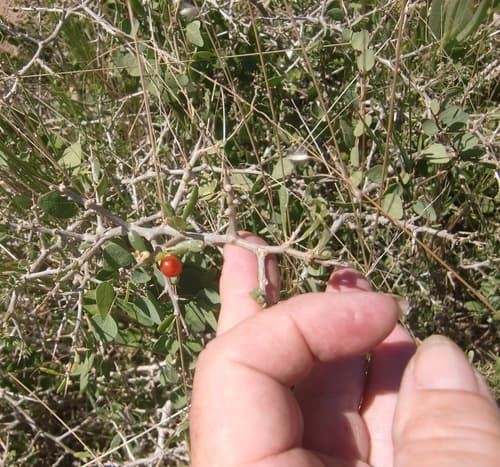
A thorny, sprawling shrub native to South Africa, typically growing up to 2 meters tall. It features small, grey-green, obovate leaves and produces solitary, bright reddish-orange berries along its rigid, spiny branches.