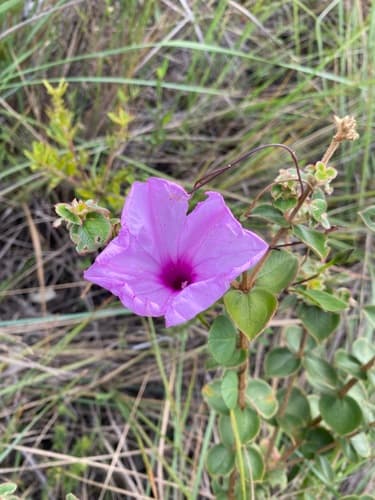
Ipomoea rupestris
NameIpomoea rupestris
Scientific NameIpomoea rupestris
Common NamesBatata-de-pedra
Plant FamilyConvolvulaceae
Natural HabitatNative to the Cerrado biome of Brazil, it thrives in rocky fields, savannas, and dry grasslands with well-drained, often sandy or stony soils.
Parts Usedroot
Medicinal Actionsanti-inflammatory
Traditional UsesIn Brazilian folk medicine, the tuberous root of Ipomoea rupestris is traditionally used to treat stomach problems, reduce inflammation, and as a general tonic.
Active Constituentsphenolic compounds, flavonoids, triterpenes
Preparation Methodsdecoction, infusion, powder
Contraindications & WarningsSpecific contraindications are not well-documented, but caution is advised during pregnancy and lactation, and for individuals with gastrointestinal sensitivities due to potential effects common in the Ipomoea genus.
Cultivation NotesPrefers full sun and well-drained, sandy or rocky soils. It is drought-tolerant once established and suited for tropical to subtropical climates.
Rarityuncommon
Description
Ipomoea rupestris is a perennial herbaceous plant characterized by its trailing or climbing stems and distinctive funnel-shaped, often purple or pink flowers. It possesses heart-shaped to ovate leaves and is notable for its tuberous root system.