Hyoscyamus leptocalyx
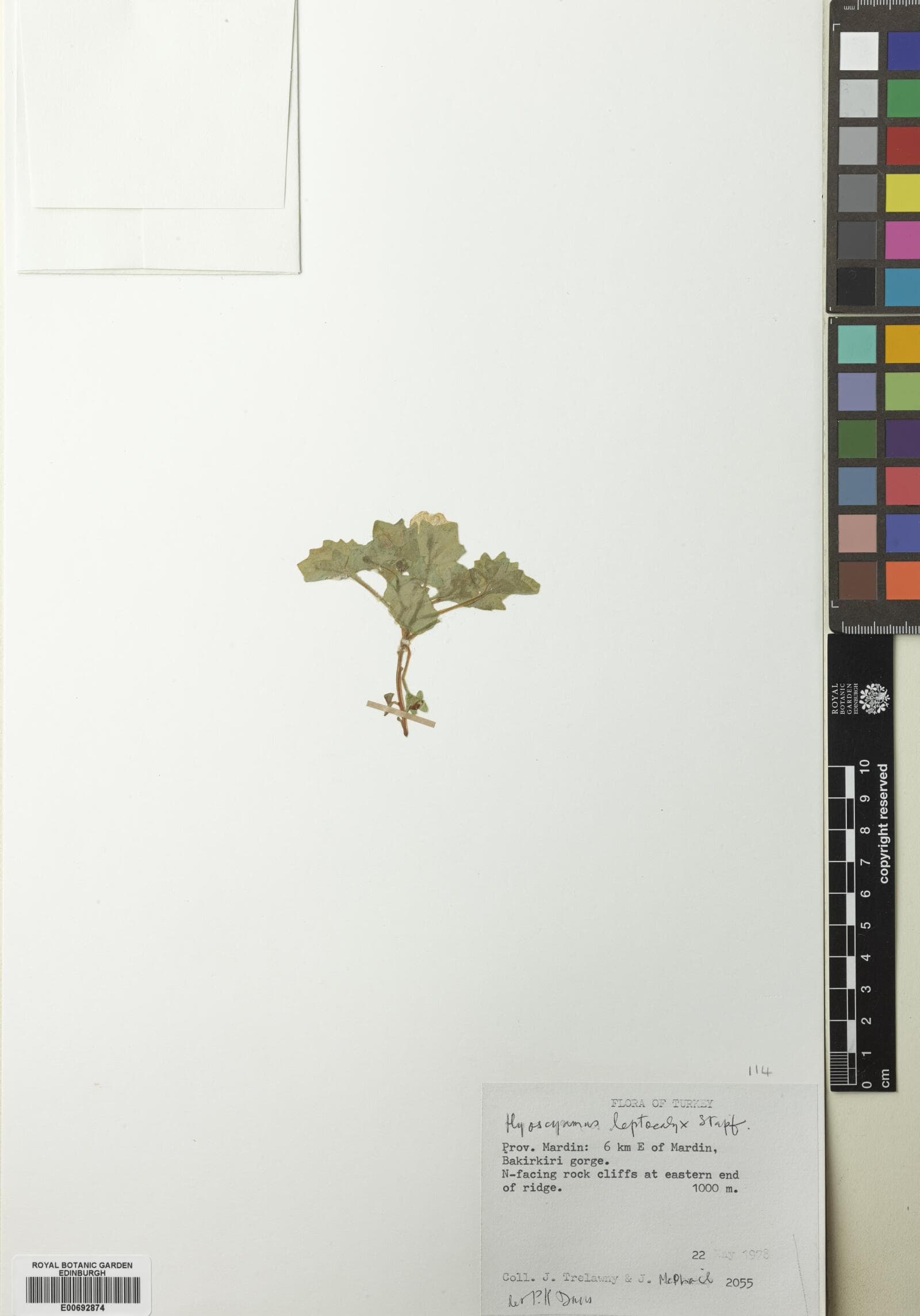
Image: Royal Botanic Garden Edinburgh (cc0)
NameHyoscyamus leptocalyx
Scientific NameHyoscyamus leptocalyx
Common NamesHenbane
Plant FamilySolanaceae
Natural HabitatThis species is found in specific rocky environments, such as N-facing rock cliffs at the eastern end of ridges, at an altitude of approximately 1000 meters. The collection metadata indicates its presence in the Bakirkiri gorge, 6 km East of Mardin province in Turkey.
Parts Usedleaf,flower,whole_plant
Medicinal Actionsanalgesic, sedative
Traditional UsesLike other species in the Hyoscyamus genus, H. leptocalyx would traditionally be used with extreme caution for its potent sedative and analgesic properties. Historically, it has been employed to alleviate pain, induce sleep, and calm nervous disorders, often in conditions requiring strong antispasmodic effects. It is a highly toxic plant.
Active Constituentshyoscyamine, scopolamine, atropine
Preparation Methodstincture, powder
Contraindications & WarningsHighly toxic. Contraindicated in glaucoma, prostate enlargement, heart conditions, pregnancy, breastfeeding, and in conjunction with other anticholinergic drugs. Use only under strict medical supervision due to its potent tropane alkaloids and narrow therapeutic window.
Cultivation NotesPrefers well-drained, rocky soils and can tolerate full sun to partial shade, consistent with its natural habitat on cliffs. Requires specific environmental conditions, possibly including arid or semi-arid climates, for optimal growth.
Rarityrare
Description
Hyoscyamus leptocalyx is an herbaceous plant, typically characterized by its hairy, somewhat sticky foliage and lobed leaves. The specimen shown is a small part of the plant, likely collected for botanical study, displaying its characteristic leaf structure and possibly an apical flower or developing fruit.