Hydrangea carroniae
Image: anschieber (cc-by-nc)
NameHydrangea carroniae
Scientific NameHydrangea macrophylla
Common NamesBigleaf Hydrangea, French Hydrangea, Mophead Hydrangea
Plant FamilyHydrangeaceae
Natural HabitatNative to East Asia, particularly Japan and China, where it grows in moist, shaded woodlands and along stream banks. It is widely cultivated globally as an ornamental plant.
Parts Usedroot,leaf
Medicinal Actionsdiuretic, anti-inflammatory
Traditional UsesTraditionally, the root and leaves have been used in some Asian folk medicine systems as a diuretic to treat urinary tract infections, kidney stones, and prostate enlargement. It has also been used for its purported anti-inflammatory properties.
Active ConstituentsHydrangin, hydrangeic acid, saponins, flavonoids, cyanogenic glycosides
Preparation Methodsdecoction, infusion, powder
Contraindications & WarningsIngestion of large quantities can cause gastrointestinal upset (nausea, vomiting, diarrhea). Contains cyanogenic glycosides, which can be toxic. Not recommended for pregnant or breastfeeding women, or individuals with kidney disease without medical supervision.
Cultivation NotesThrives in partial shade and consistently moist, well-drained soil. Soil pH influences flower color, with acidic soil promoting blue flowers and alkaline soil promoting pink. Requires protection from harsh winter conditions in colder zones.
Raritycommon
Description
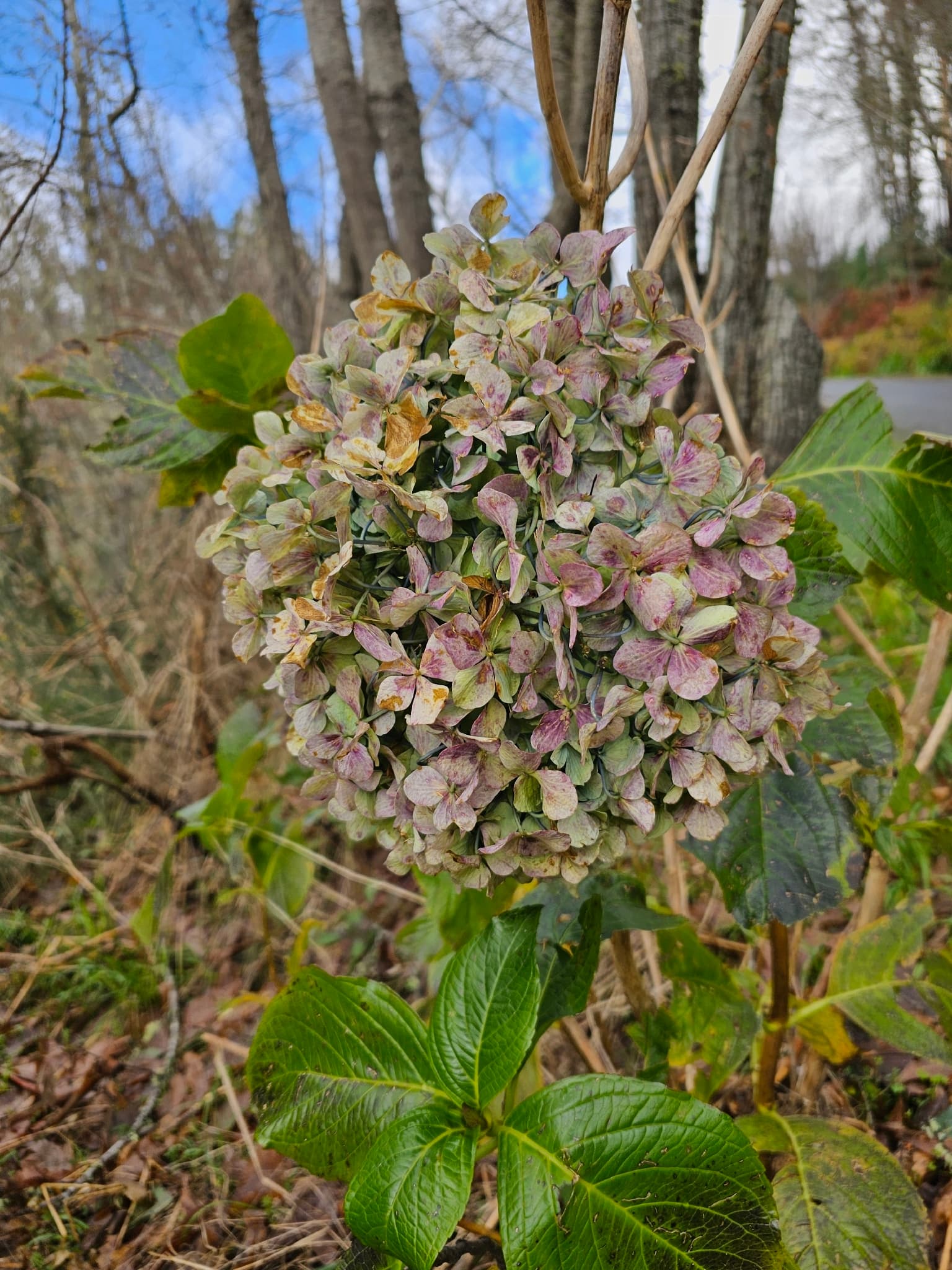
A popular deciduous shrub characterized by its large, serrated, ovate leaves and prominent, often spherical, flower clusters. The flowers in the image are past their peak, displaying muted green, purple, and brown tones.