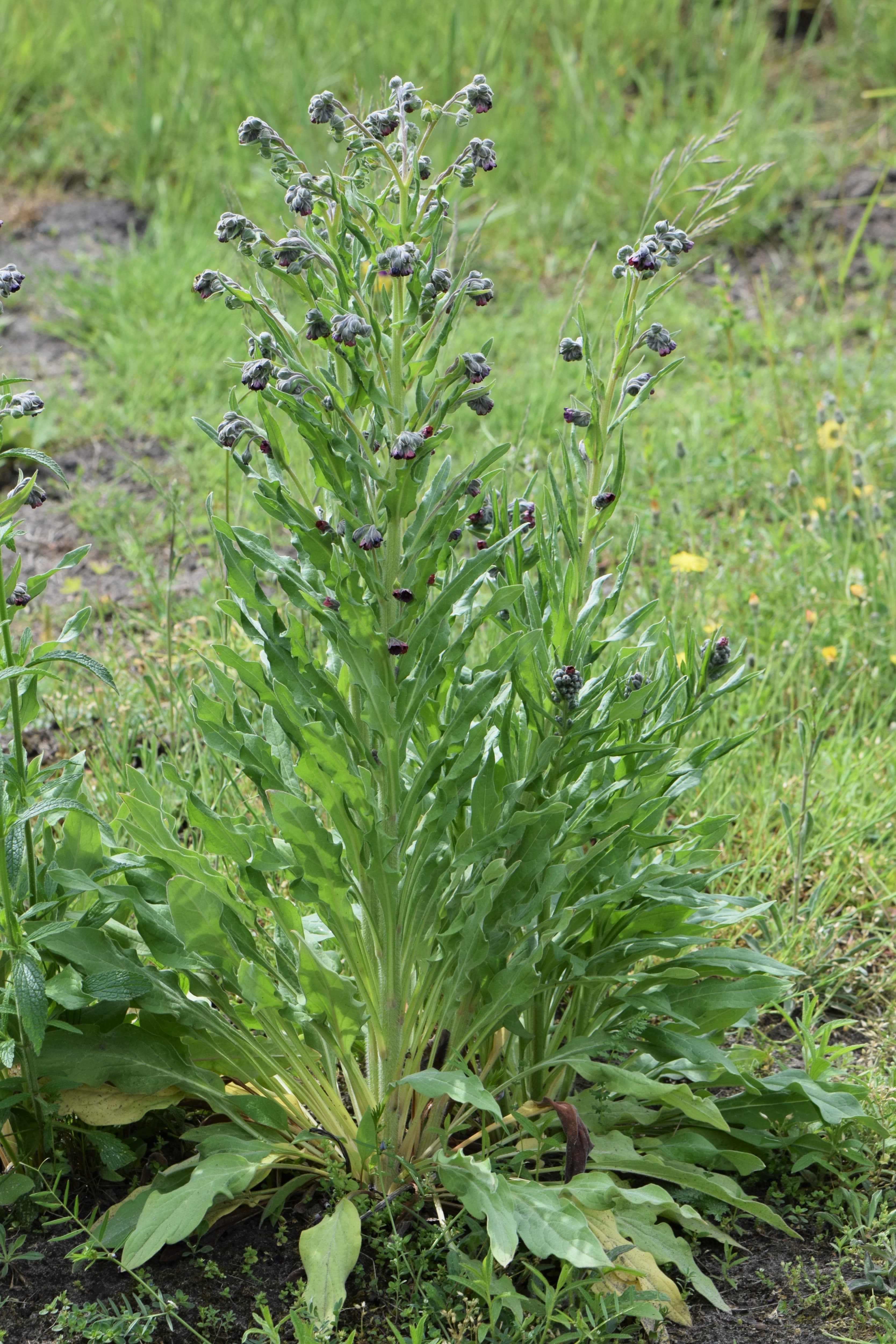
Hound's Tongue
Image: Krzysztof Ziarnek, Kenraiz (CC BY-SA 4.0)
NameHound's Tongue
Scientific NameCynoglossum officinale
Common NamesHound's Tongue, Beggar's Lice, Dog's Tongue, Gypsy Flower, Sheep Bur
Plant FamilyBoraginaceae
Natural HabitatNative to Europe and Asia, Hound's Tongue thrives in disturbed areas such as roadsides, pastures, waste ground, and dry, open woodlands. It prefers well-drained soils and can tolerate full sun to partial shade.
Parts Usedleaf,root
Medicinal Actionsanalgesic, demulcent, astringent
Traditional UsesTraditionally, Hound's Tongue was used externally as a poultice for wounds, burns, ulcers, and insect bites, and to relieve pain. Historically, it was also used internally as a demulcent for coughs and diarrhea, and as a sedative, though these internal uses are now considered highly dangerous due to its toxicity.
Active ConstituentsPyrrolizidine alkaloids (e.g., cynoglossine, heliosupine, echinatine), allantoin, mucilage, tannins
Preparation Methodspoultice, salve
Contraindications & WarningsHound's Tongue is highly toxic due to the presence of pyrrolizidine alkaloids (PAs), which are hepatotoxic (liver damaging) and carcinogenic. Internal use is strongly contraindicated for humans and livestock. It should not be used by pregnant or breastfeeding women, or individuals with liver disease. External use should be approached with extreme caution and only under expert guidance, as PAs can be absorbed through the skin.
Cultivation NotesThis biennial plant grows best in full sun to partial shade and well-drained soil. It forms a rosette in its first year and flowers in the second, readily self-seeding and often becoming invasive. It is frequently considered a weed in agricultural and disturbed areas.
Raritycommon
Description
Cynoglossum officinale is a biennial herb that can grow up to 1 meter tall, characterized by its soft, hairy, lance-shaped leaves, with basal leaves forming a prominent rosette. It produces reddish-purple to dull red-brown flowers arranged in coiled cymes, which later develop into distinctive bur-like fruits covered in hooked spines.