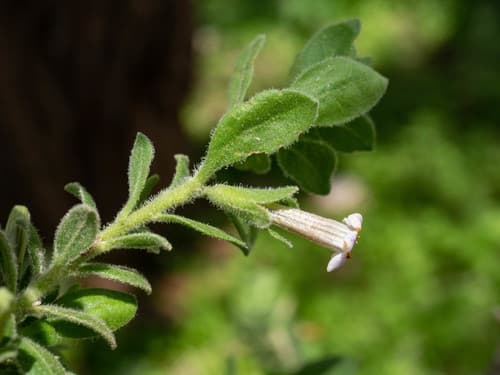
Hairy Honeythorn
NameHairy Honeythorn
Scientific NameMelianthus comosus
Common NamesHairy Honeythorn, Honeybush, Kruidjie-roer-my-nie
Plant FamilyMelianthaceae
Natural HabitatNative to Southern Africa, particularly South Africa, where it grows in dry, rocky areas, scrublands, and along riverbanks. It is adapted to arid and semi-arid conditions.
Parts Usedleaf,root
Medicinal Actionsanti-inflammatory, antimicrobial, analgesic, astringent
Traditional UsesTraditionally used by indigenous people in Southern Africa for a variety of ailments. The leaves are often applied topically as a poultice for wounds, bruises, sprains, and rheumatic pain. Infusions of the leaves or roots have been used internally for fevers, colds, coughs, and gastrointestinal issues, though caution is advised due to potential toxicity.
Active ConstituentsFlavonoids, Tannins, Saponins, Cardiac glycosides
Preparation Methodsinfusion, poultice, decoction
Contraindications & WarningsThe plant is considered toxic if ingested in large quantities, particularly the roots and seeds, due to cardiac glycosides. It can cause nausea, vomiting, diarrhea, and heart problems. Pregnant and breastfeeding women should avoid use. Consult a healthcare professional before use.
Cultivation NotesPrefers full sun to partial shade and well-drained soil. It is drought-tolerant once established and can withstand light frost. Propagated by seeds or cuttings.
Raritycommon
Description
Melianthus comosus is a medium-sized, evergreen shrub characterized by its pinnate, serrated leaves that are densely covered in fine hairs, giving them a soft, fuzzy texture. It produces striking tubular flowers, typically reddish-brown to greenish-yellow, arranged in erect racemes.