Giles' Nightshade
Image: The New York Botanical Garden (cc-by)
NameGiles' Nightshade
Scientific NameSolanum gilesii
Common NamesGiles' Nightshade
Plant FamilySolanaceae
Natural HabitatThis species is found in arid and semi-arid regions of Western Australia, thriving in sandy or rocky soils, often within mulga woodlands and shrublands.
Parts Usedfruit,leaf
Medicinal Actionsanti-inflammatory, antimicrobial
Traditional UsesWhile many Solanum species have traditional uses by Indigenous Australians, specific medicinal uses for Solanum gilesii are not widely documented in ethnobotanical literature. General Solanum uses often involve topical applications for skin ailments, but caution is paramount due to the potential toxicity of many species in this genus, especially the berries.
Active Constituentssteroidal glycoalkaloids, solasodine, flavonoids
Preparation Methodspoultice
Contraindications & WarningsAll parts of Solanum gilesii, particularly the unripe fruit, are considered toxic due to the presence of steroidal glycoalkaloids. Internal consumption is highly discouraged and potentially dangerous. Avoid use during pregnancy, lactation, and in children. Consult a qualified expert before any use.
Cultivation NotesSolanum gilesii is a drought-tolerant plant that prefers well-drained soils and full sun. It can be propagated from seed and is adapted to harsh, dry conditions.
Rarityuncommon
Description
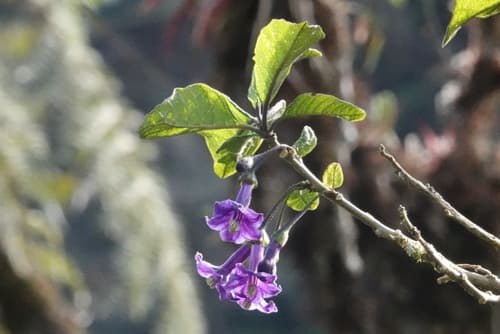
Solanum gilesii is a prickly perennial shrub or subshrub native to Western Australia, typically growing up to 1.5 meters tall. It features spiny stems and leaves, producing purple flowers that develop into globular yellow or orange berries.