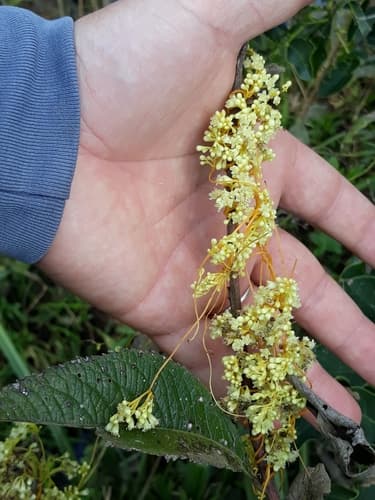
Cuscuta xanthochortos
NameCuscuta xanthochortos
Scientific NameCuscuta xanthochortos
Common NamesDodder, Strangleweed, Witches' Hair
Plant FamilyConvolvulaceae
Natural HabitatThis parasitic plant thrives in various environments, including fields, disturbed areas, and along roadsides, where it infests a wide range of herbaceous and woody host plants. It is native to parts of South Africa.
Parts Usedwhole_plant
Medicinal Actionsantioxidant, anti-inflammatory, diuretic, astringent
Traditional UsesTraditionally, various Cuscuta species, including those related to Cuscuta xanthochortos, have been used to support kidney and liver function, improve vision, and address reproductive issues such as impotence. Some species are also employed as diuretics or for treating certain skin ailments.
Active ConstituentsFlavonoids, Lignans, Polysaccharides, Coumarins
Preparation Methodsinfusion, decoction, powder, tincture
Contraindications & WarningsDue to its parasitic nature and potential for strong effects, caution is advised. It should be avoided by pregnant or breastfeeding women, and individuals with specific medical conditions or those taking medications should consult a healthcare professional.
Cultivation NotesAs an obligate parasitic plant, Cuscuta xanthochortos cannot be cultivated independently and requires a suitable host plant to grow and thrive. It spreads by seeds and can be a significant agricultural pest.
Raritycommon
Description
Cuscuta xanthochortos is a parasitic annual vine characterized by its slender, leafless, yellowish-orange stems that twine tightly around host plants. It produces dense clusters of small, pale yellow to whitish, bell-shaped flowers along its stems, lacking chlorophyll and obtaining all nutrients from the host.