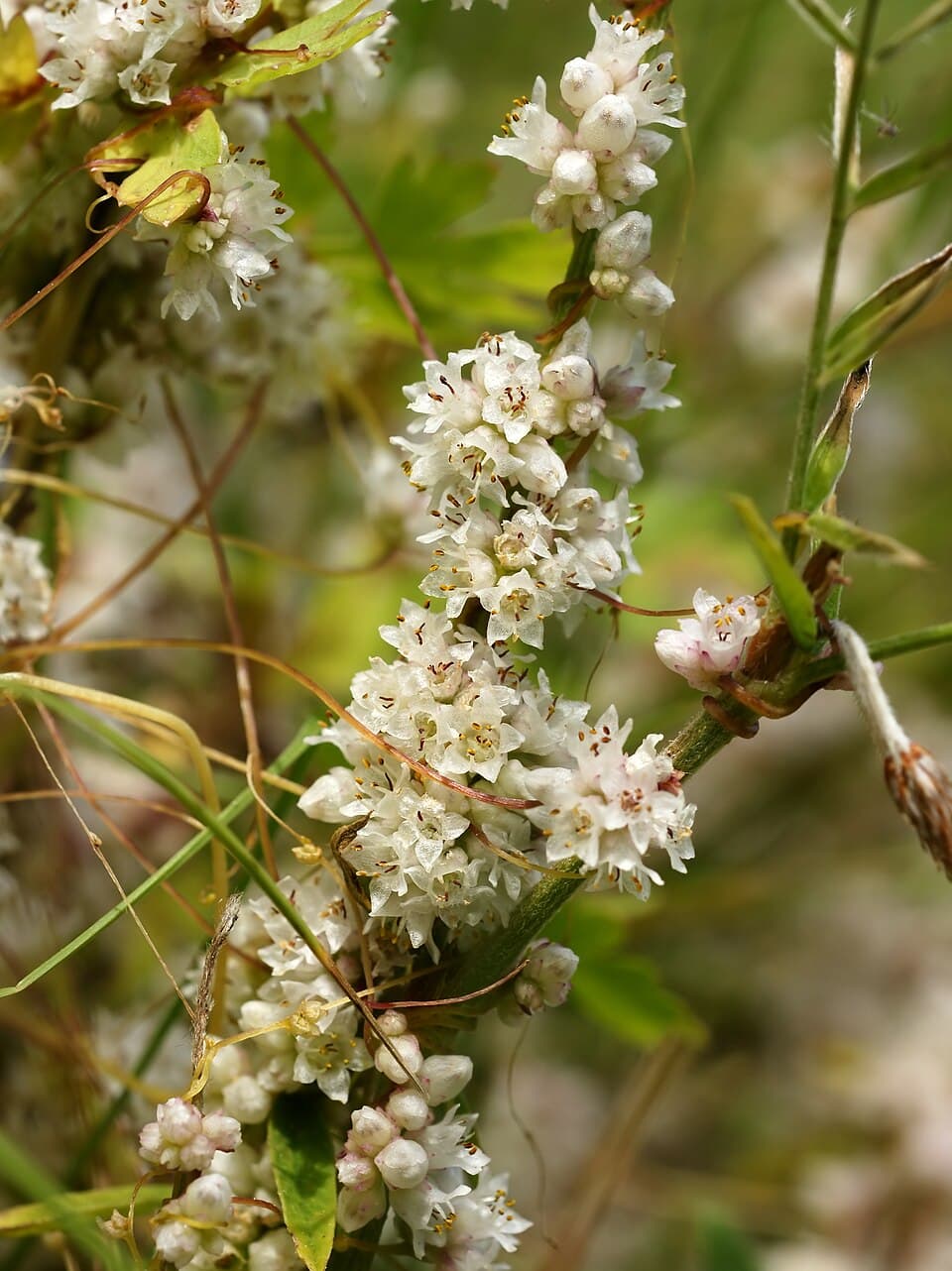
Cuscuta pellucida
Image: Fayvush,G. [Ֆայվուշի,Գ.; Файвуш Г.] et al. (cc-by-sa)
NameCuscuta pellucida
Scientific NameCuscuta pellucida
Common NamesDodder, Strangleweed, Love Vine
Plant FamilyConvolvulaceae
Natural HabitatThis species is found as a parasite on various host plants, often in sandy areas, shrublands, and disturbed habitats. The specimen was collected in the Ararat valley of Armenia, specifically in a sandy area with Calligonum polygonoides shrubland.
Parts Usedwhole_plant
Medicinal Actionsdiuretic, anti-inflammatory, antioxidant, adaptogen
Traditional UsesTraditionally, various Cuscuta species, including those similar to C. pellucida, have been used to support liver and kidney function, treat urinary tract issues, and address skin conditions. It is also employed as a general tonic and for reproductive health in some traditional medicine systems.
Active ConstituentsFlavonoids, Lignans, Polysaccharides, Coumarins
Preparation Methodsinfusion, decoction, powder, tincture
Contraindications & WarningsDue to its parasitic nature and potential for toxicity in some species, it should be used with caution. Contraindicated in pregnancy, lactation, and for individuals with specific liver or kidney conditions without professional guidance. May interact with certain medications.
Cultivation NotesAs a parasitic plant, Cuscuta pellucida cannot be cultivated independently. It requires a suitable host plant to germinate and establish, making conventional cultivation impractical for medicinal harvest.
Raritycommon
Description
Cuscuta pellucida is a parasitic annual plant characterized by its thread-like, yellowish to reddish stems that twine around host plants. It lacks true leaves and roots once established, obtaining nutrients via haustoria. It produces small, often whitish or yellowish flowers in dense clusters along its stems.