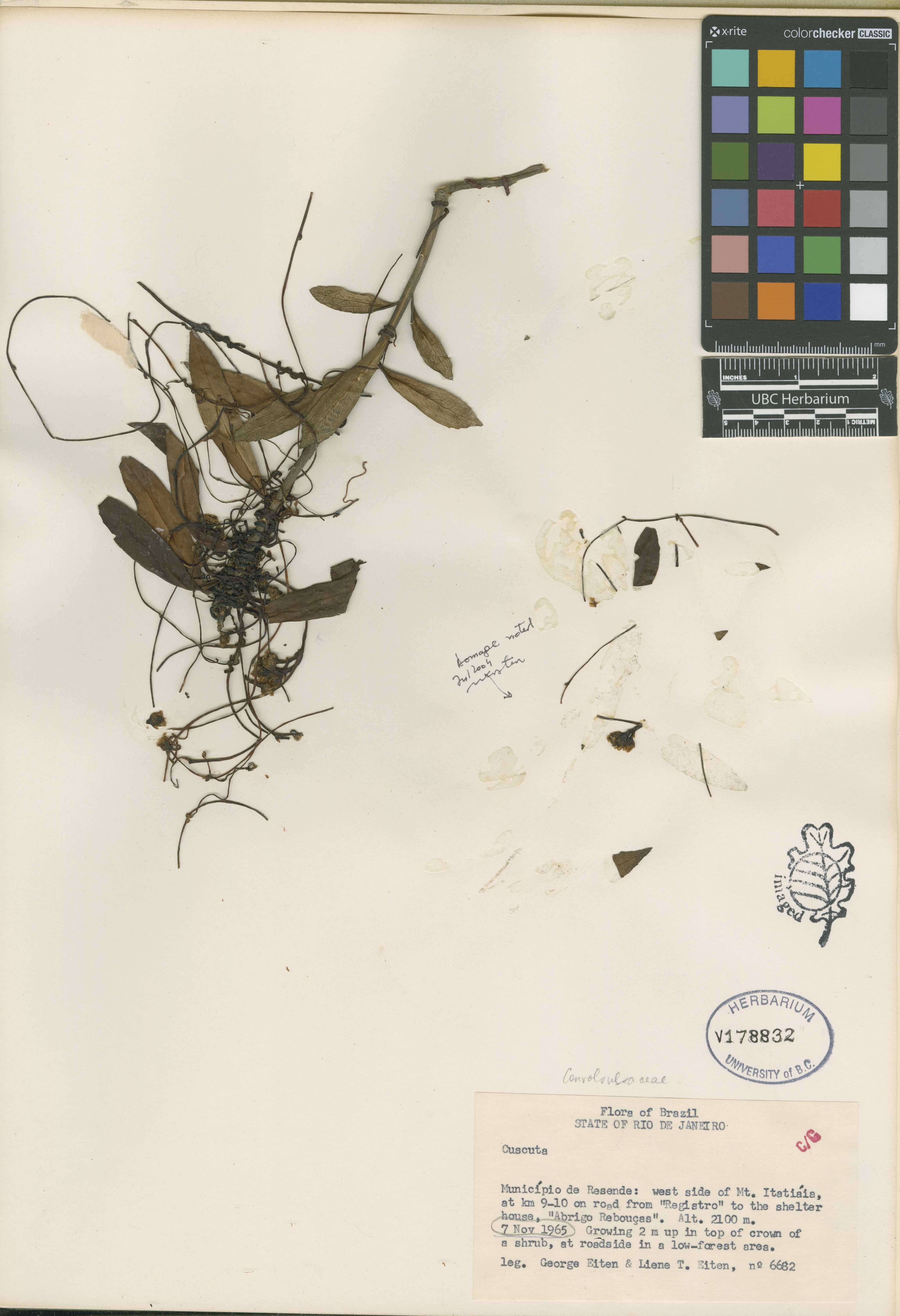
Cuscuta mantiqueirana
Image: George Eiten|Liene T. Eiten (cc0)
NameCuscuta mantiqueirana
Scientific NameCuscuta mantiqueirana Costea, S.S.Silva & Sim.-Bianch.
Common NamesDodder, Mantiqueira Dodder
Plant FamilyConvolvulaceae
Natural HabitatThis species is found at high altitudes (2100 m) on the west side of Mt. Itatiaia, Brazil. It typically grows along roadsides in low-forest areas, parasitizing the crowns of shrubs.
Parts Usedwhole_plant,seed
Medicinal Actionsantioxidant, anti-inflammatory, adaptogen
Traditional UsesTraditionally, species of Cuscuta are used to support liver and kidney function, improve vision, and enhance reproductive health. They are also employed for their general tonic and anti-aging properties in some traditional medicine systems.
Active Constituentsflavonoids, lignans, polysaccharides
Preparation Methodsinfusion, decoction, powder, tincture
Contraindications & WarningsAvoid during pregnancy and lactation. May interact with blood-thinning medications or medications affecting liver enzymes. Consult a healthcare professional before use, especially if on other medications or with pre-existing health conditions.
Cultivation NotesAs an obligate parasitic plant, Cuscuta mantiqueirana requires a suitable host plant for germination and growth. It cannot be cultivated independently and is typically propagated by seeds directly onto a compatible host species.
Rarityuncommon
Description
Cuscuta mantiqueirana is an obligate parasitic vine characterized by its slender, thread-like, yellowish-orange to reddish stems that tightly twine around host plants. Its leaves are highly reduced to minute scales, and it produces small, clustered flowers along its stems.