Cuscuta jalapensis
NameCuscuta jalapensis
Scientific NameCuscuta jalapensis
Common NamesJalapa Dodder, Dodder, Love Vine
Plant FamilyConvolvulaceae
Natural HabitatAs a parasitic plant, it thrives in areas where suitable host plants are abundant, including fields, disturbed grounds, roadsides, and gardens, often found in tropical and subtropical regions. It attaches to a wide variety of herbaceous and woody hosts.
Parts Usedwhole_plant,seed
Medicinal Actionsdiuretic, antioxidant, anti-inflammatory, astringent
Traditional UsesTraditionally, Cuscuta species have been used in various folk medicines as a diuretic, laxative, and for treating liver and kidney ailments. Some traditions employ it for skin conditions, jaundice, and as a general tonic, particularly for reproductive health and vision.
Active ConstituentsFlavonoids, Lignans, Polysaccharides, Coumarins
Preparation Methodsinfusion, decoction, tincture, powder
Contraindications & WarningsCaution is advised during pregnancy and lactation due to insufficient research. As a parasitic plant, it can be toxic to livestock if consumed in large quantities. Potential for drug interactions, especially with diuretics or blood thinners, should be considered.
Cultivation NotesCuscuta jalapensis is a parasitic plant that cannot be cultivated independently, as it requires a host plant to survive. Traditional cultivation is impossible and generally undesirable due to its weed-like nature and potential to harm agricultural crops.
Raritycommon
Description
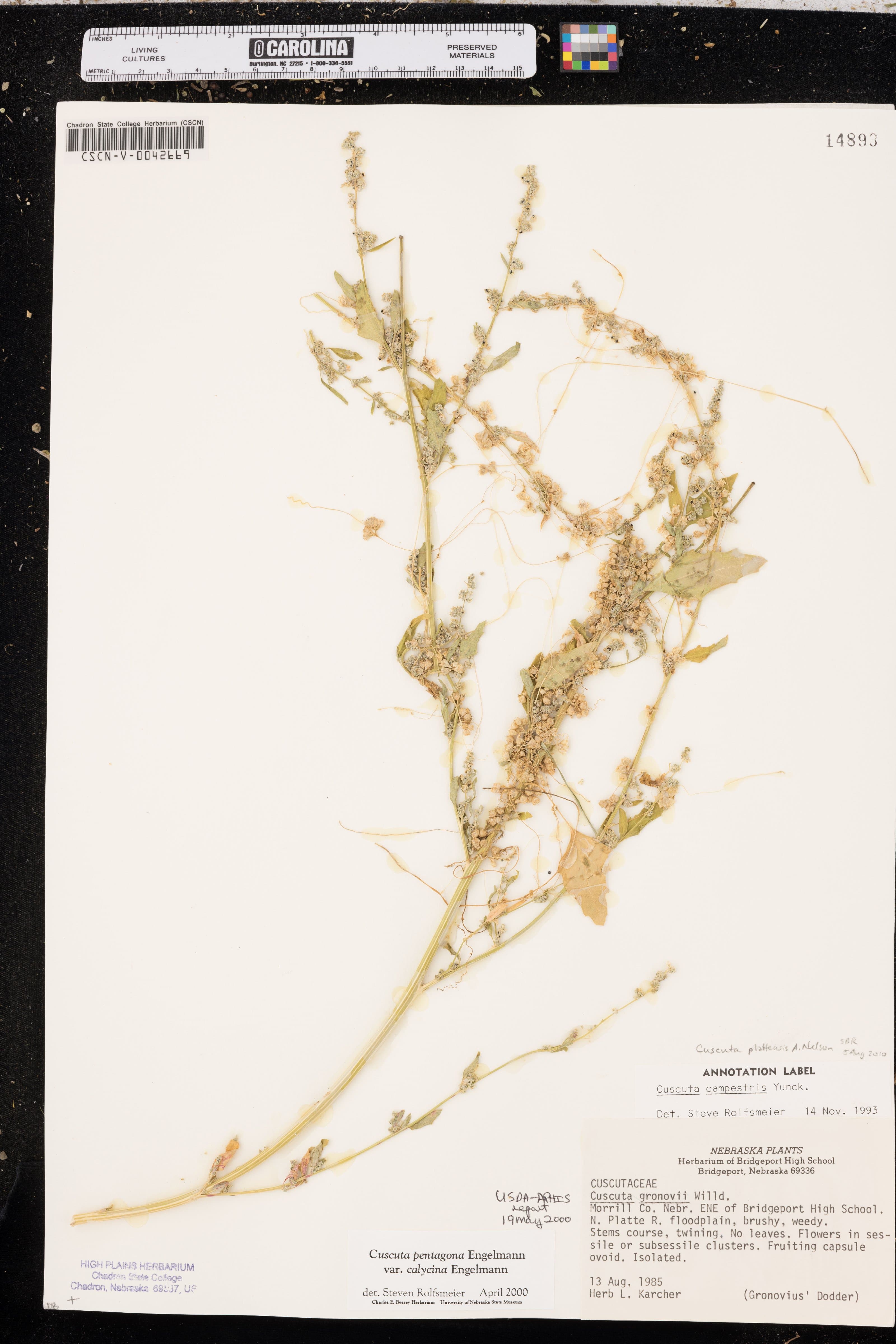
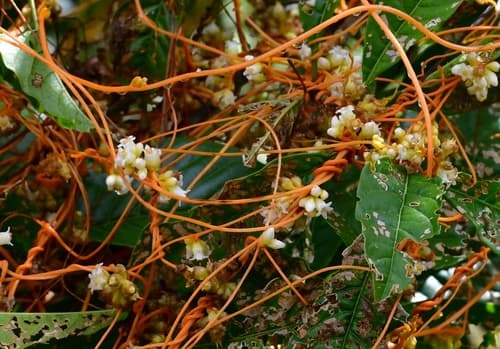
Cuscuta jalapensis is a parasitic annual vine characterized by its slender, leafless, orange-yellow to reddish stems that twine tightly around host plants. It produces clusters of small, white to yellowish, bell-shaped flowers along its stems, drawing nutrients directly from its host.