Cuscuta castroviejoi
Image: Meise Botanic Garden (cc-by)
NameCuscuta castroviejoi
Scientific NameCuscuta castroviejoi M.A.García
Common NamesDodder, Cuscuta
Plant FamilyConvolvulaceae
Natural HabitatFound in dry limestone hills with open shrub vegetation (e.g., Acacia, Barbeua) on very stony gravelly soil, typically at altitudes around 1800 m. The specimen was collected near Harar to Jijiga, Ethiopia.
Parts Usedwhole_plant,seed
Medicinal Actionsadaptogen, anti-inflammatory, antioxidant
Traditional UsesWhile specific traditional uses for Cuscuta castroviejoi are not widely documented, other Cuscuta species (like C. chinensis or C. japonica, known as Tu Si Zi) are traditionally used in herbal medicine to tonify the kidney and liver, improve vision, and strengthen bones. They are employed for conditions such as impotence, premature ejaculation, frequent urination, lower back pain, and blurred vision.
Active Constituentsflavonoids, lignans, polysaccharides, saponins
Preparation Methodsinfusion, decoction, powder
Contraindications & WarningsGenerally contraindicated during pregnancy due to potential hormonal effects. Caution is advised for individuals with excess heat or yin deficiency without dampness. Consult a healthcare professional before use.
Cultivation NotesCuscuta species are obligate parasitic plants that require a host plant for survival and growth. They cannot be cultivated independently in typical garden settings and are considered agricultural weeds in many regions.
Rarityuncommon
Description
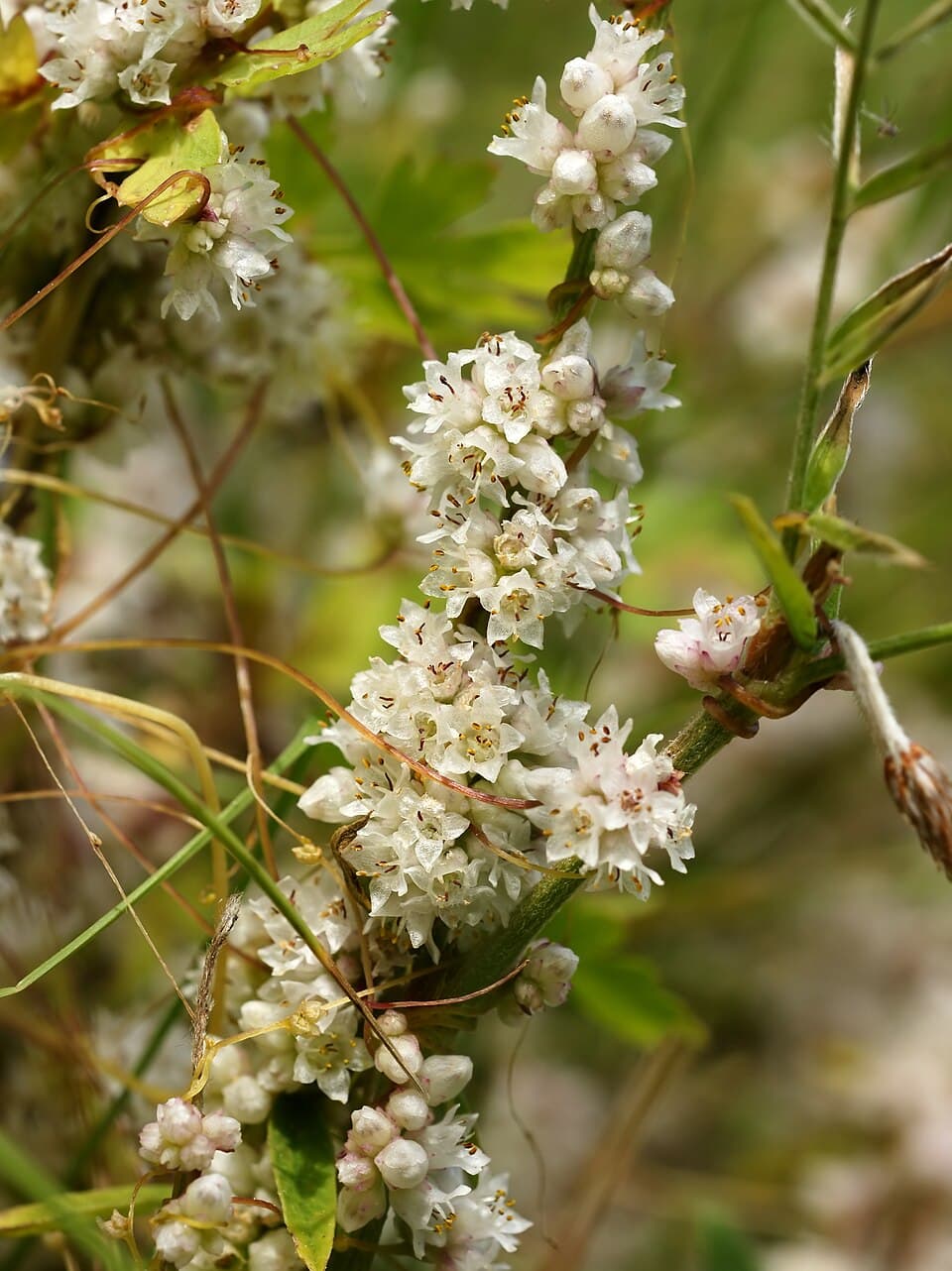
Cuscuta castroviejoi is an obligate parasitic twiner, characterized by its reddish or yellowish thread-like stems that lack true leaves. Its small flowers feature a pinkish-white corolla, dark red style-arms, and yellow anthers.