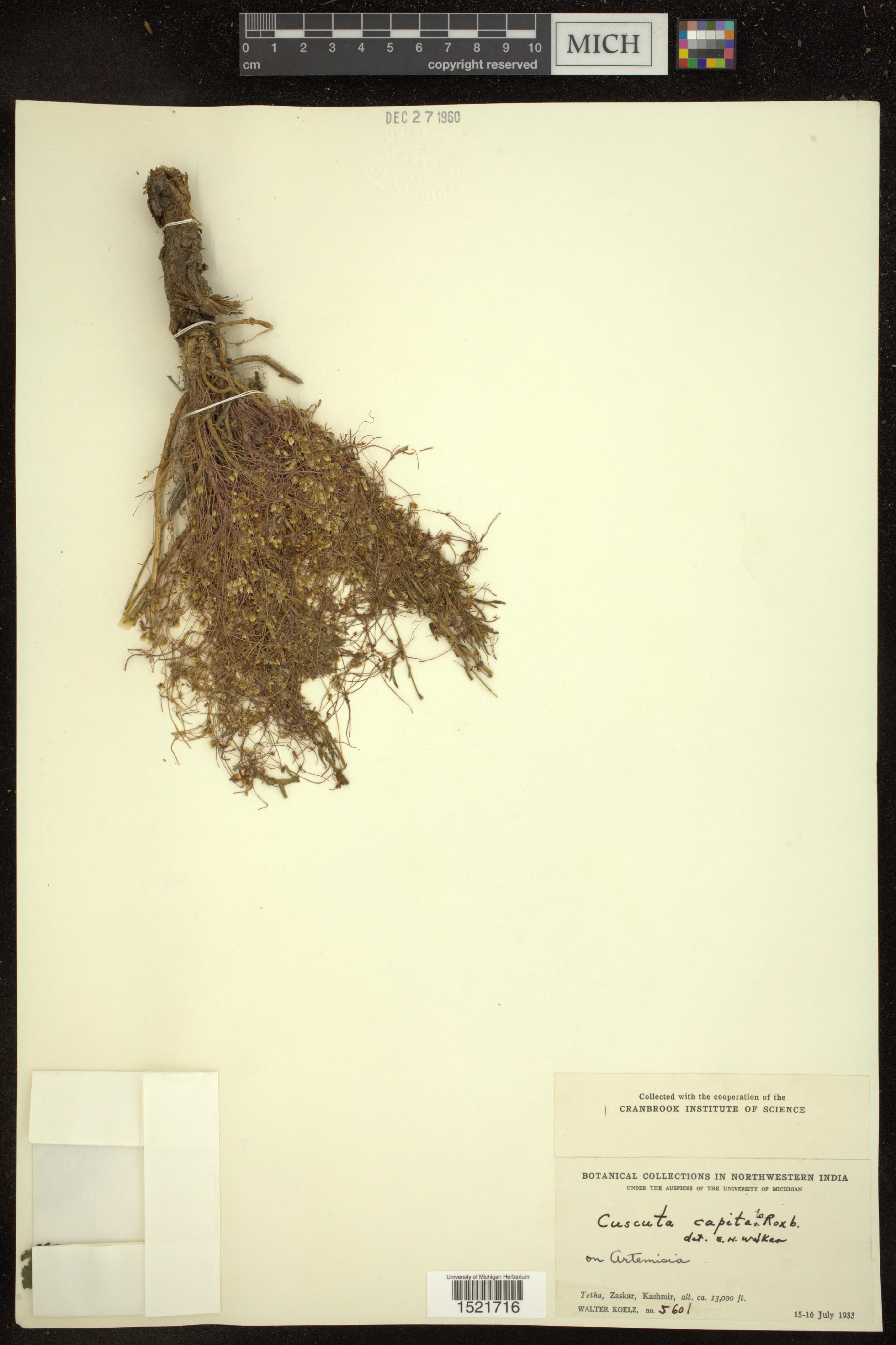
Cuscuta capitata
Image: Walter N. Koelz (cc-by-nc)
NameCuscuta capitata
Scientific NameCuscuta capitata Roxb.
Common NamesDodder, Love Vine
Plant FamilyConvolvulaceae
Natural HabitatThis species is found in high-altitude, mountainous regions, specifically noted in the Himalayas (e.g., Zaskar, Kashmir) at elevations around 13,000 ft, where it parasitizes various host plants.
Parts Usedwhole_plant,seed
Medicinal Actionsantioxidant, anti-inflammatory, astringent, diuretic, adaptogen
Traditional UsesIn traditional medicine, particularly for related Cuscuta species (like C. chinensis), the seeds are known as 'Tu Si Zi' and are used to tonify kidney yang, benefit the liver, improve vision, and treat conditions such as impotence, premature ejaculation, frequent urination, and lower back pain. The whole plant may be used for similar tonic effects or for skin ailments.
Active ConstituentsFlavonoids, Lignans, Polysaccharides, Coumarins, Saponins
Preparation Methodsinfusion, decoction, powder, tincture
Contraindications & WarningsGenerally contraindicated during pregnancy, in cases of yin deficiency with heat signs, or for individuals experiencing constipation. As a parasitic plant, it can also host and transmit plant diseases.
Cultivation NotesCuscuta species are parasitic and are not typically cultivated in the traditional sense. They require a living host plant to grow and thrive, making them difficult to cultivate intentionally for medicinal harvest. They are often considered agricultural weeds.
Rarityuncommon
Description
Cuscuta capitata is an obligate parasitic plant characterized by its thread-like, yellowish to reddish stems that twine around host plants. It lacks true leaves, possessing only minute scales, and produces small, whitish or yellowish flowers typically arranged in dense, capitate (head-like) clusters.